Recycling company in the spotlight
Breakthrough in the chemical recycling of polycarbonate
Text and images Covestro
Covestro has developed an innovative process for recycling polycarbonate. Since the late 1980s, its site in the Port of Antwerp has been one of the main production sites for this high-temperature-resistant, virtually unbreakable plastic, which can be as transparent as glass and is also available in every possible colour. As a result, the material has many applications in our daily lives.
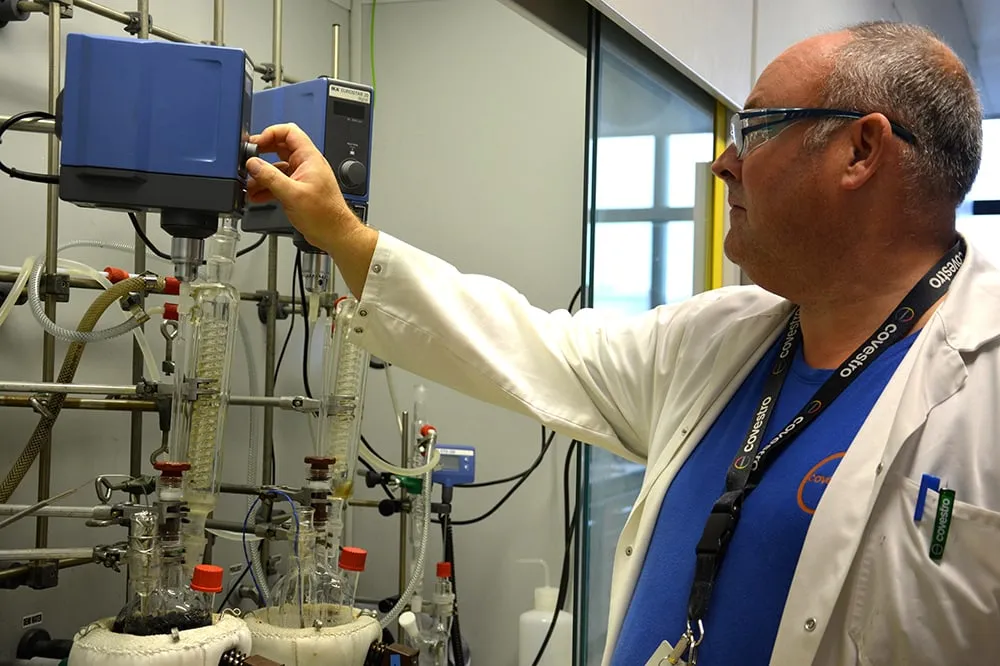
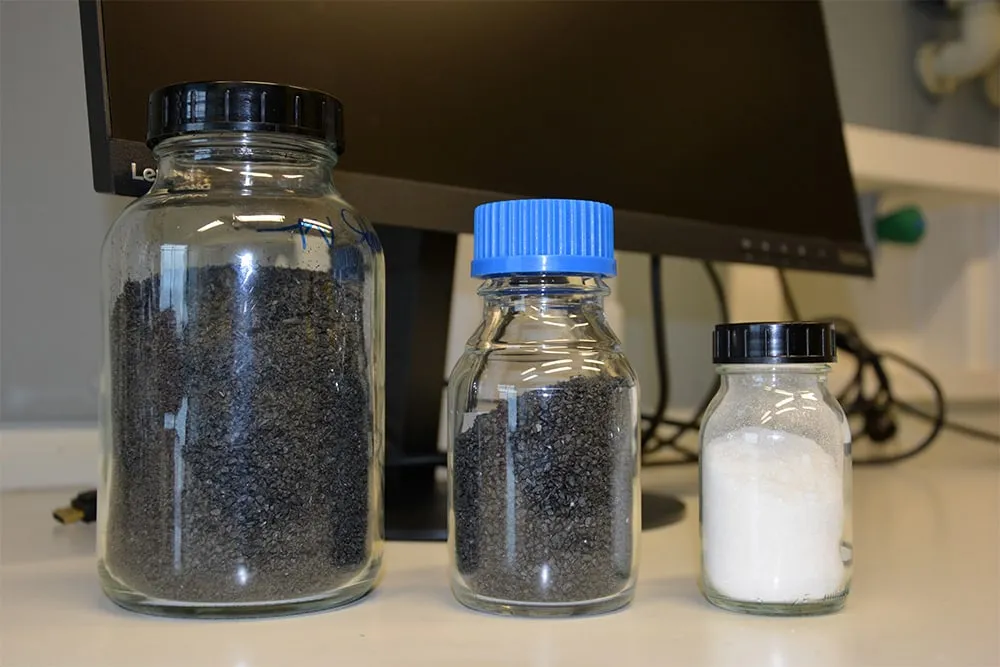
Researchers at Covestro’s Technology Center in the Port of Antwerp have now developed a chemical recycling process that can convert the casings of TV, PC and laptop screens directly back into the product from which the plastic was originally made. That product can then be fed back into the production process as an alternative raw material. This R&D breakthrough, ‘Made in Antwerp’, has already been achieved at laboratory scale. Covestro’s German headquarters now plans to further optimise the process and scale it up at a pilot plant in Leverkusen.
Covestro’s path to circularity
Covestro aims to become fully circular. It wants to achieve climate neutrality in its production activities by 2035 and, in the longer term, switch to renewable raw materials. Through modern waste recycling, end-of-life products can also become a new source of raw materials, helping to close the loop. “As a producer of plastics such as polycarbonate, we are responsible for our materials, including at the end of their life. Our advantage is that we know how our products are designed, so we can target our research towards recycling solutions,” says Thorsten Dreier, Covestro’s Chief Technology Officer. “The chemical recycling of polycarbonate is an outstanding example of how our R&D colleagues are showing that closed loops will be possible in the future. In a circular world, we need to reuse plastics as alternative raw materials at the end of their life.”
Two complementary recycling technologies
Mechanical recycling of polycarbonate is already an important part of Covestro’s circular strategy. However, the mechanical recycling process can only be used when waste streams are sufficiently pure and the recycled polycarbonate meets the quality requirements of its intended application. Chemical recycling complements mechanical recycling: it uses a chemical process to convert plastics back into monomers, that is, their individual building blocks. These chemicals can then be reused as raw materials for new plastics.
Chemical recycling for higher-quality applications
Chemical recycling can therefore process a wider range of waste streams, particularly plastics that are unsuitable for mechanical recycling. It makes it possible to produce new plastics that meet the highest quality requirements and are intended for applications where top quality is essential in terms of safety, optical transparency or aesthetics. Covestro is therefore actively developing chemical recycling. “Waste streams containing different components and with a product content of more than 50% polycarbonate, such as TV, PC and laptop screens, can be recycled through this chemical route. We have now successfully demonstrated this using various plastic waste streams containing polycarbonate in our Antwerp R&D lab,” explains Jan Busch, head of the Antwerp Technology Center. “Using this chemolysis process, we can recycle these products into a direct intermediate product for polycarbonate. This allows us to close the loop completely, making the recycling process highly sustainable.”
Next step: scaling up to semi-industrial level
Following this successful laboratory breakthrough, the next development phase is already under way. Covestro plans to build a pilot plant to gain further experience, which will be needed if the process is to be scaled up to industrial level. Millions of euros will be invested in this over the coming years. The pilot plant will be built in Leverkusen, Germany.
Covestro Antwerp is ready for the future
“This is a feather in the cap for our Antwerp R&D colleagues, who are contributing their expertise from our site in the port to global research projects at Covestro. This puts our site and the capabilities of all our Antwerp colleagues on the map worldwide. Along with the expansion of our production of raw materials for home insulation, this R&D breakthrough also shows that Covestro Antwerp is at the forefront as a site geared towards the future,” says Georg Wagner, managing director of Covestro in Antwerp.
Question about this story? Ask your question
Keep following this
Get an email when a new story is published. No account needed.
- ThemeMaking plastics and packaging circular
- SubjectRecycling company in the spotlight