The hard numbers
The saying goes that you can only manage what you measure. That is why, in every 2021 issue, RecyclePro is once again bringing you figures from the waste sector. It is up to you to draw insights from them that can optimise your production process or boost your returns. This time, we look at the Flemish Government’s plans to increase environmental levies on the incineration of commercial waste.
Environmental levies are intended to keep the proportion of recyclable waste in residual waste as low as possible. After all, what you do not have to incinerate is something you do not have to pay for. The Flemish Government now wants to tighten the screws further. The cost of incinerating commercial waste will rise next year from €13.38 to €25 per tonne, almost double. The measure is expected to bring in an additional €17 million and make polluters pay. However, it will not affect all polluters equally, as levies on household waste will remain unchanged.
An uneven playing field
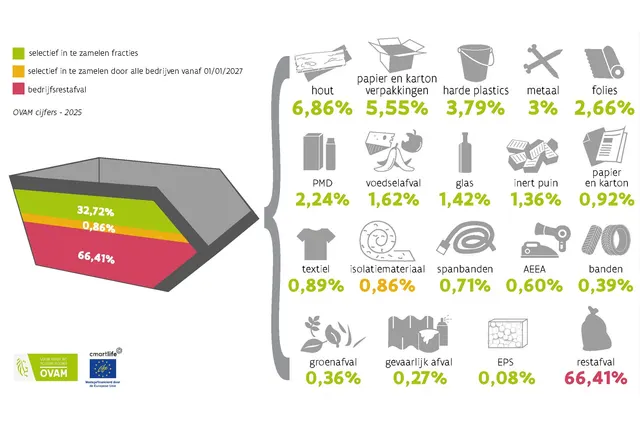
Why target commercial waste, then? OVAM’s waste composition analyses show that, on average, 44% of commercial residual waste in skips and 29% of commercial residual waste in wheelie bins could still be collected separately. So there is certainly useful material to be recovered from businesses’ residual waste. But will this measure achieve that? Or will commercial waste simply shift into the household waste stream? And what about the regions around us? The Netherlands made this change earlier, but applies it without discrimination. The rate there is currently €33.15 per tonne for everyone. The Brussels-Capital and Walloon regions are still lagging behind and are now working to raise their levies to €15. An uneven playing field, then.
Question about this story? Ask your question
Companies in this story

Keep following this
Get an email when a new story is published. No account needed.
- ThemeImproving waste collection and transport
- SubjectHard numbers
- CompanyOVAM