N49 reconstruction: circularity in practice
Text Valérie CouplezImage COPRO
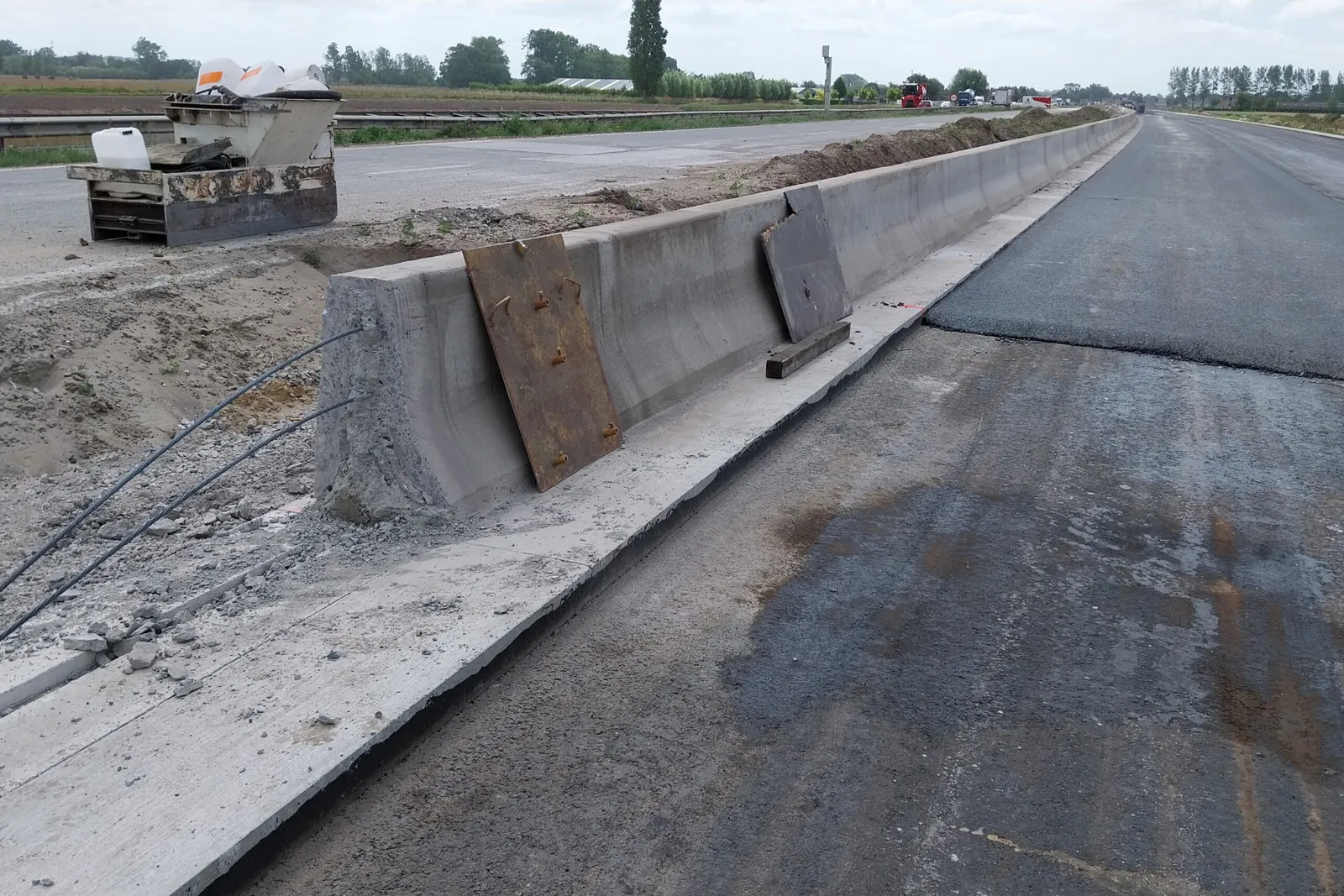
The Agentschap Wegen & Verkeer is currently rebuilding the N49 between Damme and Maldegem. The aim of this strategic multi-year project is to turn it into a fully fledged motorway linking Antwerp and the coast, particularly the Port of Zeebrugge. Given the heavy traffic, the N49 plays a crucial role as a route for freight traffic and heavy military transport, so every layer of the motorway calls for considered material choices and independent quality assurance. In connection with this project, Unit & Sustainability manager Pieter Keppens explains how circular loops are being closed throughout the entire structure of the motorway, including in road construction.
The N49’s foundations begin with the sub-base, where COPRO monitors both recycled aggregates and hydraulically bound mixtures. “The old asphalt and concrete road was broken up and excavated, then reused as aggregate on site,” says Keppens. Both the sub-base and the base course consist of recycled concrete aggregate, which is sampled and checked on a spot basis by mobile crushers in accordance with the COPRO quality mark. This gives the client and contractor objective information about purity, particle size distribution and any contamination, supporting confidence in the use of recycled materials. A cement-bound mixture with BENOR certification was used for the base course to meet the high load-bearing requirements. Its composition, including cement and water content, is monitored under certification, as these are the exact parameters that determine compaction and service life. Here too, recycled concrete aggregate is reused in the new road.
Circular use in asphalt and road concrete
Milled asphalt from the old road is put to good use in new asphalt for the lower layers of the new road. This is a fully circular application that reduces the use of both virgin bitumen and primary aggregates. COPRO monitors and certifies the quality of both the milled asphalt granulate and the newly produced asphalt. On this site, high-quality A+ concrete aggregate was also used in a fully circular way in BENOR-certified road concrete for the dividing structures. For several years, Standard Specification 250 has allowed up to 40% of primary aggregate to be replaced with A+ concrete aggregate. “From January 2026, we will be able to take circularity a step further. The new Standard Specification 250 V5.0 will then stipulate that A+ concrete crusher sand generated during crushing can also be reused in the production of road concrete. The first certificate for this high-quality A+ concrete crusher sand has already been issued,” Keppens confirms.

The importance of quality
Focusing on quality, and checking and certifying it, increases confidence in materials. This is an approach COPRO strongly supports. “Our certification provides assurance that these materials can be used in the sub-base in an environmentally safe way, that they meet the technical requirements of the Standard Specification, and that local reuse also brings environmental and economic benefits: less transport, fewer primary raw materials and maximum reuse value,” explains Michaël Van Schelvergem, Certification Manager COPRO. Every year, 13 to 14 million tonnes of recycled material are certified in this way. “Construction and demolition waste makes up the largest volume, but we are now also seeing more and more secondary aggregates being given a second life. We expect this trend to continue as the supply of high-quality recycled aggregates for circular use in concrete increases,” Keppens predicts. At the request of the Agentschap Wegen & Verkeer, enhanced production control was applied to road concrete during the reconstruction of the N49. COPRO carried out additional sampling at certified production sites for hydraulic mixtures, asphalt and concrete, specifically for production intended for this project. Targeted external oversight and direct reporting to the client ensure that the quality of delivered products is closely monitored, helping to avoid necessary repairs later on.
A strategic choice
For the Agentschap Wegen & Verkeer, enhanced production control is simply common sense. “Quality and sustainability are core values for us. Enhanced production control by COPRO gives us additional, objective insight into the quality of concrete, asphalt and other construction materials. For a project on this scale, it is a deliberate strategic choice. The inspections go beyond the standard sampling checks. COPRO takes additional samples, tests compressive strength, checks mix designs and systematically compares results with the agreed standards. All findings are reported directly and objectively, allowing contractors to make adjustments in good time. This means fewer repairs and smoother execution, with minimal disruption for road users and local residents,” concludes Peter Sabbe, project manager at Agentschap Wegen & Verkeer West-Vlaanderen.
Question about this story? Ask your question
Companies in this story
Keep following this
Get an email when a new story is published. No account needed.
- SubjectGreen Road Mobility
- CompanyCopro