Is a European vehicle passport finally on the way?
Text Valérie CouplezImage Febelauto en iStock
For 25 years, Febelauto, the Belgian management organisation for end-of-life vehicles, has been campaigning for the introduction of a vehicle passport. “If we don’t want valuable raw materials to be lost here, we need to be able to trace vehicles from A to Z,” explains Febelauto director Catherine Lenaerts. She welcomes the mention of such a passport in the federal coalition agreement and hopes that real work will now begin on it, preferably at European level.
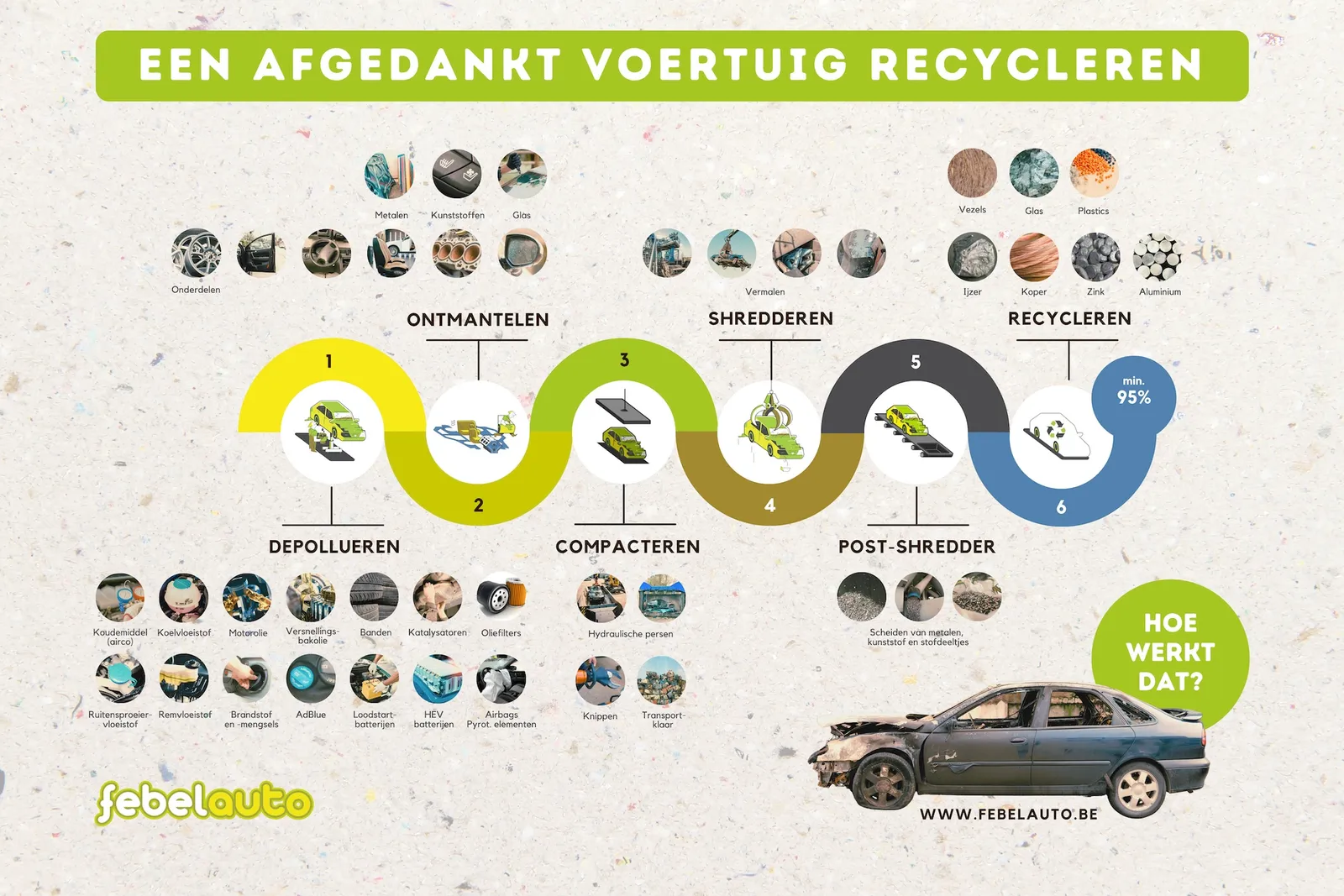
She immediately points to the figures showing how the collection of end-of-life vehicles has evolved since 2014. “It is striking that, with all the modern technology available to us, we have seen mainly a downward trend over the past decade. That means too many vehicles are slipping through the net, and everyone loses out as a result.” The environment suffers most of all. “End-of-life vehicles processed here in Belgium achieve a recycling rate of 98%, including 24% reuse. Our particularly advanced post-shredder technology is what makes the difference, allowing all those valuable raw materials to be given a second life profitably. We had the savings calculated: emissions are reduced by no less than 83%, equivalent to 3,392.3 kg less CO2 per vehicle. So it is worth making a greater effort to keep end-of-life vehicles here,” Lenaerts concludes. She also highlights safety as an important argument. “There is a reason why certain vehicles are classified as wrecks here. Letting them be driven elsewhere is playing with people’s lives, because the buyer is often unaware of their condition.”
Chassis number as a unique identifier
The conditio sine qua non for processing end-of-life vehicles correctly is comprehensive traceability. And that is where the problem lies today. “In Belgium, we have made things difficult for ourselves by linking number plates to people rather than vehicles. That makes a system like this harder to replace with one that can trace a vehicle. But it is not impossible, because every vehicle has a unique identifier: the chassis number. We have been reporting it to the Vehicle Registration Service for 25 years, which means a certificate of destruction is generated for every end-of-life vehicle at authorised recycling centres. That could be the perfect basis for such a system. If we can trace eggs back to a specific farm, surely modern digital technology can make it possible to do the same for a vehicle.”
Political courage needed
According to Lenaerts, the reason we have not got there yet is a lack of political courage. “Without political commitment to provide the resources and people needed, you cannot change this. That is why we warmly welcome the mention in the coalition agreement. After 25 years of fighting a losing battle, we hope that real work will finally begin.” The legal framework is already in place, in effect. The 2010 law on the Crossroads Bank states that every movement of a vehicle must be registered. “That is exactly what we need to make vehicles traceable. You can only achieve traceability if you can follow every step. But the Royal Decree implementing the law is missing, which is why it has remained a dead letter all these years.”
Better at European level
Nevertheless, Lenaerts is particularly keen to see a European solution. The new ELV regulations even refer to three passports: for circularity, vehicles and batteries. “The fact that responsibilities are split between two departments, DG Environment and DG Move, calls for cooperation if we are to arrive at a truly comprehensive solution for all Member States. There are already tools that could provide a good starting point.” Lenaerts cites EUCARIS, the system through which several European countries already exchange information on vehicles, driving licences, insurance documents and traffic offences. “It may be a matter of linking or expanding existing digital systems. But if we leave it to the Member States, nothing will happen. The differences between them are too great. We are looking particularly to the Netherlands to take the lead. They have more people and resources there.”
Figures rise
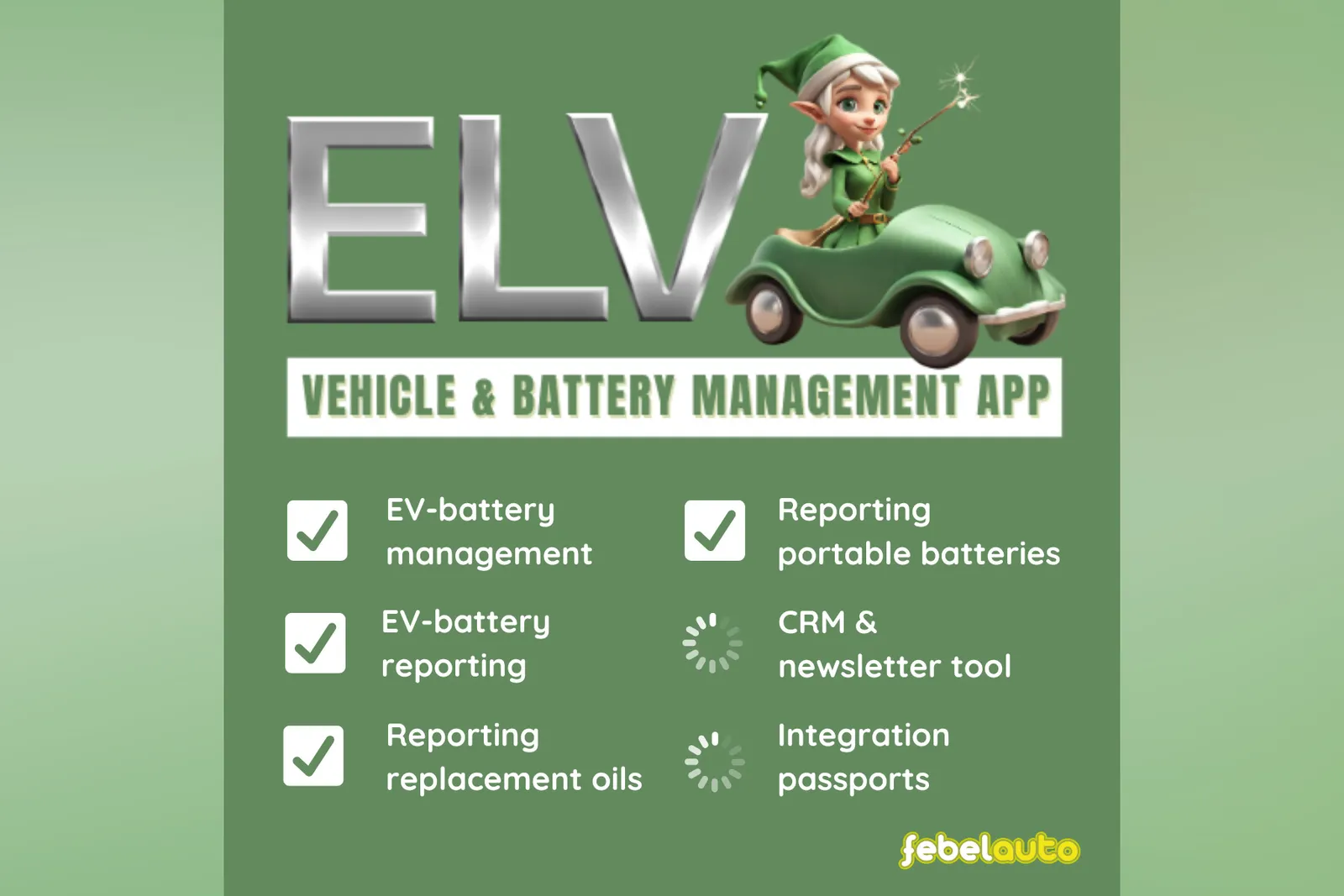
Despite the challenges on the ground, Lenaerts remains positive. “The figures moved in the right direction again last year. We went from 63,592 end-of-life vehicles to 69,116, an increase of 8%. For batteries, our ELV app is already a fully digitalised system ready to monitor recycling. We have also left the option open to integrate other passports. So we are fully prepared to move towards a single digital system for complete traceability. That will bring transparency and drive out rogue operators.”
Question about this story? Ask your question
Keep following this
Get an email when a new story is published. No account needed.
- SubjectGreen Road Mobility