New Packaging & Packaging Waste Regulation explained
Text Valérie CouplezImage iStock
Europe has set out how it plans to reduce the amount of packaging waste in the coming years. The new rules are set out in the new Packaging & Packaging Waste Regulation, adopted at the European Parliament’s plenary session on 11 April. This is a step forward for the recycling industry, as clear obligations are being imposed right at the start of the chain. Producers will now have to take account of the recyclability of their packaging materials and meet requirements for recycled content.
It has been a long road, but the new Packaging & Packaging Waste Reuglation is here. This time, it is a regulation rather than a directive, so the legislation no longer has to be transposed into national law. This is a trend we are seeing increasingly often in European legislation, ensuring a level playing field across all Member States. The substantial document sets out the requirements that all packaging, including single-use coffee and tea packaging, will have to meet in Europe in future. It is built around five key pillars: restrictions on PFAS, design for recycling, recycled content, reduced packaging use and recycling targets.
Recycled content requirements to create a stable market
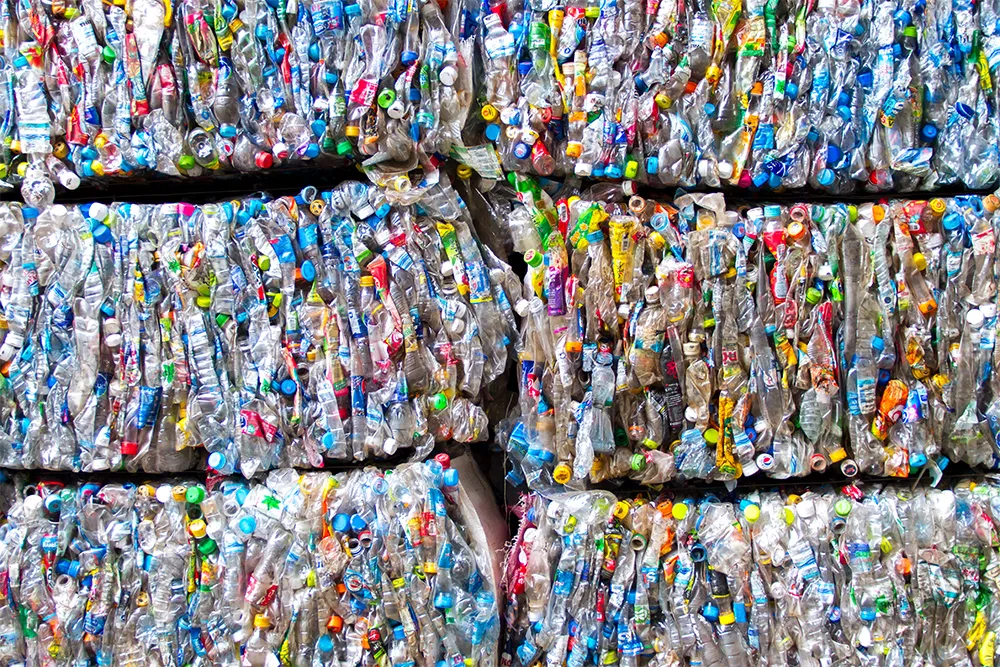
This is an evolution that the recycling sector must embrace. By introducing recycled content requirements, Europe aims to create a stable market from 2030. This is the key condition for encouraging investment to boost capacity and quality, and bring Europe’s recycling industry to full maturity. An evaluation will be carried out in 2032 to assess whether the targets remain relevant and should be tightened further by 2040. For now, however, from 1 January 2030, packaging placed on the European market will have to meet the following requirements:
- 30% recycled content for contact-sensitive packaging, with the exception of single-use beverage bottles made mainly from PET;
- 10% recycled content for contact-sensitive packaging made from plastics other than PET, with the exception of single-use beverage bottles;
- 30% recycled content for single-use plastic beverage bottles;
- 35% recycled content for all other plastic packaging not covered by the previous points.
Towards improved recyclability
The criteria for recyclability have also been clearly defined. From 1 January 2030, only packaging with a recyclability grade of A (at least 95%), B (at least 80%) or C (at least 70%) may be placed on the market. On 1 January 2038, the last of these categories will also be phased out. How recyclability is assessed will depend on the material concerned: PET, PE, PP, HDPE, films, PS, XPS, EPS, biodegradable plastics … Annex II of the regulation explains the rules for each material.
Produce less waste and recycle more
Europe also requires Member States to reduce the amount of packaging waste. Compared with 2018 figures, it must be 5% lower by 2030, 10% lower by 2035 and 15% lower by 2040. Finally, Europe is calling for greater efforts to collect and recycle waste. Member States will also have to step up collection and recycling. By 1 January 2029, each Member State must have mandatory collection targets to ensure the collection of the materials listed in Article 46, consistent with the recycling targets also set out in that article and, of course, the recycled content requirements in Article 7. By 31 December 2030, 55% of plastic packaging waste by volume must be collected.
No protection for Europe
We end on a sour note. The last-minute delay to the rules was due to an objection from the European Commission’s Directorate-General for Trade. It struck out the restriction requiring recycled content targets to be met using waste generated, collected and recycled on the European market. The aim had been to prevent Europe’s recycling industry from having to contend not only with competition from virgin plastics, but also from cheap recyclates from Asia, where energy and labour costs are much lower. This would have breached WTO trade agreements, and has now been replaced by a provision that recyclate must come from companies operating under ‘broadly equivalent conditions’. This concept is still to be defined in greater detail.
Question about this story? Ask your question
Keep following this
Get an email when a new story is published. No account needed.
- ThemeMaking plastics and packaging circular
- SubjectWaste paper