Circular plastics? All hands on deck!
With the Green Deal, the European Commission has launched an ambitious programme to make the European economy climate-neutral and circular. This comes with an impressive array of legislative initiatives, many of which focus on the circularity of plastics. Why? The aim is twofold: to progressively reduce the use of fossil feedstocks and to collect more plastic-containing waste for sorting and recycling.
Let’s call a spade a spade: all too often, plastic-containing waste in Europe ends up in residual waste sent for incineration, or even in landfill. Breaking this loophole requires a strong focus on innovation: innovation to sort more effectively, recycle better and in greater quantities, and take material recovery into account from the design stage of products.
Until now, mechanical recycling has focused mainly on relatively straightforward plastic waste streams: fairly clean waste from short-lived products, such as packaging. But that is nowhere near enough to make the plastics sector circular as a whole. To bring every step of the value chain on board, we also need to invest in other recycling technologies, such as physical and chemical recycling.
Physical recycling involves selectively dissolving polymers to separate them from impurities, so that clean polymers can be recycled. Chemical recycling recovers the building blocks used to produce polymers, the monomers or, further upstream, pyrolysis oil as an alternative to fossil naphtha, from plastic-containing waste. These complementary technologies therefore also enable impure or more complex waste streams to be used in a circular economy as a source of new feedstocks.
It also allows polymers that cannot be recovered through mechanical recycling to be given a new lease of life. Examples include thermosets such as polyurethanes. Chemical recycling can also recover building blocks with a purity comparable to that of virgin feedstocks of fossil origin. This means that applications with very high quality requirements, such as food or medical packaging, can also use recovered feedstocks.
Does this mean chemical recycling competes with mechanical recycling? Certainly not. If more plastic-containing waste is collected across Europe, the pie simply gets bigger. There will then be a slice for every recycling technology, enabling it to build a commercially viable operation. We are now at a critical juncture: investment decisions on new recycling technologies need to be made, while mandatory recycled content requirements are being laid down in legislation. For chemical recycling, it is crucial that chain of custody models such as ‘mass balance allocation’ are permitted by legislators.
Since they are simply indistinguishable from one another, it is not possible to calculate exactly how many fossil building blocks and how many building blocks of recycled origin are present in chemical recycling. In addition, plants producing recycled pyrolysis oil mix different incoming streams and have several outgoing streams, which may or may not be destined for plastics applications. Finally, the volumes of pyrolysis oil in such plants are currently still very small compared with the volumes of fossil naphtha. Clear agreements therefore need to be made on assigning recycled content to specific streams.
The so-called ‘mass balance allocation, fuel exempt’ model, with certification from the ‘point of origin’ through to the final product, makes it possible to assign and trace recycled content throughout the entire value chain. As investment grows and pyrolysis oil volumes increase, more markets can be supplied with materials derived from recycling plastic-containing waste to replace fossil feedstocks. This is the only way to build, step by step, a circular future for plastics. In 2024, let’s work together with an open mind to meet this challenge. All hands need to be on deck if we are to speed up the circular economy. ❚
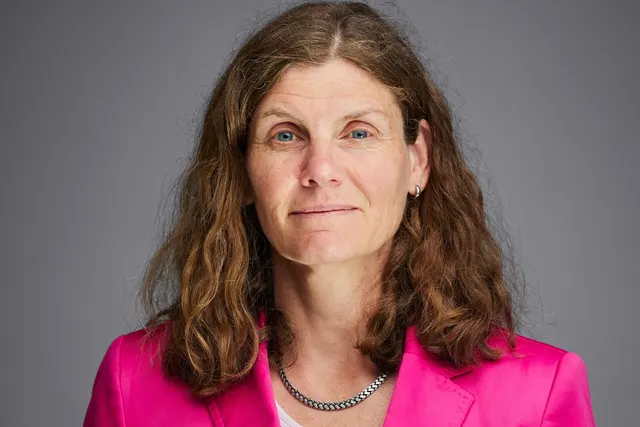
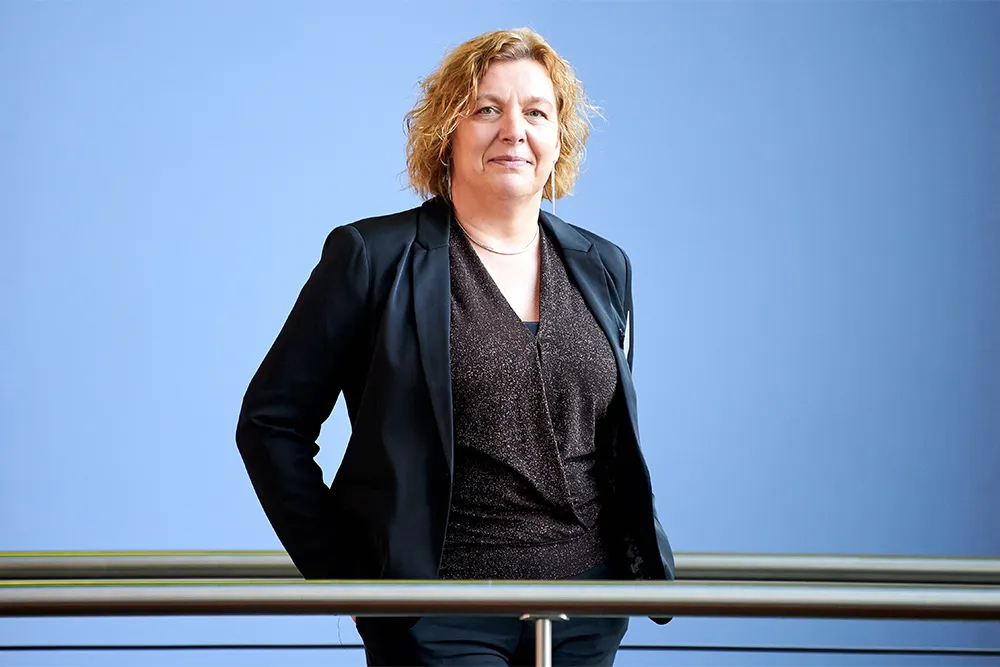
Saskia Walraedt,
director, essenscia PolyMatters
Question about this story? Ask your question
Keep following this
Get an email when a new story is published. No account needed.
- ThemeMaking plastics and packaging circular
- SubjectThe pen