Recommendations for preventing lithium fires

The European Green Deal and the new Circular Economy Action Plan identify electronics as a key value chain, where recycling plays an important role in achieving sustainability goals. However, there is no magic formula that can eliminate the risk of fires in electronic waste containing batteries. There are, though, a number of steps that can be taken to minimise the risk. This applies to all stakeholders involved in the life cycles of batteries and electronic devices. That is the conclusion of a recently published study focusing on fires caused by lithium-ion batteries. It describes best practices for preventing such incidents. Here we summarise the main recommendations.
A total of 109 respondents from all segments of the WEEE value chain took part in the survey, covering collection, sorting, pre-treatment, shredding and post-shredding. They also represented facilities of different sizes, treating different types of waste and operating in different locations. Of the respondents, 81 (74%) said they had implemented good practices and risk mitigation measures between 2016 and 2019. For many companies, these had already helped reduce the risk of fires. Just over half reported that the frequency had fallen. For 15%, there had been no further incidents, while 23% reported a 50% decrease. These figures varied considerably, which can be explained by the fact that some investments were not intended to reduce the risk, but rather to ensure that an incident would not cause major damage. Only one respondent had seen the frequency increase despite their investments. Respondents were more in agreement on one point: 65% said that further measures would be needed to improve the results.
Design recommendations
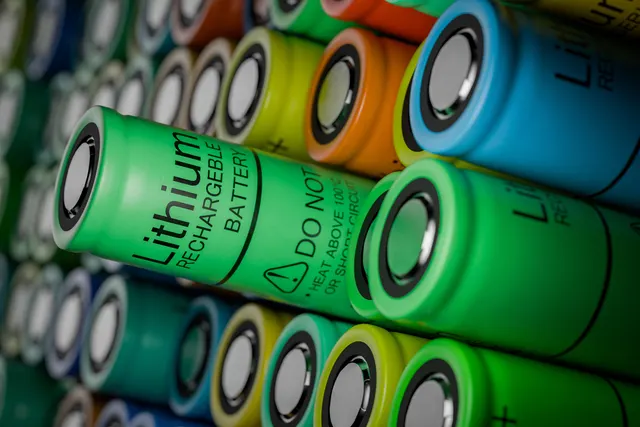
Products must be designed to remain safe throughout their entire life cycle. This should also apply to recycling. This is clearly not the case for lithium batteries today. Making batteries truly safe will require a new internal chemistry, a more robust casing or the addition of a flame-retardant coating. The safety of existing types could also be improved by better labelling of electronic devices containing batteries and making batteries easier to remove from electronic devices. Users should be told whether their electronic device contains a battery, whether it can be removed and what type of battery it is. Raise their awareness of the potential dangers if the waste is not handled properly by providing clear labels. Finally, provide waste operators with information on the types of batteries used, for example through a colour code, with a link to a website where they can find further details.
Collection recommendations
Most countries have rules in place requiring batteries and electronic waste to be collected through separate channels, and are looking to promote this in the coming years. This should ensure that batteries end up in waste streams that can be fully controlled. It is important to provide a separate area for electronic waste that still contains a battery, with clear instructions for users. It is not always easy to identify the type of battery, so materials can then be handled with the utmost care. Ensure that staff who handle these batteries receive adequate training. Special containers are also recommended for transport under ADR SP 670. The more batteries that can be removed from electronic waste in advance, the better. Other recommendations include covering the battery with insulating, non-conductive material and discharging it according to the correct procedure.

Pre-treatment recommendations
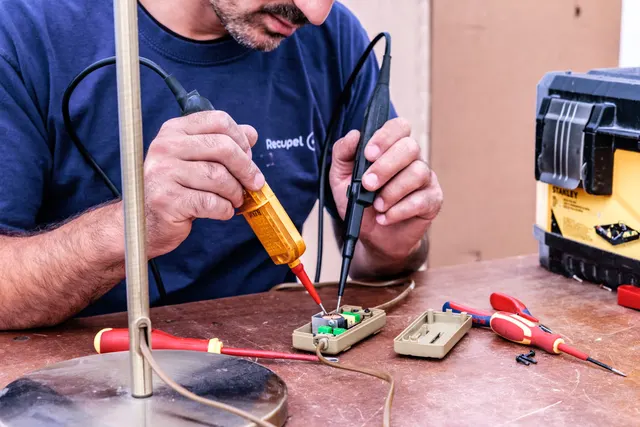
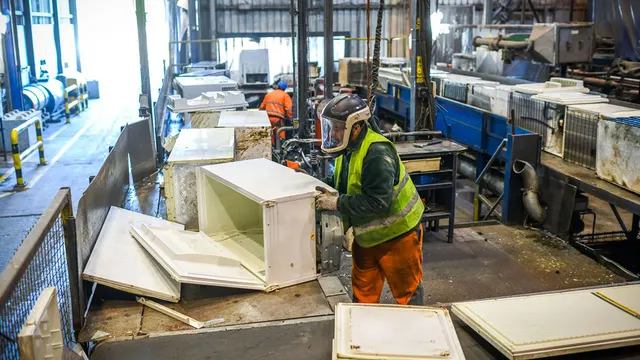
The priority here is to ensure that electronic waste containing lithium batteries can be identified and that the batteries can be removed correctly. Appropriate staff training is therefore essential. Test whether this training is effective, too. Carry out a risk assessment of areas and activities requiring special attention. This will make it possible to draw up the appropriate protocols for staff.
Final processing recommendations
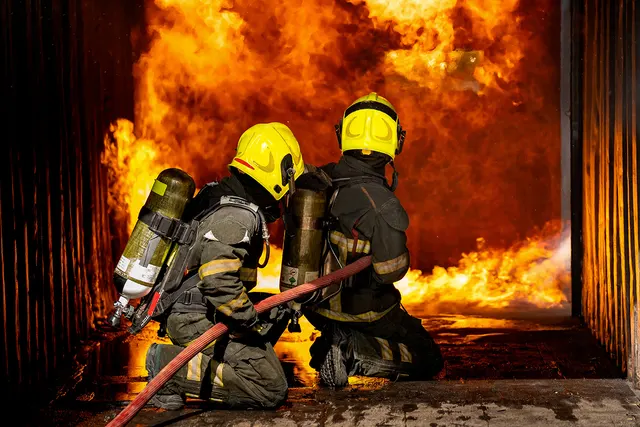
This applies to facilities that receive and process lithium batteries specifically. Most recommendations concern the early detection of fires, firefighting measures and training staff in these procedures to prevent incidents and limit damage. It is important to keep emphasising the dangers of lithium batteries. Provide special containers for storing lithium batteries, too. For example, a pressure vessel will prevent flames from escaping the container if an incident occurs. Equipping it with sensors that detect temperature changes and an alarm system can improve safety for everyone involved.
Question about this story? Ask your question
Keep following this
Get an email when a new story is published. No account needed.
- ThemeCircular processing of electronics and batteries
- SubjectLithium-ion fires