The hard facts

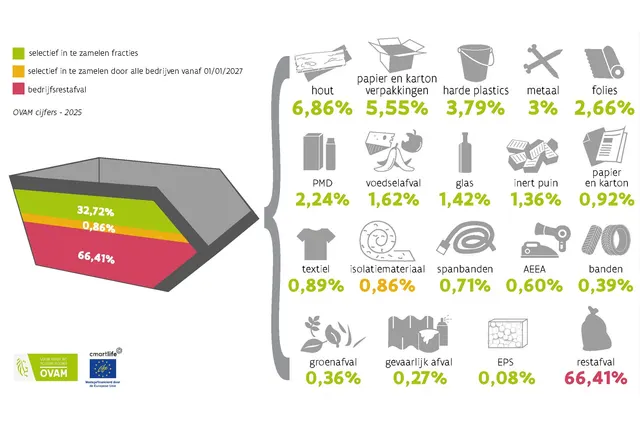
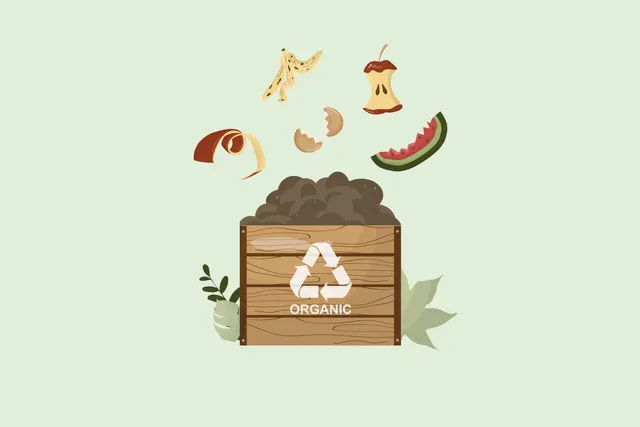
The saying goes that what gets measured gets managed. That is why RecyclePro is once again bringing you figures on the waste sector in every 2022 edition. It is up to you to draw insights from them that could optimise your production process or increase your returns. From 2024, the EU requires its Member States to keep bio-waste out of residual waste. Flanders is therefore focusing on the collection of green waste and GFT (vegetable, fruit and garden waste), as well as home composting. Even so, more than 35% by weight of the waste in Flemish household rubbish bags is still recyclable bio-waste.
Household residual waste in Flanders averages 143 kg per resident. To bring this figure down further, Flanders and, by extension, all Member States must keep bio-waste out of residual waste, both from households and businesses. The 2019-2021 household waste composition analysis shows that bio-waste still makes up a relatively large proportion of household waste. Progress on this fraction is needed to meet the residual waste target of no more than 100 kg per resident by 2030.
What is the best collection scenario?
OVAM examined the economic, social and environmental impact of a number of bio-waste collection and treatment scenarios. The study also looked at the influence of pricing policy. The greatest environmental benefit was found when bio-waste was collected as GFT and treated through pre-digestion followed by composting. This scenario, however, also has the second-highest societal cost.
What is the best pricing policy?
When the fee for the separate collection of GFT rises, for example by 5 euro cents per kg, the amount of household waste collected per capita increases by around 7.8%, equivalent to an average of 7.4 kg. This estimate therefore indicates that households take the cost of separate GFT collection into account when sorting their waste.
What about private producers?
Finally, the study also considered whether private producers with similar bio-waste should be included in household bio-waste collection schemes. The study found that this could be particularly relevant for small catering businesses and bakeries. The collection frequency would need to be sufficiently high to prevent bio-waste from having to be stored for long periods. This could be an option particularly in densely urban areas, where household bio-waste is often already collected weekly.
Question about this story? Ask your question
Companies in this story

Keep following this
Get an email when a new story is published. No account needed.
- SubjectHard numbers
- CompanyOVAM