












Working together across the entire value chain
Text Valérie CouplezImage OVAM
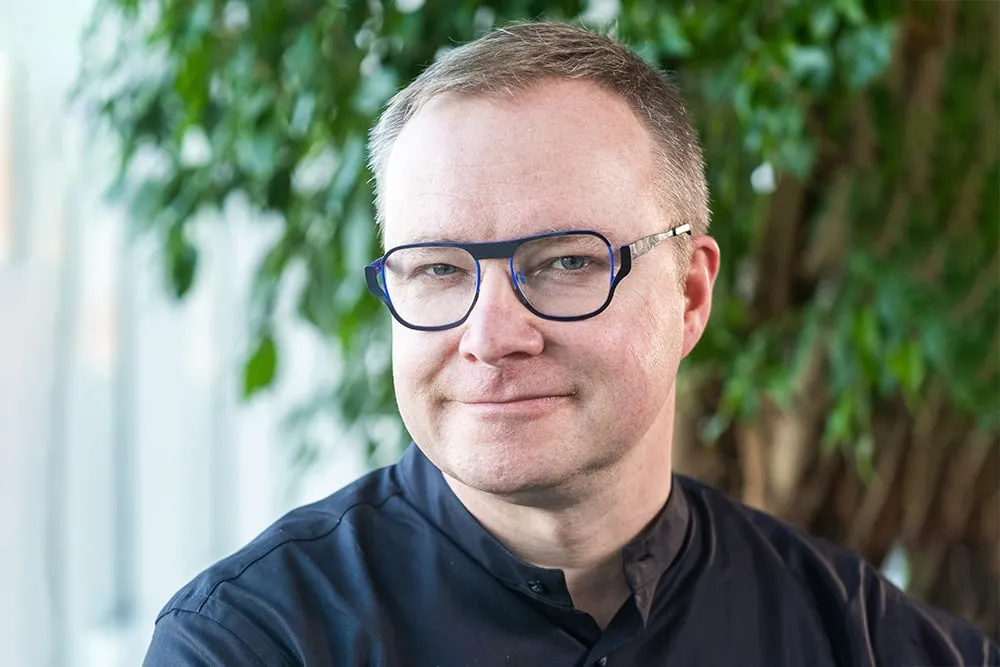
Over the past few years, he has played just about every role there is to play in the world of recycling. So there is no one better placed to give us a picture of how the sector has evolved and what we can expect in the years ahead. We talk to Werner Annaert, Director-General of OVAM.
He grew up in the 1980s, against a backdrop of illegal landfill sites and toxic waste. This inspired him to focus on environmental issues from the outset of his studies in economics, and later European law, writing a thesis on the treatment of solid waste in Belgium. “Like every economist, I started out as an auditor,” Annaert laughs. “It wasn’t quite my thing. When I saw a vacancy at Interafval, I decided to take my chance.” Since then, his career, taking him via Febem, later Denuo, and Veolia, has remained firmly rooted in the world of waste and recycling. “You never get bored, the sector is constantly changing. New regulations and technologies emerge every day, along with new challenges.”
Source separation and quality go hand in hand
Over the past decade, he has seen us move ever closer to the source. “The amount of waste we produce collectively is still on the rise. If you can separate waste as soon as it is produced, you can achieve better quality. But that has a huge impact on how you organise the whole process. That is why we need to keep thinking about how we can further improve things such as transport and containers. The pressure to improve quality increases every year. That is why, in Flanders, we want to pursue both approaches: focusing on waste streams that are as clean as possible, while also investing in facilities to sort all fractions as effectively as possible. We also need to remain alert to possible contaminants in those streams, such as PFAS. Companies using recycled content will want strong assurances that they can do so without any concerns.”
A central hub
There is plenty of work ahead. As Director-General of OVAM, he sees his organisation’s role in the coming years primarily as that of a central hub. “Our knowledge of materials and waste is greatly valued at local, national and international level, for example in the PFAS dossier. These are precisely the building blocks we need to shape the circular economy and help make it a reality. And we want to give it our all every day as one team.” OVAM aims to position itself ever more clearly as a partner to the circular economy and the recycling industry. “Unfortunately, regulation is needed for companies that are unwilling to come on board. That is why we also want to use our expertise to support enforcement as effectively as possible. But recycling companies can also take on more responsibility themselves and introduce quality systems. Ultimately, that is in everyone’s interests.”
Focusing on collaboration
For Annaert, collaboration is therefore the way forward. “Not just within the recycling sector, but across the entire value chain. We can already see this happening in the glass and paper sectors, for example. Producers are taking stakes in companies specialising in recycling these streams to secure future supplies of raw materials. But we must not forget that turning waste back into raw materials takes expertise. These materials have their own characteristics and may contain contaminants, which must be taken into account during processing. Over the next ten years, however, we will see more of this kind of vertical integration and collaboration. The same applies to OVAM: the Green Deal for Circular Construction, for example, puts us in contact with companies and organisations we were less familiar with before. This also allows us to broaden our knowledge and network.”
A safe final step
One thing will not change, however: “At OVAM, we want to remain the gatekeeper. That was the reason we were set up, and it will remain our task: removing harmful substances from society. Incinerators and landfill sites also have a place in a circular economy. They are the safe final step,” Annaert concludes.
Een zakelijke vraag aan OVAM? Get in touch
Companies in this story

Keep following this
Get an email when a new story is published. No account needed.
- SubjectNews
- CompanyOVAM







