












What does the Antwerp Declaration entail?
Text Valérie CouplezImage CC BY 4.0 en Thomas Hansenne
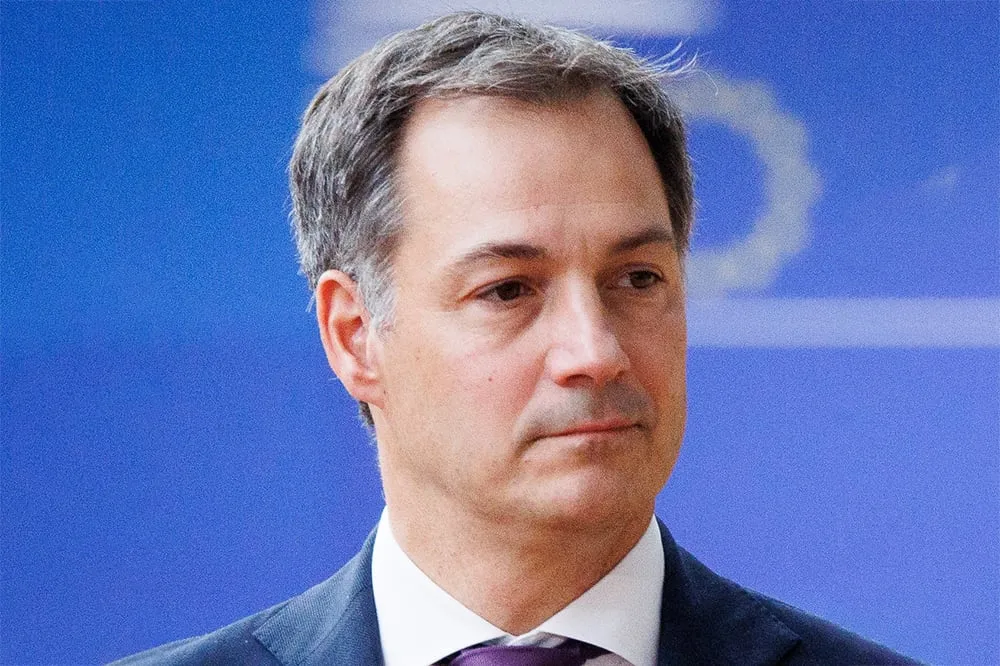
“We need industry because of its capacity for innovation. It must come up with tomorrow’s climate solutions. That is why Europe must not only be a continent of industrial innovation, but must also remain a continent of industrial production.” With these words, Belgian Prime Minister Alexander De Croo underlined the importance of a European Industrial Deal. The Antwerp Declaration has since been endorsed by 1,205 organisations and 823 companies, supporting this ambition. In the next legislative term, the Industrial Deal must be given the same status as the Green Deal. “Not in opposition to one another, but to reinforce one another,” De Croo added.
To achieve climate neutrality by 2050, electricity production in Europe will have to multiply several times over, while industrial investment will need to be six times higher than in the previous decade. This enormous challenge comes just as both large companies and SMEs are facing their most severe economic downturn in ten years: demand is falling, production costs are rising and investment is moving to other regions. The US economy, benefiting from financial support under the Inflation Reduction Act, overcapacity in China and rising exports to Europe are putting even greater pressure on European industry. Europe urgently needs a business case. Open strategic autonomy is crucial to a competitive and resilient EU. However, this can only be achieved if basic and energy-intensive industries remain and invest in Europe. Without a targeted industrial policy, Europe risks becoming dependent even on basic goods and chemicals.
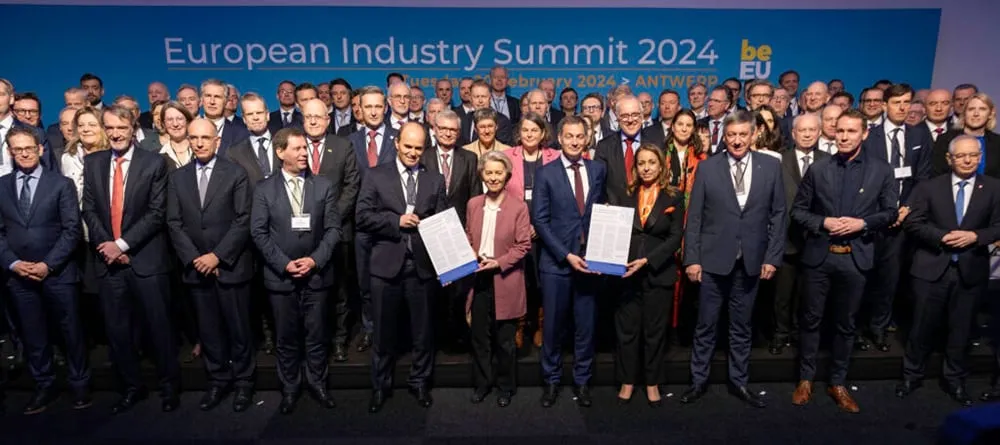
Ten proposals
The Antwerp Declaration therefore calls on the next European Commission and Parliament to develop an industrial policy. It puts forward ten proposals:
- Make the Industrial Deal central to the new European Strategic Agenda for 2024-2029. We are calling for a comprehensive action plan to make competitiveness a strategic priority and create the conditions for a stronger business case in Europe. The action plan must include measures to end inconsistent regulations, conflicting objectives, unnecessary complexity in legislation and reporting.
- Include a strong public funding chapter, with a Clean Tech Fund for energy-intensive industries, closely coordinated with a simplified state aid framework. This should help de-risk public and private investment in clean technologies.
- Make Europe a globally competitive energy supplier. We need a genuine EU energy strategy with concrete measures to promote cross-border electricity, expand the network for hydrogen and other renewable and low-carbon molecules, and build partnerships with resource-rich countries.
- Develop the infrastructure Europe needs. Build world-class energy, digital, CCUS and recycling infrastructure. Unblock cross-border transport and develop trans-European networks. Remove permitting barriers to industrial transformation projects.
- Strengthen the EU’s security of raw material supply by boosting domestic mining, sustainable processing and recycling capacity for critical raw materials, alongside new global partnerships. We need renewable carbon and circular carbon feedstocks, including through the expansion and rapid approval of advanced chemical recycling technologies.
- Stimulate demand for low-carbon, carbon-free and circular products. Enable consumers, both businesses and individuals, to choose net-zero and circular products based on transparent product carbon footprints and environmental footprints. Lead the way through public procurement and EU-supported buyer initiatives.
- Revitalise and improve the European Single Market to support the transition of integrated value chains. Also create a single internal market for waste and recycled materials.
- Make the innovation framework smarter, including by promoting high-quality science, technological innovation and collaborative policies. Promote digitalisation as a prerequisite for groundbreaking research and increased efficiency.
- Create a new approach to legislation. Allow entrepreneurship to thrive so that the best solutions can be found to overcome challenges. Legislation must encourage companies to invest in clean technologies. Avoid excessive reporting, ensure consistency, remain aligned with industrial realities and integrate proposals through a stronger Secretariat-General.
- Put in place a structure that enables results to be delivered. Appoint a first vice-president responsible for implementing the European Industrial Deal and for the seamless integration of legislation and alignment with the next European Commission’s agenda.
Question about this story? Ask your question
Keep following this
Get an email when a new story is published. No account needed.
- SubjectNews







