












Versatile family business goes paperless
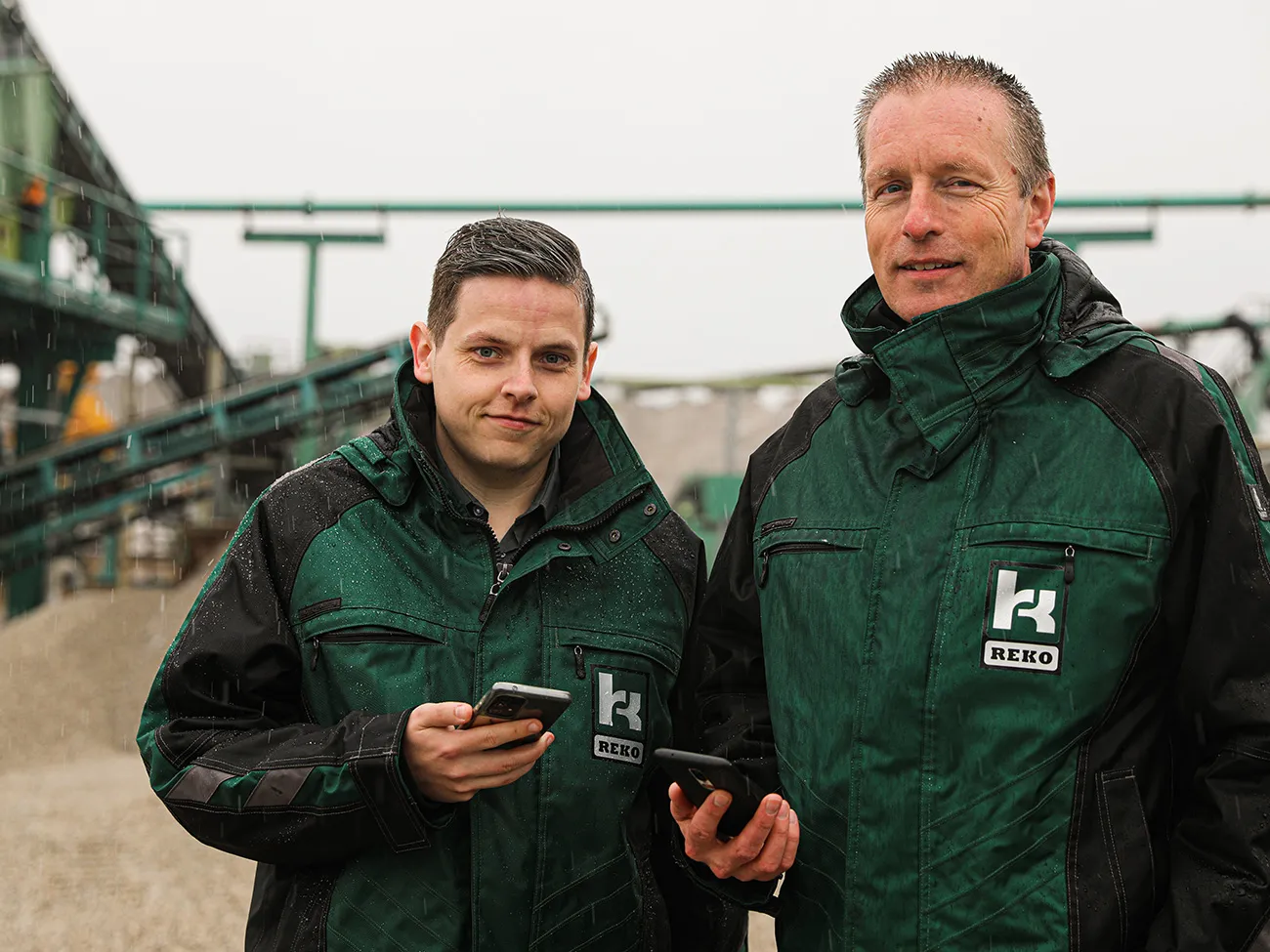
More than twelve years ago, Reko Raalte took its first steps towards streamlining internal processes with the help of software from VanMeijel. The versatile family business is now taking digitalisation further with the same ICT partner and can operate almost entirely paperlessly across all departments.
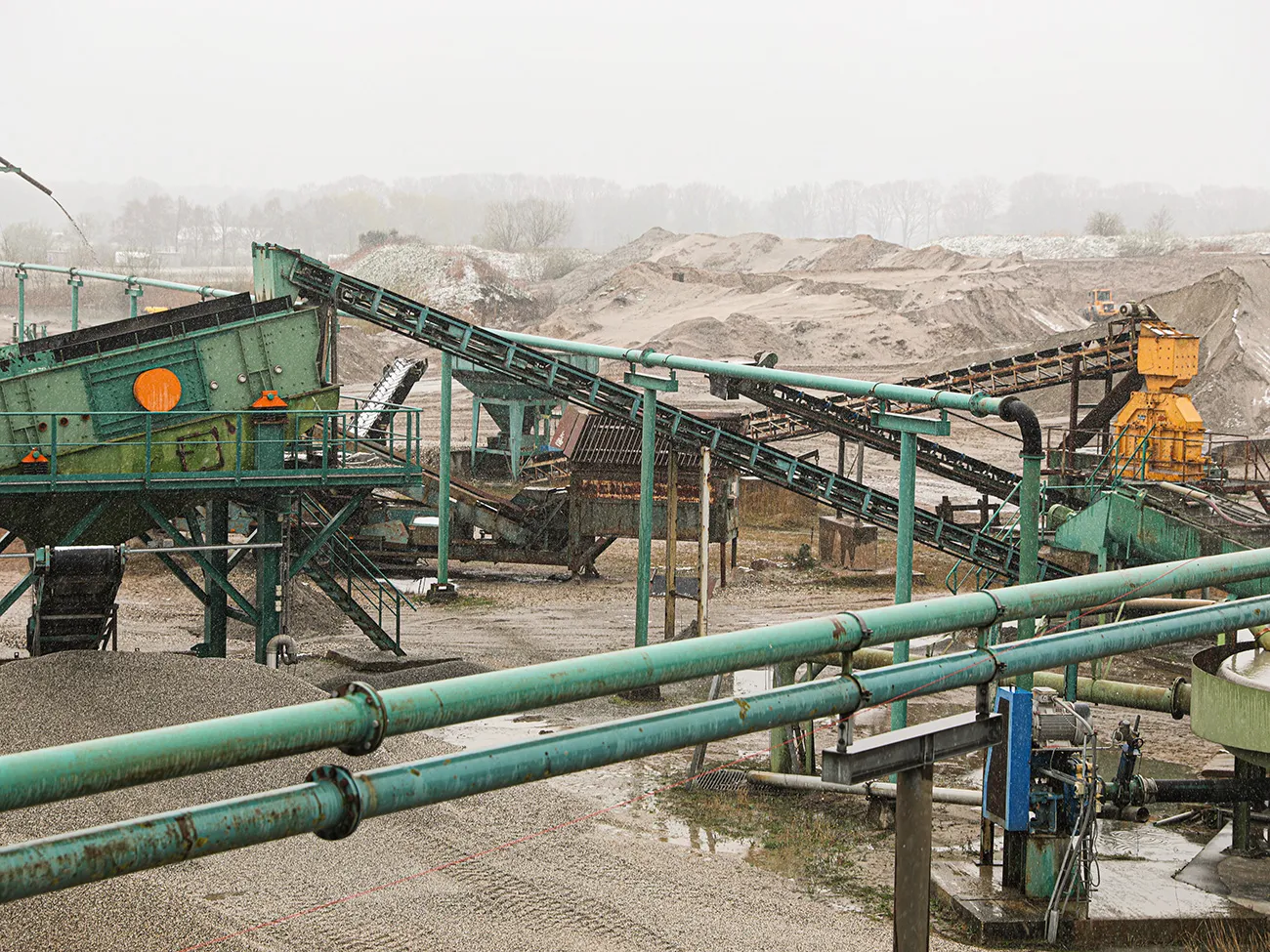
Founded in 1969, Reko Raalte comprises several departments that are closely interconnected. “We are active in earthmoving, soil remediation, transport, waste containers, demolition and asbestos removal. We have our own sand quarry, where we screen, wash and separate aggregates, and we can also screen materials and crush rubble on site using mobile equipment,” says Lourens Riemens, controller at Reko Raalte. “We also operate a waste drop-off centre for rubble, construction and demolition waste, commercial waste, asbestos, household waste and green waste, among other materials.”
Metacom
The family business is run by the second generation, while the third generation is already working in the company too. “Our company is characterised not only by its flat structure, but also by its focus on digitalisation,” says Riemens. “It is embraced throughout the organisation, and has been for many years. We took our first steps towards streamlining internal processes twelve years ago. At the time, the road construction department was already using VanMeijel’s estimating software, but the financial administration was handled in a different package, while the weighbridge, container administration and planning were connected to yet another application. In other words, we had three different systems that did not communicate with one another. VanMeijel knew this could be done more efficiently. Metacom, its ERP system, can also handle planning and financial administration. This meant VanMeijel could offer us a complete system with all the ‘ingredients’ we needed. We were the first company to go live with the system, which we are still using to our full satisfaction.”
Taking digitalisation further, step by step
In recent years, Reko Raalte began to feel the urge to make further changes. “You hear a lot of ‘talk’ in the market about going paperless, and we thought it sounded like a good idea too,” says Riemens. “With so many departments and so much overlap, it is no easy task. The grass always seems greener on the other side, so we also held discussions with another provider, as well as VanMeijel. In the end, we concluded that our long-standing IT provider was still the best choice.” Over the past year and a half, Reko Raalte has made significant progress in digitalising its processes. “We divided the work into several phases. We started by digitalising time registration and our employees’ internal processes, with the exception of our drivers. Together with VanMeijel and a small group of employees, we ran a test phase to identify the pain points. These were resolved before we gradually increased the number of users. By early 2021, everyone was up and running, and within a few weeks we were able to phase out the paperwork.”
Paper is outdated
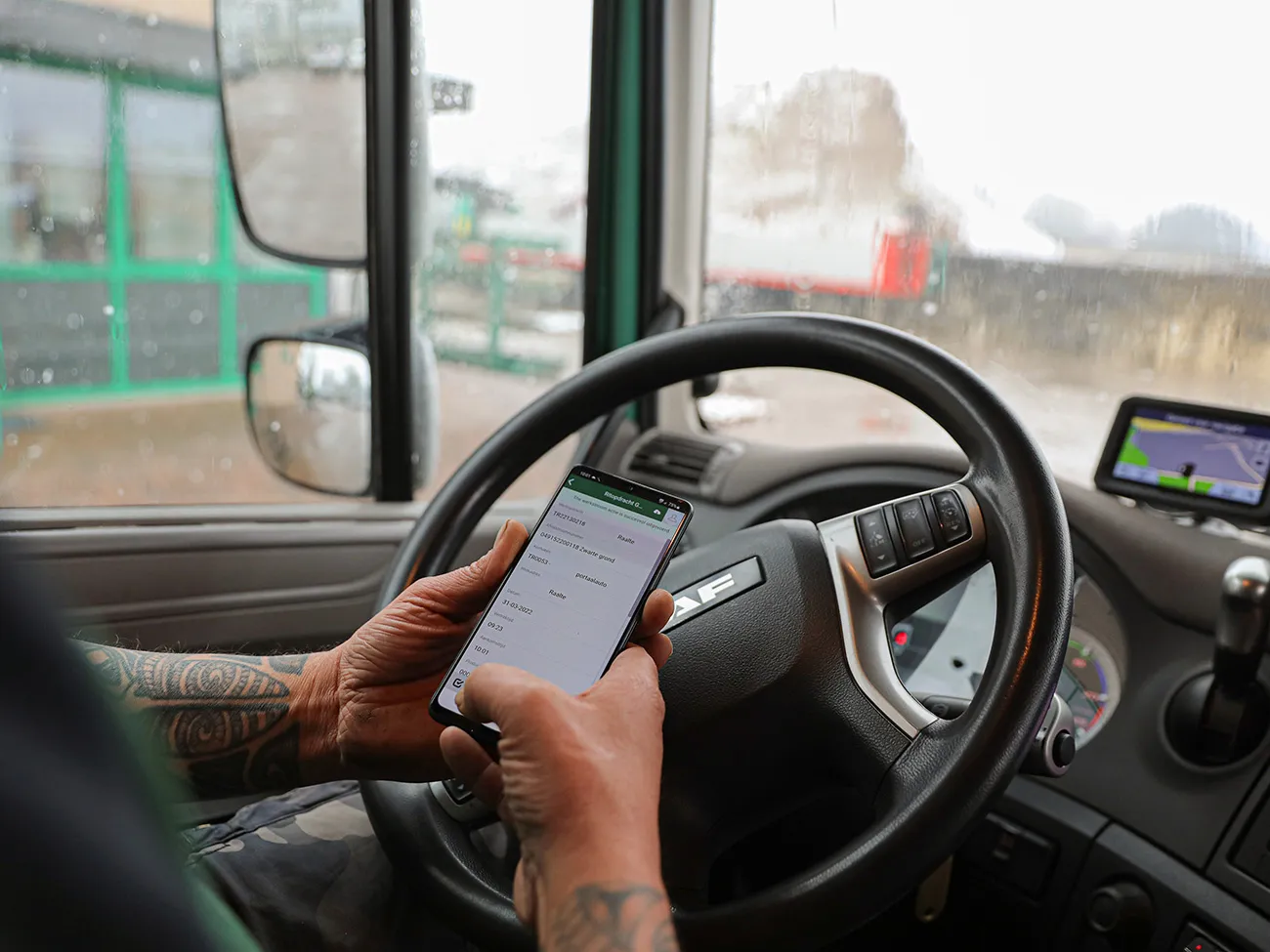
According to Riemens, the initial move to digital processes went fairly smoothly. “The next step was to enable our drivers to work paperlessly. Previously, a driver would take a pile of paperwork with them. More paperwork would be handed over en route and at the weighbridge, and the driver then had to record their hours as well. We chose to separate these steps digitally: an app for time reporting, work orders and automatic weighing at our site in Raalte. Drivers no longer need to get out of their lorries. What is more, the weighing data is immediately visible online and, once approved, goes straight into the administration. Drivers and customers bringing in waste now receive the weighbridge ticket by email at the touch of a button. People were rather sceptical at first, but it turned out they much preferred this way of working. Planning, work orders, time registration, everything is handled digitally and goes straight into the administration. Working with paper really is outdated,” Riemens laughs.
Control notifications
Digitalising the waste containers brought a few more challenges, Riemens says. Reko Raalte needs to know where its more than 500 containers are located. “In the past, this was done on paper and the location was entered manually, with the risk of errors. That is now a thing of the past. The system has even been refined to the point where, if a driver enters a container number and the container is not where it should be, an alert is generated automatically. This means a check takes place much earlier in the process, any errors can be corrected sooner and the invoice can be sent out more quickly.” And Reko Raalte continues to digitalise at pace. “The next step is to digitalise purchase and sales invoices. Taking these digitalisation projects step by step makes them much easier to manage. It is also important to retain control, test new applications with a small group and then bring others on board. That is absolutely essential for user acceptance.”
Question about this story? Ask your question
Keep following this
Get an email when a new story is published. No account needed.
- ThemeMaking use of textiles and other waste streams
- SubjectNews







