Transporting waste is not without risk
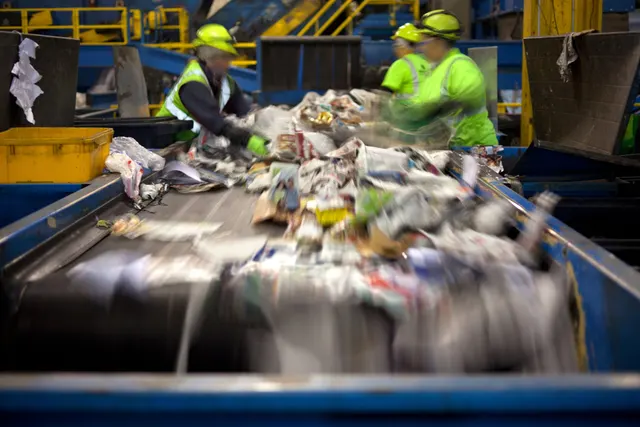
Everything changes. The value of waste is no exception. Decades ago, everything associated with waste was seen as a cost. Since then, not only has the terminology evolved, but, above all, so has the way waste is valued. The closer to the source, the lower or more negative its value. But in fact, we now speak only of by-products. The various subsequent stages in the treatment of these by-products create a chain of added value. Recycling therefore adds value. However, recycling activities involve large volumes, logistics and a great deal of transport. These come with a wide range of risks. Real-life cases make that abundantly clear.
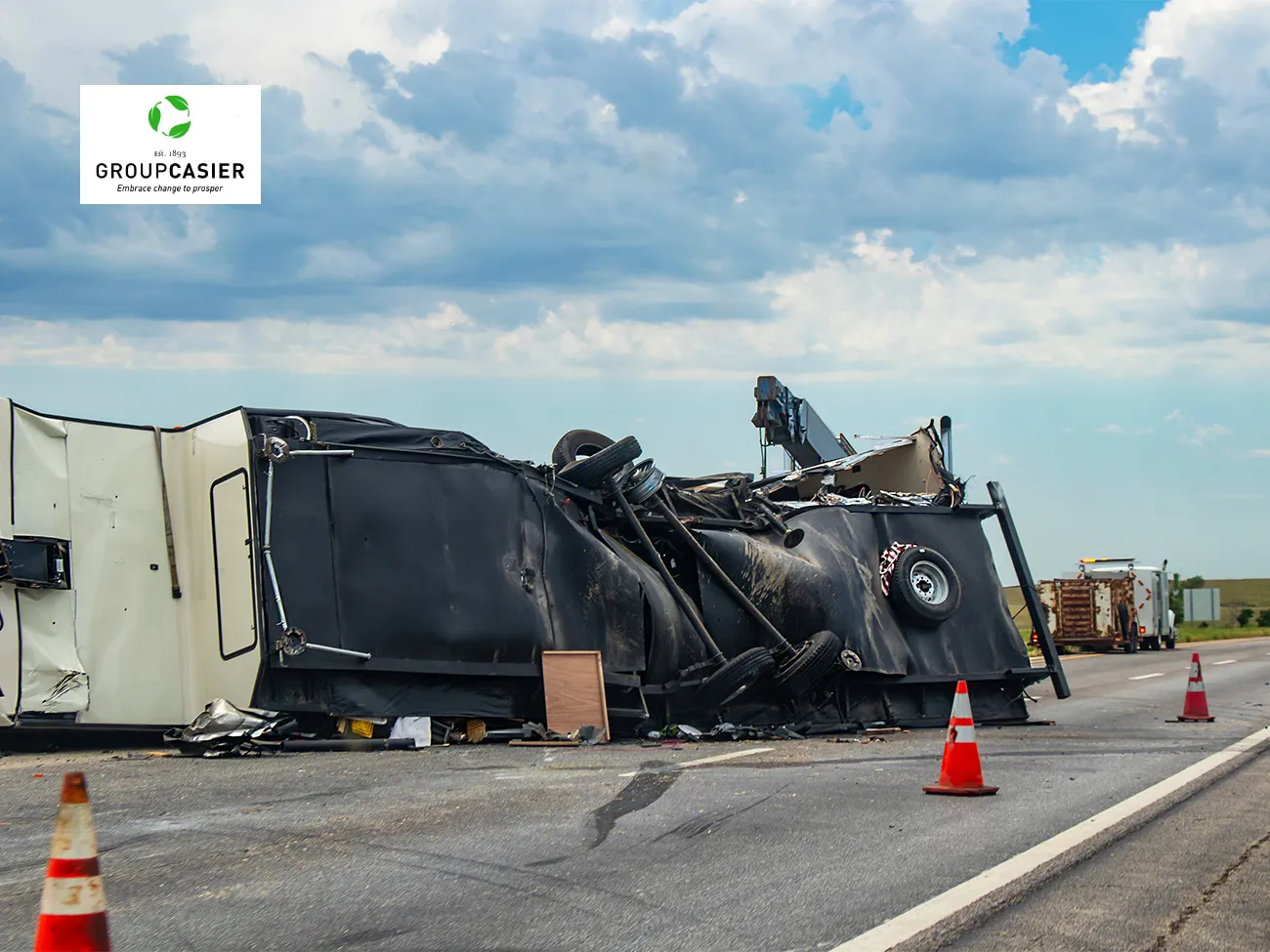
The scenario that is easiest to picture is a road accident involving a load that may be toxic and has no commercial value in itself. On a motorway, a collision causes a semi-trailer to jack-knife into other vehicles. The load is damaged and leaks out of the trailer. There are injuries, several other vehicles are damaged by the jack-knifed trailer, and the load is scattered across the wreckage and the road surface. The compulsory third-party motor insurance will of course cover a substantial part of the damage: the injuries, the damage to the other vehicles and the clean-up of the load that spilled onto the road from the trailer … Less obvious is what happens to the tractor unit and trailer, which are no longer roadworthy. If the policy provides for it, recovery costs may be covered by the truck’s comprehensive insurance. However, the police will almost always order the initial recovery. This brings us to the fate of the load. The truck’s third-party insurer will cover only the costs incurred to prevent further leakage (immediate measures to prevent imminent damage). Other costs, such as transloading, temporary storage, quarantine, repatriation and possibly destruction, are borne by the party with an interest in the cargo (in the case of own-account transport) or the carrier (in the case of transport for hire or reward).
The swelling containers
A biogas plant operator needs to start a new bacterial culture in its reactors. It orders three containers of activated sludge to be transported by road. The transport is carried out by a third party. The containers have to be transferred en route and spend a short time in a transit area. Within a few days, the containers swell, with their side walls and roofs bulging out completely. The likely cause is clear: the bacteria have remained active, as expected, but the gas produced has been unable to escape. When a door panel on one of the containers is opened, the high pressure causes an explosion, seriously injuring the person involved. An industrial, explosion-proof cutting tool has to be brought in for further investigation and to make the site safe. The containers are cut open, as are the flexibags used to transport the activated sludge. In this case, the load has some commercial value, albeit limited, but someone has been injured and the incident has incurred substantial costs: temporarily isolating the containers, making the situation safe by cutting them open, damage to the 20 ft containers, removing the load … There is an interesting debate to be had about who should be held responsible for the incident, when it ultimately emerges that an oversized flexibag and an unsuitable degassing valve were chosen for this transport. Here too, the costs are initially charged to … the party with an interest in the cargo.
The role of transport insurance
The solution in both examples is, of course, transport insurance. But whether we are talking about the carrier’s liability (under the CMR Convention) or the risk borne by the party with an interest in the cargo, the question of the goods’ value arises in either case. For the insurer, this is the basis for assessing the loss and reimbursing the costs. If the goods have insufficient, no or negative value, you need to agree sufficient additional cover with the insurer for all these costs. Transport insurance is therefore highly relevant to the transport of waste, by-products and recyclates, and requires a sound assessment of the risks.
Question about this story? Ask your question
Keep following this
Get an email when a new story is published. No account needed.
- SubjectTransport & logistics