












The updated Antwerp Declaration and its importance for the recycling industry
Text Valérie CouplezImage iStock
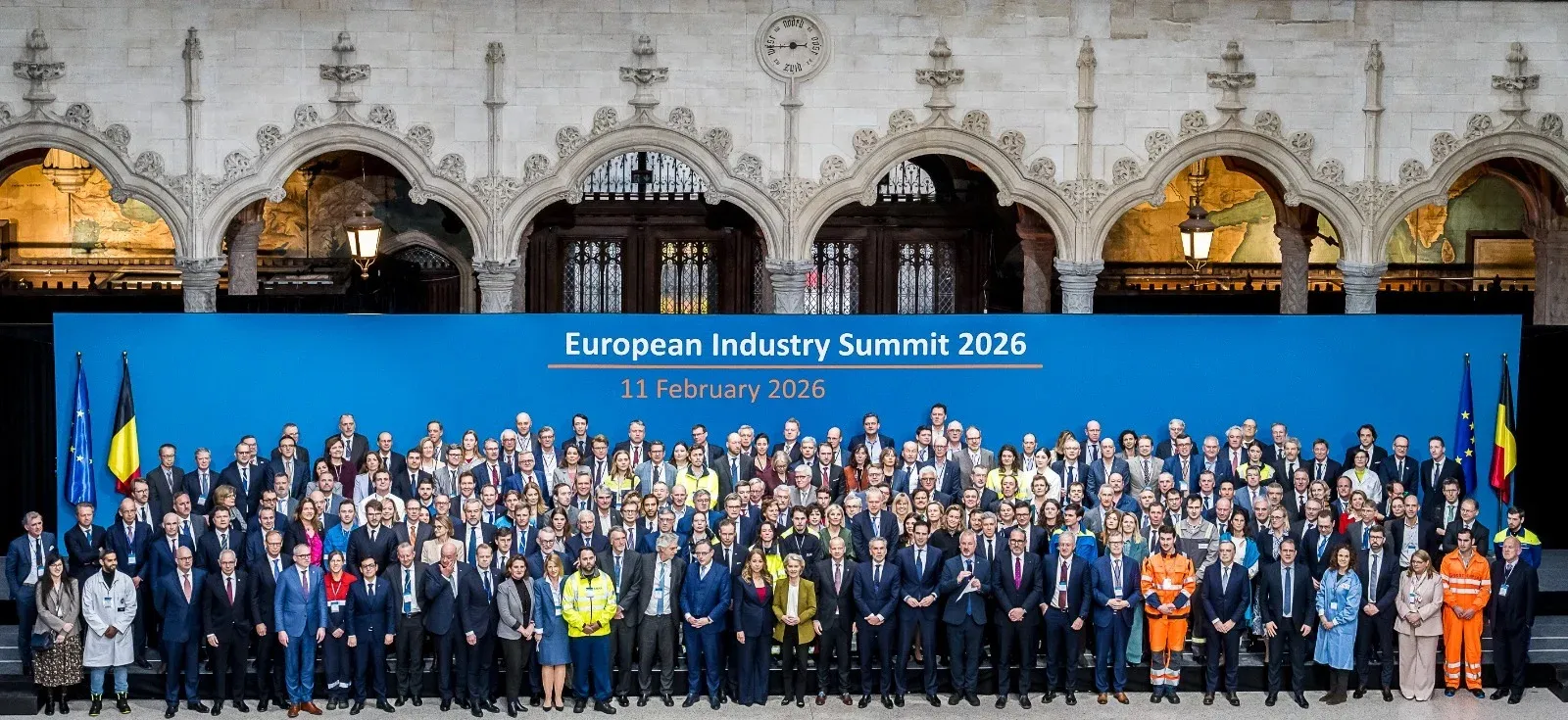
In February 2024, European industry called for measures to strengthen its competitiveness. The call for help did not fall on deaf ears, but despite plenty of goodwill, firm, concrete action failed to materialise. In February, on the eve of the European summit in Alden Biesen, industry therefore sharpened its tone. Not with a second Antwerp Declaration, but with an updated one calling for lower energy and carbon costs, support for fair global trade, improved access to finance and a procurement policy that favours European products.
The core argument made by the business community behind the Antwerp Declaration is clear: there can be no resilient, secure or strong Europe without a strong European industry. The current geopolitical shocks must be an opportunity for Europe. Change is here to stay. Nostalgia will not solve our problems or our structural dependencies. Global competition is relentless. European citizens want high-quality jobs in Europe for future generations. SMEs, the backbone of Europe’s industrial and business fabric, are struggling everywhere. European industries and businesses face persistently high energy and carbon costs, as well as unfair trade practices. The pace at which facilities are closing and jobs are being lost in vital sectors is unprecedented. The Draghi report has not been implemented. The situation is worse than a year ago, and the next five years will be the most challenging for European industry in many decades. The Letta report on the single market highlighted its fragmentation, which is the first obstacle to overcome.
Industry’s demands
Europe’s industrial leaders are calling for measures that reflect the urgency felt in times of crisis. Measures once considered impossible were taken to overcome the COVID-19 crisis. We need the same approach to industrial competitiveness: moving from diagnosis to implementation, and from plans to results, with one goal only, to save our industry. Not next year, not next week, but today. According to the Antwerp Declaration monitoring report, around 83% of the KPIs monitored for the EU have shown no significant improvement. Electricity prices in Europe remain higher than in competing countries. Carbon costs are unique to Europe, and the system is designed to make them rise year after year. China aims to add the equivalent of an entirely new high-tech sector to its economy over the next decade and will decarbonise industry at a rapid pace. The United States continues to pursue an assertive industrial strategy, as well as far-reaching trade measures to revive manufacturing across the country. Although the situation is critical, the outcome is not inevitable. We can overcome this if we turn the Clean Industrial Deal into results that are felt on the factory floor in 2026. We are calling for bold measures in three key areas:
- Reduce energy and CO2 costs. Energy costs in Europe are simply too high to compete, and are determined not only by commodity prices but also by regulatory levies.
- Support fair global trade and improve access to finance. Free trade agreements and other types of agreements must secure vital supplies for industry, open up access to new markets and boost exports. The EU must consider all policy tools to tackle unfair competition and ensure a truly level playing field for EU industries, both in domestic and international markets, including protection against carbon leakage.
- Be proud to buy products made in Europe. Lead by example through public procurement and EU-backed initiatives by private buyers. Enable consumers, both businesses and individuals, to choose climate-neutral and circular products, based on transparent product and environmental carbon footprints, and in doing so support high-quality jobs in Europe.
What does this mean for recycling?
What should we take away from this for recycling? As a sector, don’t we need higher carbon costs to make the difference with virgin materials? Perhaps, but there is also much here that we can welcome as a sector. Lower energy costs, for example, could help us compete with ultra-cheap virgin materials and recyclate from other parts of the world. Above all, though, we should welcome the focus on ‘made in Europe’. That is recycling through and through. You cannot source raw materials much more locally than from waste produced here, from which we make useful raw materials and products. It is fully circular and already has a lower carbon cost. Buying European should also boost demand for European recyclate and help close the door to raw materials that travel around the world before being used here. The Antwerp Declaration also calls for a genuinely unified single market across Europe. And although regulation is important today for guaranteeing the quality of recyclate, a uniform waste policy across the entire European Union would greatly simplify administrative procedures. In other words, delivering on the Antwerp Declaration also means building a more competitive, resilient recycling industry.
Question about this story? Ask your question
Keep following this
Get an email when a new story is published. No account needed.
- SubjectNews







