Que sais-je?
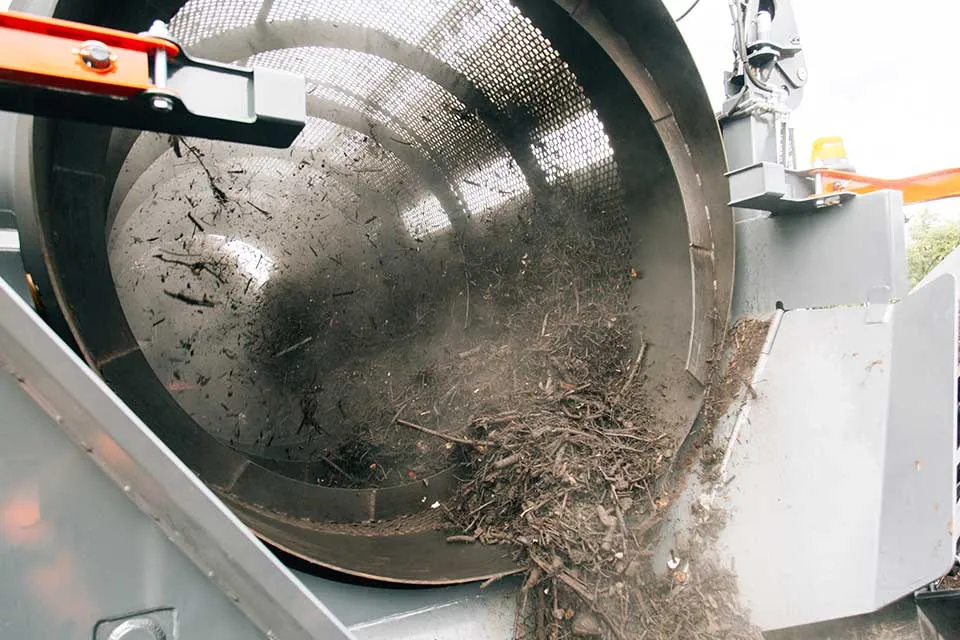
Rest assured, you have not accidentally picked up the Belgian edition of RecyclePro. Que sais-je?, or “what do I know?”, was the motto of the 16th-century philosopher Michel de Montaigne. “Self-examination gives you insight into how to act in accordance with your own nature”: this was practical wisdom rather than some grand philosophical truth, and one of the views that earned him great respect.
What do we really know about the Circular Economy? What do we need to do to achieve a fully circular economy? And is the Circular Economy a utopia, or is it genuinely within reach? These questions are now occupying many people around the world, whether out of concern or in the course of their work, but in any case with great passion.
I see the Circular Economy as the equivalent of perpetual cosmic balance, a kind of Yin Yang, if you like. In the drive to create a better life for all, the industrial revolution has ensured that a large proportion of the world’s population has a roof over its head, can holiday in a warm country and owns a mobile phone. At the time, it was impossible to foresee the immeasurable damage this would cause to the planetary balance of our Earth. In the years ahead, therefore, we will need to make additional efforts to restore the balance across all ecosystems on our planet, Earth.
Today, the Circular Economy is still wrongly associated primarily with “waste and recycling”. Although this is a misconception, it is certainly understandable, and is due in no small part to the waste and recycling sector itself. At the same time, recycling, as the longest-established rung on the R-ladder, also shows where the Circular Economy is falling short and offers a starting point for action.
The theoretical approach, with its target pathways, environmental cost indicator (MKI) calculations, Transition Agendas, Moonshots and Roadmaps, must be translated into practical implementation scenarios in the very short term, with achievable, measurable targets for the entire value chain.
The Netherlands’ circularity goals for raw materials, Narrow the loop, Slow the loop, Close the loop and Substitution, require performance at product-group level that contributes value to achieving a fully circular economy by 2050. The knowledge and experience built up by the waste and recycling industry will therefore be an indispensable link in product-group strategies. Whereas recycling companies were once only allowed to collect waste outside, at the back of a company’s production site, in recent years their advisers have already become involved in production processes to reduce and sort waste, and enable it to be reused. The next step is to involve them in the design phase, too, so they can rethink products and help ensure that secondary raw materials are used, or that recyclable and reusable materials are specified.
Naturally, it can feel “scary” to let a recycling company look at your design process, and a marketer will not be pleased when a raw materials specialist points out that the materials used in a product do not actually contribute to its reusability or recyclability. Accepting this paradigm shift will no doubt prompt plenty of debate, but in my view it is indispensable.
I would like to end with an inspiring quote: “The value of life lies not in its length, but in what you do with it.” Let this inspire you, too, to focus on doing the right things.
Question about this story? Ask your question
Keep following this
Get an email when a new story is published. No account needed.
- ThemeCircular construction and demolition
- SubjectThe pen