












Taking on administrative bloat
Text Valérie CouplezImage iStock
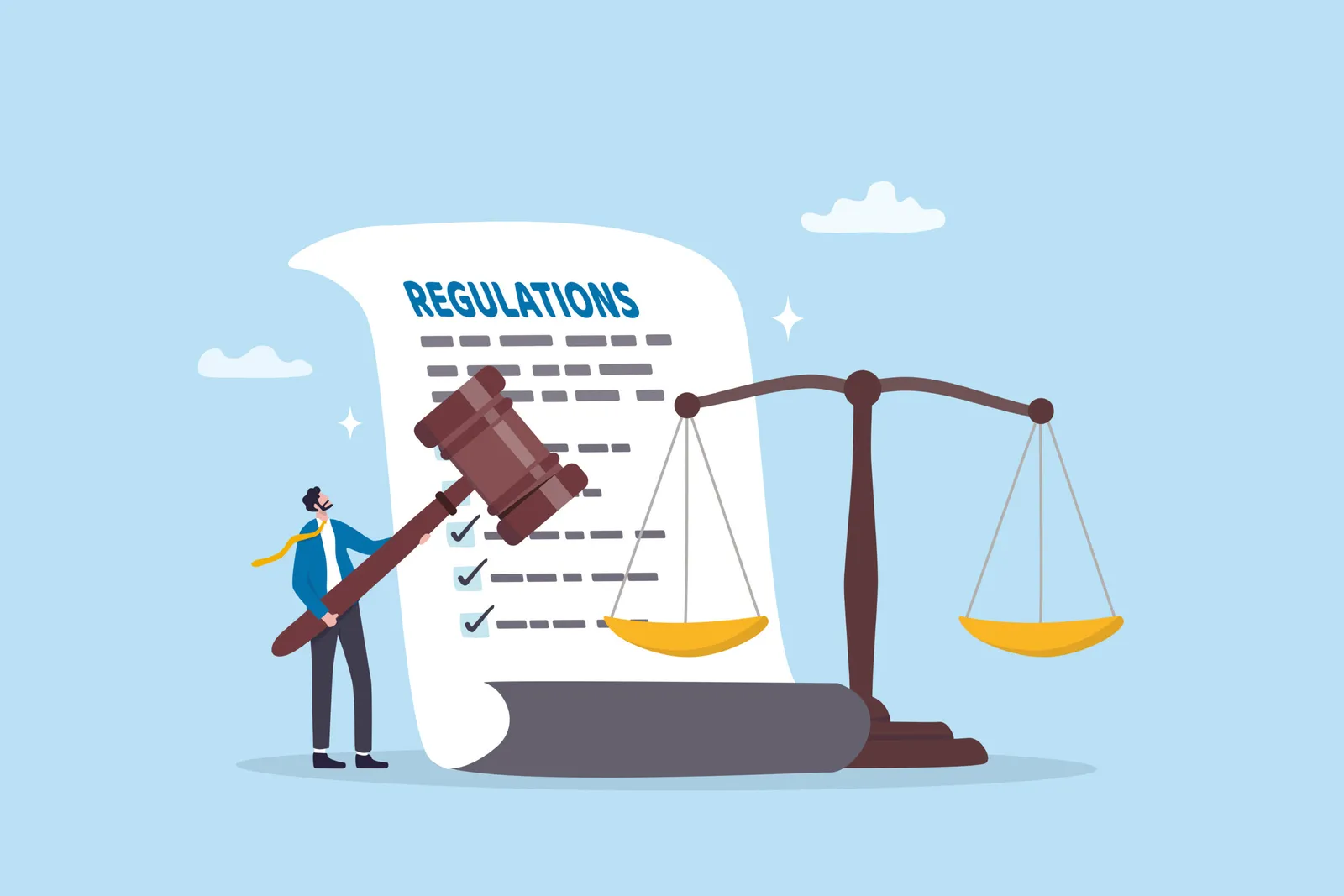
Nobody likes stepping on the scales, usually for fear that the needle has moved further to the right again. For regulatory authorities, that does not seem to be a possibility but a certainty. Legislation just keeps piling up. With its new initiative Wetwatchers.be, Vlaamse Ondernemers, a partnership between 21 employer and sector organisations, is stepping up the fight against this administrative burden. To start with, it has identified 25 unnecessary laws and rules. It is now up to the Flemish government to take action.
“Reducing the regulatory burden gives businesses room to breathe. Yet we continue to see the opposite happening: a record number of new rules is added every year. This regulatory zeal is holding back productivity growth and undermining businesses’ competitiveness. We asked businesses which laws and rules are causing them the most difficulty today. It is now up to the Flemish government to actually repeal or amend these first 25 proposals. Through Wetwatchers, we will continue to monitor throughout the entire legislative term whether the Flemish government is making progress in the fight against overregulation,” says Vlaamse Ondernemers.
List of 25 proposals
- The WetWatchers.be website features an initial selection of 25 laws and rules that are currently causing the most difficulty for businesses in Flanders. The list covers laws and rules across various areas of Flemish government responsibility, affecting a wide range of businesses in numerous sectors. Vlaamse Ondernemers is calling on the Flemish government to repeal or amend these 25 proposals. Here are some of the laws being targeted:
- Raw material declarations: these enable waste to be reused in production. Because the Vlarema rules are more restrictive than the European framework directive, they apply only to specific materials, producers and applications. Removing this restriction would allow more waste to be used as a raw material. Article 36 of the Materials Decree provides a sound legal basis for this.
- In recent years, we have seen public funds flow to organisations whose primary aim is to use those funds to bring legal proceedings against the very same government. At a time when permitting procedures are difficult and costly, the government should not be indirectly facilitating this financially.
- Conflicting advice undermines the smooth granting of permits. For example, the Department of Agriculture and Fisheries now also provides advice on permits outside agricultural areas, which makes no sense. We are calling for fewer advisory bodies and for their remits to be clearly defined.
- Increasing the recycling and reuse of construction and demolition waste does not necessarily require more extensive source separation. It can also be achieved through high-quality sorting at recycling companies. Moreover, the proposed exemptions are too limited in practice. Any amendment would, however, require strict enforcement of achievable output requirements for each waste stream.
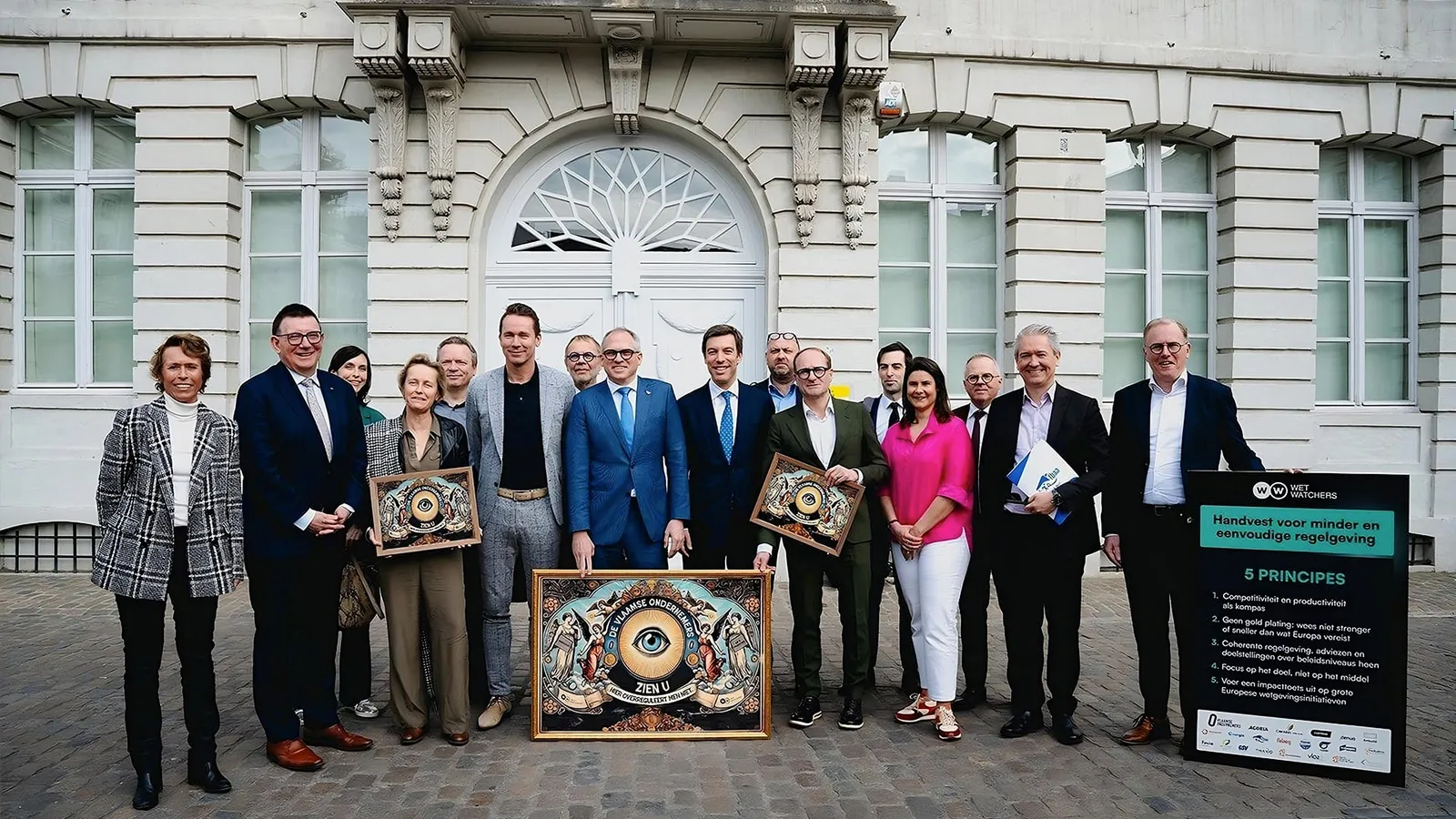
Charter for simpler, lighter regulation
Vlaamse Ondernemers is also putting forward five basic principles through its Charter for simpler, lighter regulation, which every new rule should meet.
- Competitiveness and productivity as guiding principles: every measure affecting businesses must support competitiveness and/or productivity;
- No gold-plating: Flanders should not impose stricter rules or move faster than required by Europe;
- Consistent regulations, advice and objectives across levels of government: no more government bodies contradicting one another;
- Focus on the goal, not the means: adopt a technology-neutral approach;
- Carry out an impact assessment of major European legislative initiatives: this will enable Flanders to have a greater influence and anticipate European legislation more effectively.
Flemish government action plan
Through the WetWatchers campaign, Vlaamse Ondernemers will monitor throughout the entire legislative term whether the Flemish government is making progress in the fight against overregulation. During a meeting with a delegation from Vlaamse Ondernemers, the government has already said that it shares concerns about the administrative burden and will take forward the proposals. The government also intends to present its own action plan soon.
Question about this story? Ask your question
Keep following this
Get an email when a new story is published. No account needed.
- SubjectNews







