












Sludge as a source of energy and recovered raw materials
Text Saar BenteinImage Aquafin
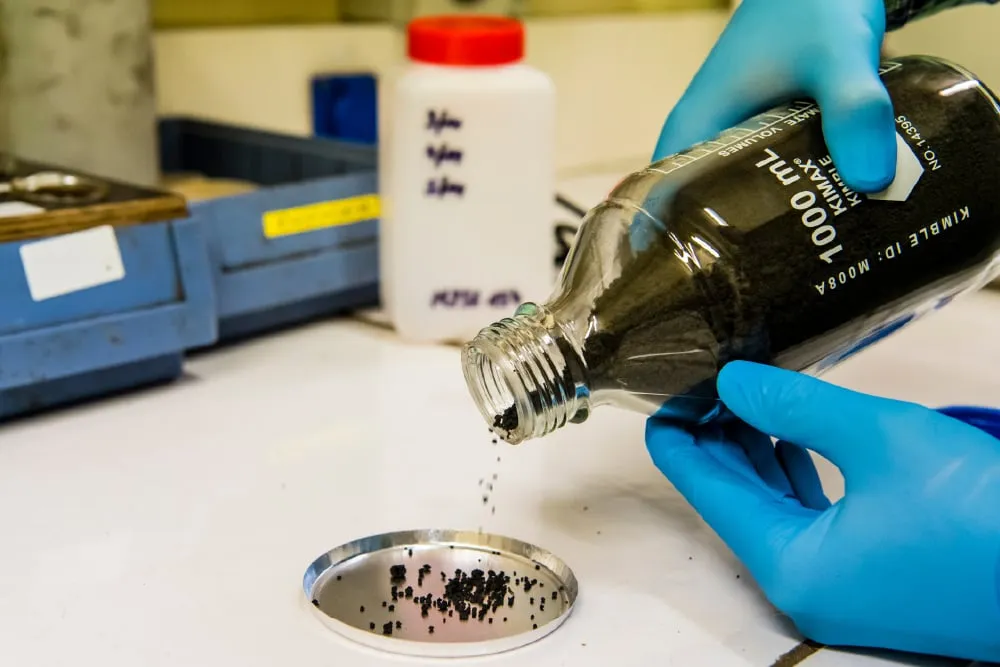
With 329 wastewater treatment plants across Flanders, Aquafin treats our domestic wastewater. The organic sludge produced at wastewater treatment plants is dried and used as fuel. In line with its strategic objectives to eliminate fossil fuels from sludge treatment processes, Aquafin is replacing the three existing sludge dryers in Deurne, Leuven and Houthalen with brand-new CO2-neutral facilities in Roeselare and Beringen, which use waste heat from the nearby Mirom and Bionerga waste incinerators.
All wastewater treatment plants (WWTPs) with biological treatment produce 350,000 tonnes of biomass, or sludge, each year. The sludge mass is kept at a constant level. Net growth, or excess sludge, is removed for treatment. Drying sewage sludge is an intermediate step in the treatment process. The drier the sludge, the fewer journeys are needed to transport it for final treatment. This is beneficial both economically and environmentally. Aquafin currently has three sludge drying plants: in Deurne, Houthalen and Leuven. After dewatering, one third of the sludge from all WWTPs is dried at these sites. The remaining two thirds is sent directly to the mono-incinerator in Brugge or the co-incinerator Sleco in Deurne.
No fossil fuels
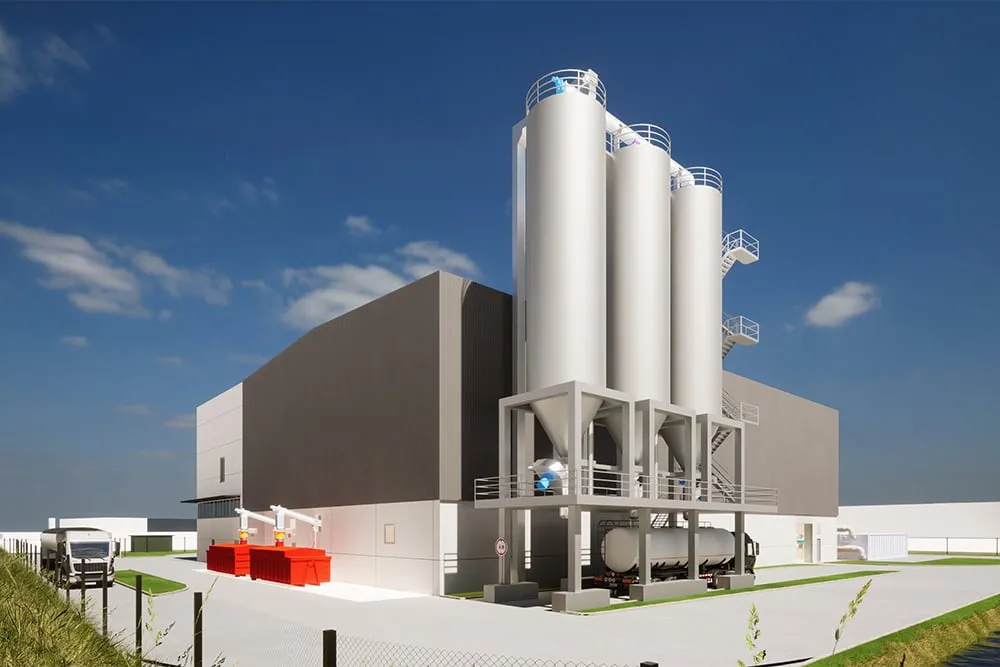
In 2018, Aquafin set strategic objectives to make its sludge treatment more efficient, environmentally friendly and sustainable. A key first action is to gain greater control over the final treatment of sludge. “This is a crucial factor,” says Ivo Verschueren, Account Manager Industry at Aquafin. “If a problem arises at the final treatment facility, there is nowhere else to send it. A few years ago, many tonnes of sludge ended up in the maritime canal in the Netherlands. To protect our environment, we want to prevent this by reducing our dependence on the final treatment facility.” Aquafin therefore aims to control 66% of the end product by 2026 and 100% by 2040. Aquafin is also progressively eliminating fossil fuels from sludge treatment and maximising the recovery of energy and raw materials. “We want to dry one third of the sludge using low-grade waste heat,” says Verschueren. To achieve these objectives, Aquafin is building two new sludge dryers in Roeselare and Beringen that run on low-grade waste heat. “We have signed contracts to take waste heat from waste management intermunicipal association Mirom for the dryer in Roeselare and from Biostoom for the dryer in Beringen.” The dried sludge will be valorised at the planned sludge mono-incineration plant by producing high-pressure steam. A turbine converts this high-pressure steam into low-pressure steam and electricity. The low-pressure steam will be fed into ArcelorMittal’s steam network, where it will be used entirely in its processes to replace fossil fuels. The electricity will be used on site at the sludge mono-incineration plant. The three facilities are expected to be operational in 2027.
Phosphorus recovery
The construction of a sludge mono-incineration plant in the port of Gent opens the way to recovering phosphorus on a large scale from the flue gases. No other waste is added during mono-incineration. “Phosphorus is a finite resource. That is why recovering as much phosphorus as possible from waste is a key priority for us. Although research and pilot tests are still under way, we could succeed in replacing up to 18% of Flanders’ phosphorus imports with recycled phosphorus produced locally,” says Verschueren.
Optimised transport
With the three new facilities being built, in 2027 one third of the dewatered sludge will go to Sleco in Deurne, one third to the sludge mono-incineration plant in Gent and one third to the new sludge dryers in Roeselare and Beringen. “An optimal geographical spread was one of the criteria in the tenders. We limit the number of kilometres by organising sludge transport efficiently. Our process saves fossil fuels in three ways,” concludes Verschueren. “We use waste heat instead of natural gas, transport the dried sludge granules efficiently, and use them to produce steam and contribute to ArcelorMittal’s transition to greener operations.”
Question about this story? Ask your question
Keep following this
Get an email when a new story is published. No account needed.
- SubjectNews







