












Safe disposal of asbestos
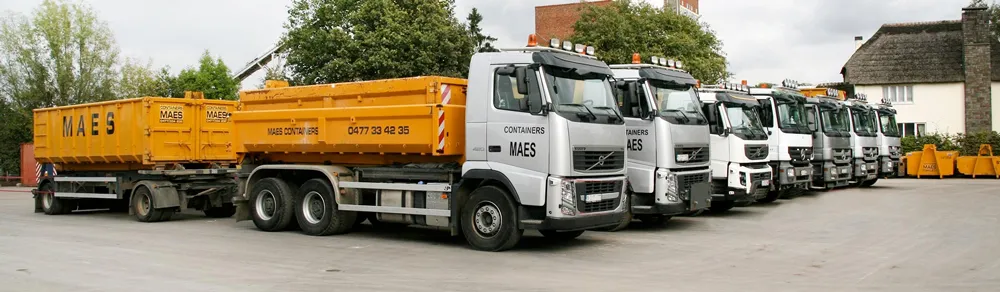
The use of asbestos has been banned since 1995. Unfortunately, buildings now being demolished that were built before the ban may contain asbestos. Container companies therefore also deal with it extensively. For Containers Maes, this amounts to almost 25,000 tonnes a year. “We always want to dispose of this material as safely and as quickly as possible at authorised landfill sites, but this is not always straightforward,” says sales director Roel Lemmens.
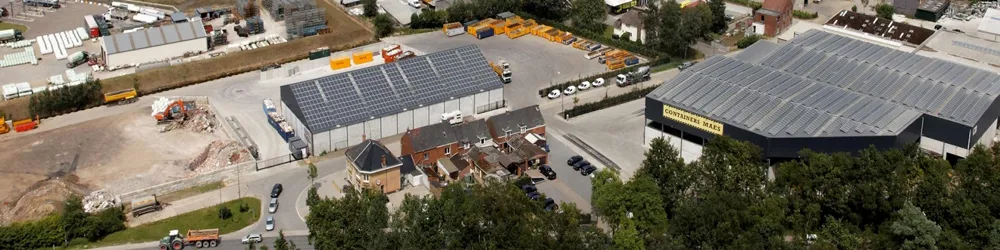
Since its establishment in 2003, Containers Maes has grown into one of the largest collectors and processors of construction and demolition waste. From seven branches in Tessenderlo (2), Vilvoorde, Tienen, Waremme, Geel and Herenthout, the company prepares waste for a second life. Alongside its flexible just-in-time supply of skips and wheelie bins, the Limburg-based growth company is making full use of its extensive expertise in selective waste processing. “Both large construction companies and smaller contractors or roofers turn to us for their construction and demolition waste. Using various techniques, we ensure that most of these materials can be reused,” Lemmens says.
Informing and raising awareness
One exception is asbestos, a material that, because of the risks it poses to people and the environment, can only be disposed of at authorised landfill sites. “We dispose of between 20,000 and 25,000 tonnes of asbestos a year, all bonded asbestos,” Lemmens says. Containers Maes employees therefore come into contact with it almost daily. Figuratively speaking. “Most deliveries are made correctly, in sealed big bags. This means our employees never come into direct contact with the material, and the impact on the environment is kept to a minimum. Our employees are trained to identify asbestos and take protective measures when necessary, but usually everything is done as it should be. This is the result of extensive awareness campaigns aimed at our customers. We do our best to inform them about how to handle asbestos. The common asbestos applications are well known, but we also try to warn them about less common uses. Contaminated materials in particular can still cause problems. If a barn with an asbestos roof burns down, an exception must be requested from OVAM for that waste. This administrative procedure causes delays because customers are unaware of it, even though the aim is to get the asbestos to an authorised landfill site as quickly as possible.”
Running up against landfill limits
Containers Maes faces more problems when disposing of asbestos. “In theory, Flanders has sufficient landfill capacity to dispose of all asbestos safely. But for practical reasons, each landfill site has a limit on the amount it can accept each day. We regularly run up against these limits. Our environmental permit also allows us to store only a limited quantity of asbestos temporarily at our sites. This means that sometimes we have to tell customers we cannot collect their skip. We raised this issue with OVAM because, as more asbestos is released under the Flemish Government’s asbestos phase-out plan, the situation will only become more pressing.” Lemmens says additional landfill capacity is therefore needed, either by increasing the daily intake or by authorising a new landfill site for asbestos. “A second challenge on the ground is logistics. With the closure of REMO (landfill site), local disposal is no longer possible, so we have to travel to Antwerp or West Flanders. It is also difficult to find an available landfill site in Wallonia.”
Question about this story? Ask your question
Companies in this story

Keep following this
Get an email when a new story is published. No account needed.
- ThemeCircular construction and demolition
- SubjectNews
- CompanyOVAM







