












Recycling more and better textiles
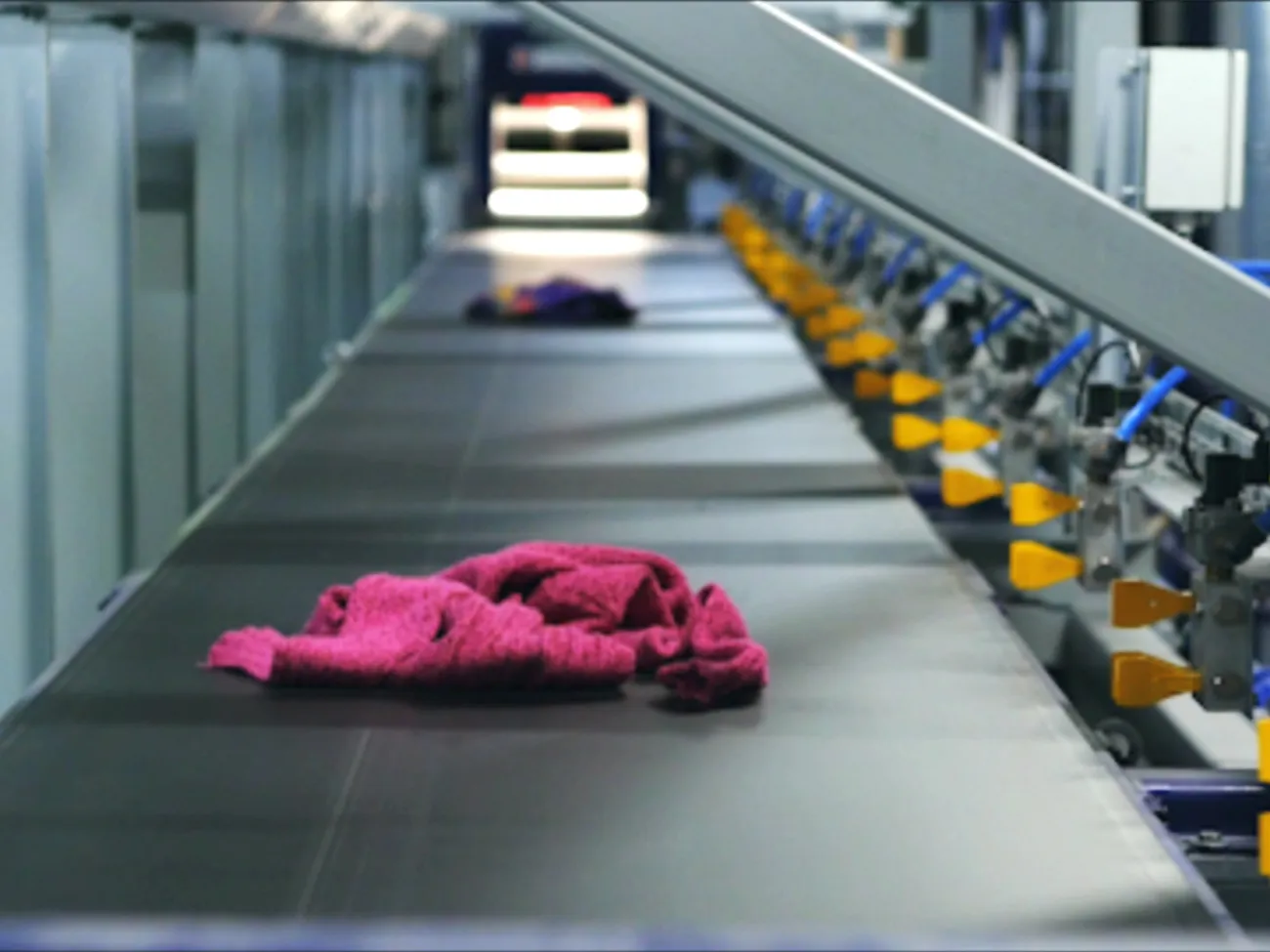
Across Europe, we produce 15 million tonnes of textile waste every year. Some of it can still be reused, while some can only be recycled. This is all linked to the fast fashion trend, which leads us to throw clothes away sooner while also having a negative impact on textile quality. To help companies recover more value from textile fibres, Valvan Baling Systems has developed Fibersort technology. Textile recycling companies can use it to identify and sort textiles according to fibre composition, colour and structure.
Valvan Baling Systems built its reputation on manufacturing balers for a wide range of applications. Building on this core expertise, the company from Menen began developing machinery for sorting second-hand clothing. “The success of our customers has enabled us to help several existing sorting facilities increase production or implement newer technology. In recent years, however, they have been faced with a mountain of used textiles, particularly the fraction that is no longer suitable for reuse. Today, 73% of textiles worldwide are still incinerated or landfilled. Automated sorting technology is what is needed to turn non-reusable clothing into valuable raw materials for recycling. That is why we developed Fibersort.” Maurits Vandeputte, innovation manager at Valvan Baling Systems, explains.
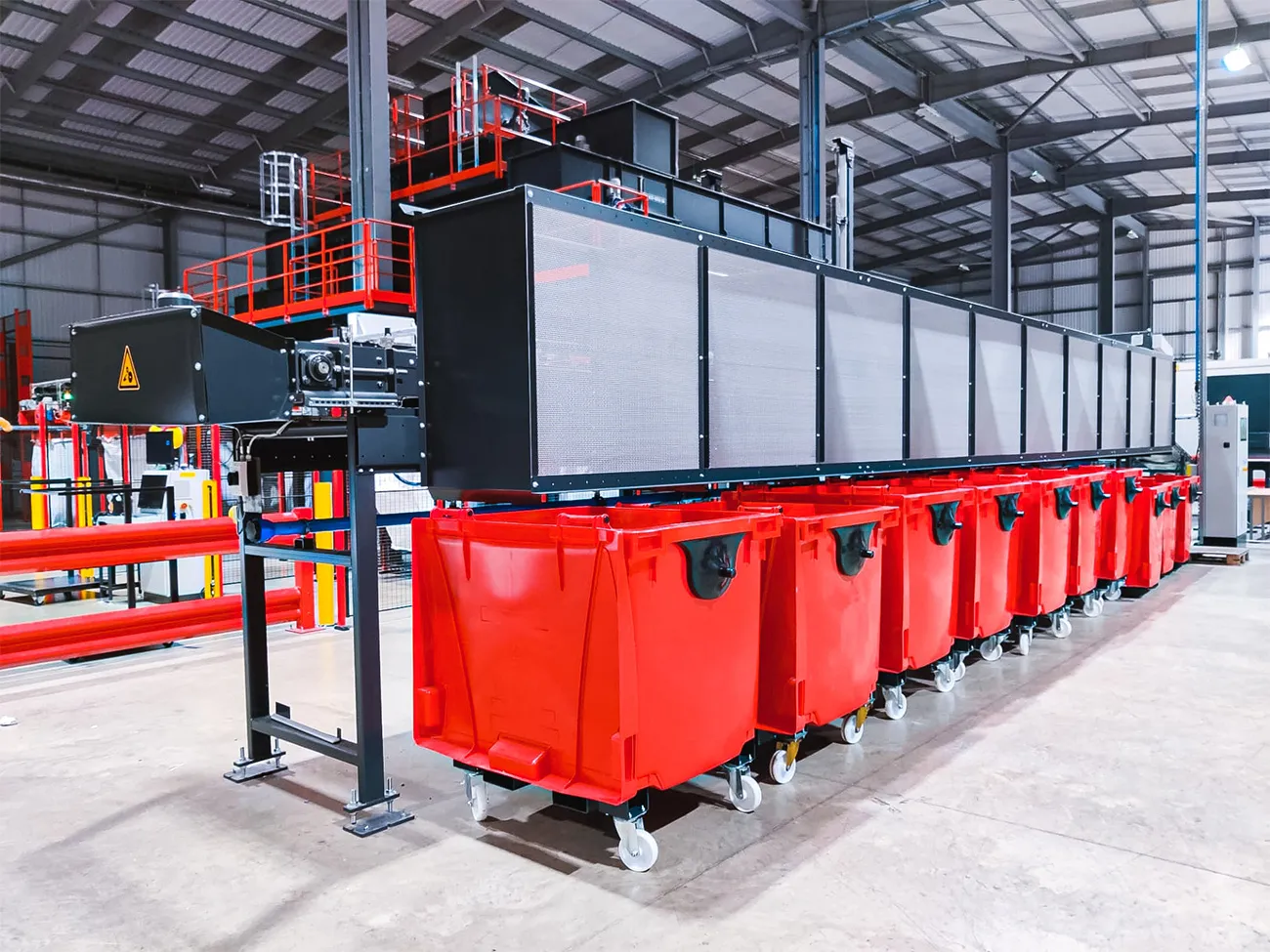
Identification and sorting by fibre type, colour and structure
Fibersort is a new technology that enables the recycling industry to identify and sort textiles according to fibre composition, colour and structure. The technology combines NIR (near-infrared) and RGB camera technology to identify fibre type, colour and structure respectively. “We have currently trained the system to recognise six fibre types: wool, cotton, polyester, viscose, acrylic and nylon. At the customer’s request, however, this can be extended to other fibre types. We then add these to the fibre library,” says Vandeputte. The accuracy of the Fibersort system depends on the information about fibre compositions available in that library. Mature, well-trained systems can achieve an accuracy of up to 95%. Colour detection works in two stages. First, textiles are distinguished according to whether they consist of one colour or several colours. A detailed analysis is then carried out on the items that are a single colour. Identifying the structure, whether woven or knitted, is important for sorting products according to the appropriate recycling processes.
Designed with productivity in mind
When developing Fibersort, Valvan Baling System focused on productivity in relation to the scale and degree of automation of textile recycling companies. The solution is available in several variants: manual, semi-automated, fully automated, or even fully integrated into a sorting plant. The scanner is at the heart of every system. A single manual Fibersort scanning table can process one textile item every five seconds. Capacity varies according to average weight. “We estimate that there are around three textile items per 1 kg, giving a capacity of about 240 kg/hour. Our semi-automated systems use a conveyor belt to feed items to the scanning tables. These are designed to process one textile item per second and can sort items into six to fifty categories. A person or robot feeds the machine one item at a time. Capacity can reach 1,200 kg/hour, but is actually limited to one item per second and depends on the specific weight of an item. We have already installed a fully automated system of this kind at Wieland Textiles, with a robotic picker handling the feed.”
A second life
Fibersort technology offers significant potential for recovering more value from textile fibres. But, like any technology, it also has its limitations. “For example, accuracy will decrease when a textile item is made from more than three different fibre types. Another important consideration is that the scanner can only examine the surface. It is also best if clothing is dry, as liquids can interfere with the spectrum analysis. But this promising technology is crucial to giving more materials a second life,” Vandeputte concludes.
Question about this story? Ask your question
Companies in this story

Keep following this
Get an email when a new story is published. No account needed.
- ThemeMaking use of textiles and other waste streams
- SubjectNews
- CompanyValvan







