












One year of Bodemkwaliteit.be: Flemish interest in soil quality is growing, 390,000 Flemish residents have consulted the soil contamination explorer, with remediation completed every 2 days in Flanders
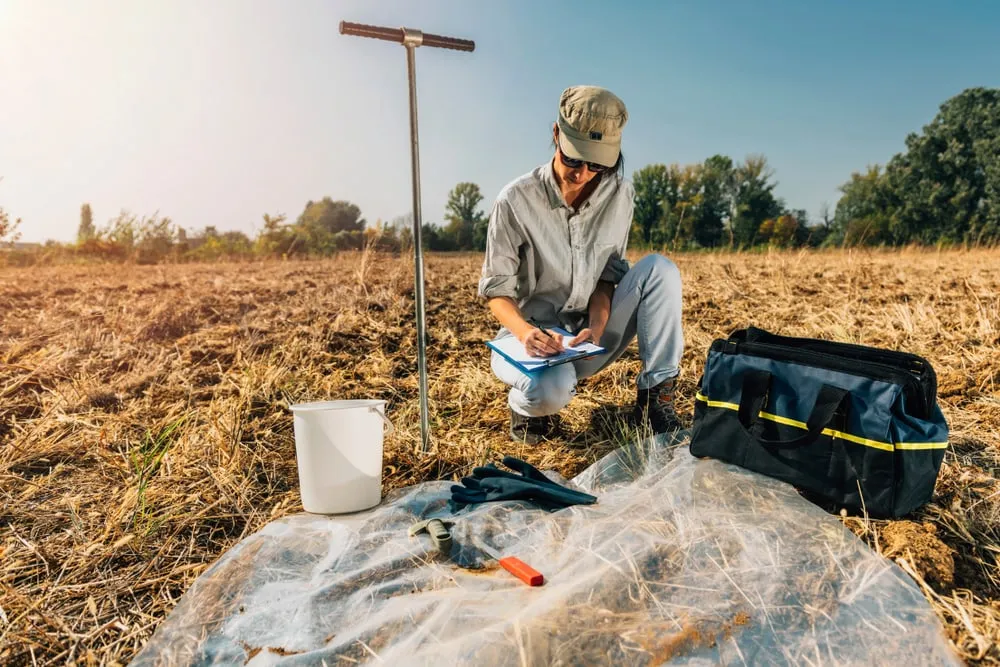
A year ago, the OVAM launched the website www.bodemkwaliteit.be. Through this new soil contamination explorer, the OVAM maps soil quality. The OVAM aims to identify contaminated land and remediate it where necessary. Since its launch, more than 390,000 Flemish residents have consulted the soil contamination explorer. Around 300 records are viewed each day on average, mainly in urban areas. In addition to cataloguing risk sites and making data available, the OVAM also coordinates soil investigations and remediation in Flanders. Over the past year, the OVAM completed 1,634 soil investigations, started 111 new remediation projects and completed 164 soil remediation projects.
World Soil Day
Today is World Soil Day, a chance to turn our attention to what is happening beneath our feet: in the soil. A year ago, the Public Waste Agency of Flanders (OVAM) began making more soil data available to every Flemish resident through the website bodemkwaliteit.be. Previous research had shown that people in Flanders wanted more information about soil contamination in their neighbourhood and across Flanders. The number of visits to the website shows that this is indeed the case. No fewer than 390,000 Flemish residents have already consulted the soil contamination explorer.
With the soil contamination explorer and soil contamination record available on bodemkwaliteit.be, the OVAM is taking an important step forward in making soil information accessible in Flanders. The soil contamination explorer provides a map-based spatial summary of known soil information. A soil contamination record is available for each plot and provides a clear summary of the information available for that plot. The record also contains general advice on soil care.
“We attach great importance to transparency and public access to environmental information, and are constantly looking at how we can make it available,” says Jan Verheyen, spokesperson for the OVAM. “We already shared soil information through the soil certificate, the woningpas, the overview of landfill sites and De Grote Grondvraag. With its successor, bodemkwaliteit.be, we have created a handy tool that brings all this information together and has clearly struck a chord with people in Flanders.”
Soil remediation completed every 2 days
Flanders’ rich industrial past has left its soil facing many challenges. When the Soil Decree was introduced in 1995, 85,000 risk sites were identified where potentially polluting activities may have taken place. Since then, 60% of these risk sites have been investigated and 4,843 sites have been remediated. Over the past year, 164 soil remediation projects were completed, 111 new remediation projects were started, and 1,298 exploratory and 336 descriptive soil investigations were completed. All this contributes to the goal of having remediation underway by 2036 for every priority historical case of soil contamination.
Environmental awareness is growing, but awareness of soil is lagging behind
Although concern for the environment is growing in Flanders, soil is often overlooked. An OVAM survey at the end of 2023 found that half of Flemish residents never stop to consider the quality of the soil in their neighbourhood. Yet healthy soil is important for clean drinking water, safe food, biodiversity and protection from extreme weather. The OVAM is also using campaigns to raise awareness of soil among people in Flanders.
What information is available on bodemkwaliteit.be?
Visit www.bodemkwaliteit.be to find soil information for any plot of land in Flanders. Depending on the situation, the following results may be shown:
- Green: soil is clean. The soil has been investigated and is fully compliant. No further action is needed.
- Yellow: soil is slightly contaminated. The soil is contaminated, but not seriously. No further action
is needed. - Red: soil is contaminated. The soil is seriously contaminated. Further investigation or remediation
is required. - Brown-grey: soil information is being checked. The test results for this plot are
being double-checked by the OVAM. - Hatched: potential risk site. A risk site is land on which polluting activities are or have been
carried out. An initial exploratory soil investigation is required. - White: no soil information. This plot is not a risk site. If it is properly looked after, no investigation
is needed. - Purple: information for owners only. This specific soil information is available only to the
- owners of this plot. Information about private individuals’ soil will be protected in this purple category
- in accordance with GDPR.
The OVAM is also continuing to invest in the tool, which will be expanded in stages. More data sources will be integrated into Bodemkwaliteit.be in the future, making it even easier for Flemish residents to find information about their own soil and the soil in their neighbourhood.
Een zakelijke vraag aan OVAM? Get in touch
Companies in this story

Keep following this
Get an email when a new story is published. No account needed.
- ThemeSafe and clean processing
- SubjectNews
- CompanyOVAM







