












Making shampoo from waste
Text Valérie CouplezImage Fille Roelants
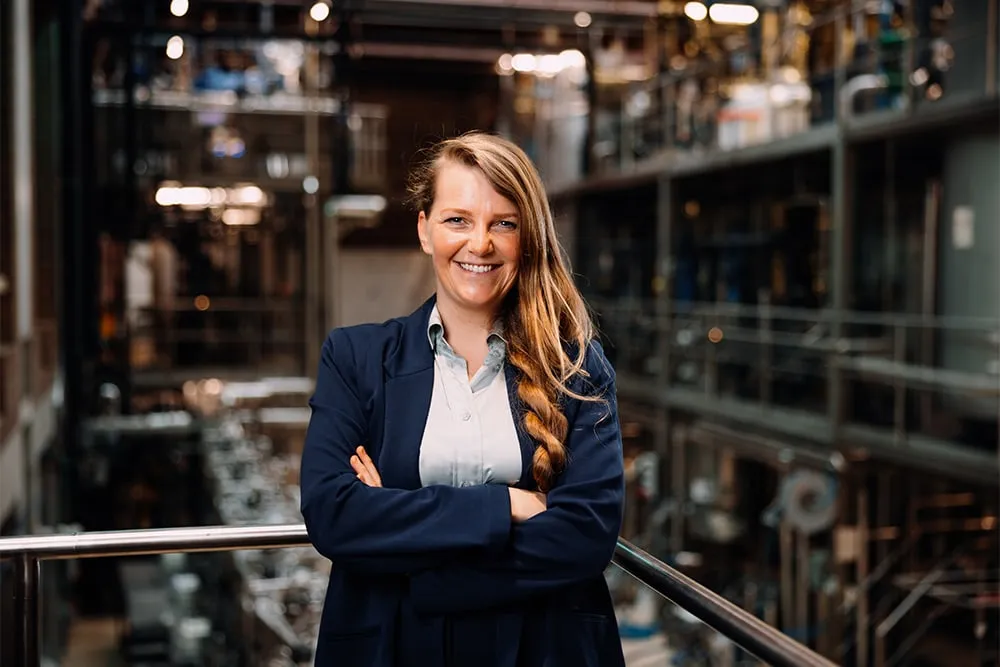
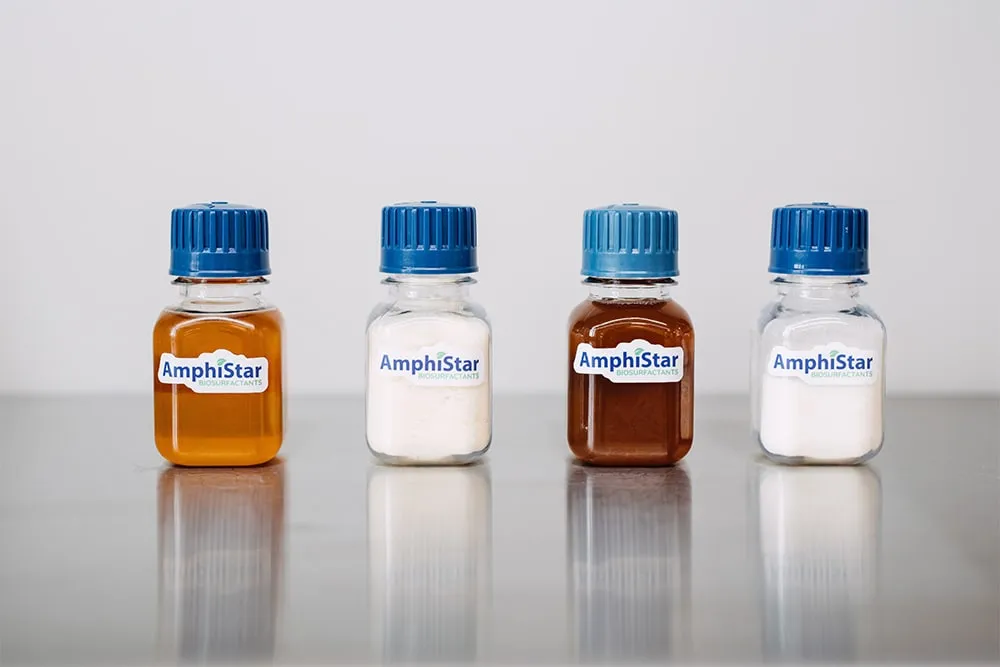
That, in a nutshell, is what AmphiStar can do and does. More precisely, the company produces surfactants, the basic building blocks of many products, from biological waste and residual materials. A recent funding round, in which the spin-off from Ghent University and the Bio Base Europe Pilot Plant raised €6 million, is intended to enable it to move beyond the laboratory scale, develop new ingredients for formulations commercially and draw up the blueprint for its future plant. There is plenty to do, then. We spoke to co-founder and COO Sophie Roelants.
A deep dive into the formulations of shampoo, toothpaste, paint, detergents, cleaning products, pesticides and even food would reveal synthetic surfactants. These are substances that reduce surface tension. For example, they prevent a layer of limescale forming on your glasses in the dishwasher, or stop grease remaining in your hair after washing. “Today, they are made from fossil feedstocks or palm oil,” Roelants explains. “Neither is sustainable, and the production process is too, as it requires high pressures and temperatures. Some are also difficult to break down in the environment.”
Cleaning products made from up to 97% food waste
Roelants and AmphiStar are therefore taking a resolutely different approach. Twenty years ago, a production process for a biosurfactant was developed at Ghent University (InBio.be). AmphiStar, as a spin-off, is now building on that work. Ecover has developed a limited edition of cleaning products, made with up to 97% recycled food waste, using AmphiStar biosurfactants among other ingredients. The collaboration shows that waste can be both a source of opportunity and a foundation for the future. “We have actually developed a technology platform for fermenting waste using yeasts, fungi or bacteria. These convert all kinds of waste-derived nutrients into surfactants. This takes place at low temperatures (30 to 37 °C) and pressures compared with chemical production processes. The only ‘new’ raw materials we add ourselves are water, although we are also trying to recover and reuse as much of it as possible, and acid or base to keep the pH of our process in check.” The remaining fraction can then be sent for anaerobic digestion to produce green electricity.
Scaling up and optimising further
The collaboration with Ecover proved to be the perfect way to put AmphiStar and its sustainable technology on the map. “The aim now is to roll this out commercially and scale it up, so that other customers come to us too.” Initially, the focus is on the homecare and personal care markets. “But really, the sky is the limit,” Roelants adds. “Surfactants are used in so many products.” AmphiStar will initially continue to operate from the Bio Base Europe Pilot Plant. “We plan to have our own ‘launch plant’ up and running within two years, allowing us to increase capacity to 1,000 tonnes. This is crucial if we are to compete on price. Conventional fossil-based refining processes have been developed over recent decades to run as efficiently as possible. Biorefining still has some way to go. We are constantly refining the engineering of our process to lower costs and develop better microorganisms. With our own launch plant, we will already be at an acceptable price point. The commercial plant is then due to follow in 2028.”
It has to happen
Roelants is not yet revealing where exactly the plant will be located. “Talks are under way. Ideally, we would look at co-location, with us and the producer of the relevant waste stream on the same site, to keep our transport footprint small too.” Until then, she hopes legislation and marketing will continue to raise awareness among producers and consumers that things need to change and can change. “It really has to happen. And not just with AmphiStar: there is so much movement in biotechnology at the moment. Fossil feedstocks are polluting and finite. We have to look for alternatives anyway. By seizing this momentum now, we can become more sustainable without compromising the comfort and luxury we are all used to,” she concludes.
Question about this story? Ask your question
Keep following this
Get an email when a new story is published. No account needed.
- SubjectNews







