












Innovative collection, processing and separation of grout slurry
Text Roel van GilsImage Bonneveld
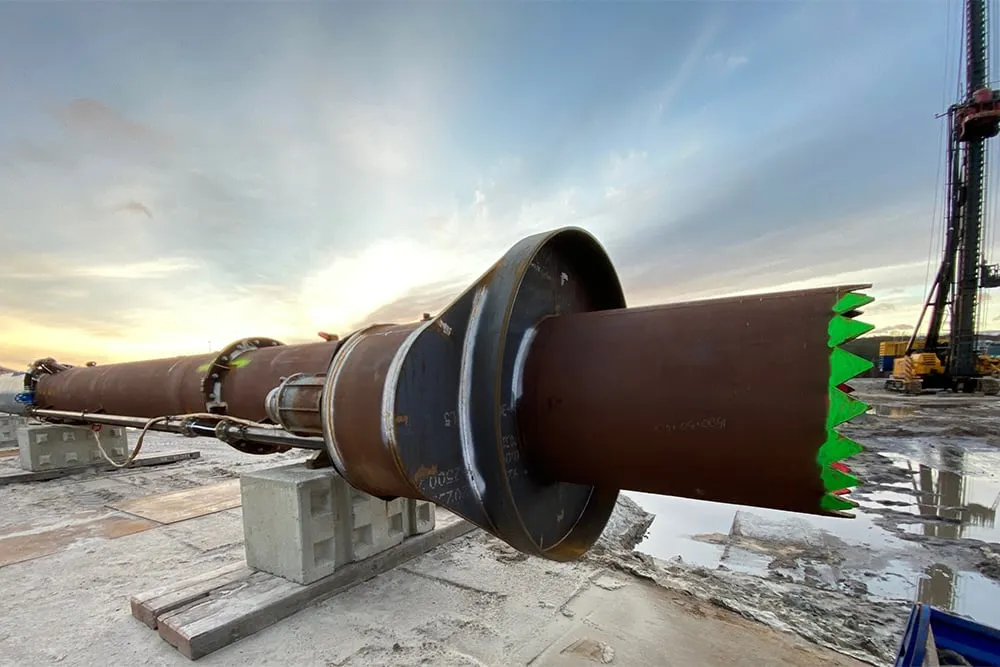
In the north of the Netherlands, Franki Grondtechnieken and Bonneveld Aannemingsbedrijf are jointly constructing a challenging 52 by 49 m, 20 m-deep construction pit. A total of 380 steel foundation piles are being drilled from a pontoon. What makes this civil engineering project particularly special is that the grout slurry produced is collected underwater in an inventive way, processed and separated back into its original raw materials for reuse.
Franki uses grout slurry when drilling the piles. According to Jan Leen van der Vlies, operations director at Franki Grondtechnieken, there are several reasons for this. “First, it increases the water pressure in the soil beneath the drill bit, improving soil displacement. The slurry also provides the necessary cooling for the drilling process and helps seal the drilled wall. It also carries the loosened material up to the surface, and finally, the composition of the slurry can be used to monitor the drilling process.”
Preventing grout spoil
When a bored foundation pile is installed, around 7 to 10 m³ of grout spoil, a mixture of cement, sand and water, is generally left on the bottom. “That would be disastrous for the bond between the underwater concrete and the piles in this construction pit,” says Harry van der Heiden, director of Bonneveld Aannemingsbedrijf. “The piles have to be completely clean to prevent leaks or worse.” He calculates that after installing the 380 piles, around 3,000 m³ of grout spoil would be left in the pit. “That is why we came up with a solution: first, an oversized 22 m casing is placed on the bottom of the pit, then pushed and worked 1.5 m into the ground to seal it. There is a pump chamber at the bottom with a heavy-duty pump that pumps around 80 to 100 m3 of grout slurry while a foundation pile is drilled to depth through the casing. This means no grout spoil is left behind, because all the residue is pumped away.”
Recycling technology
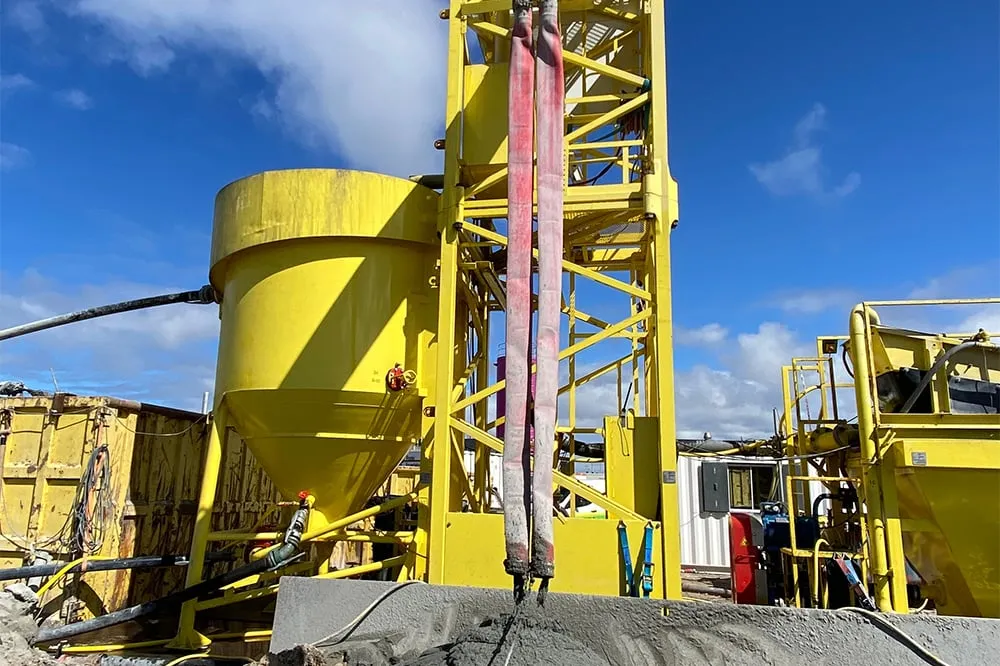
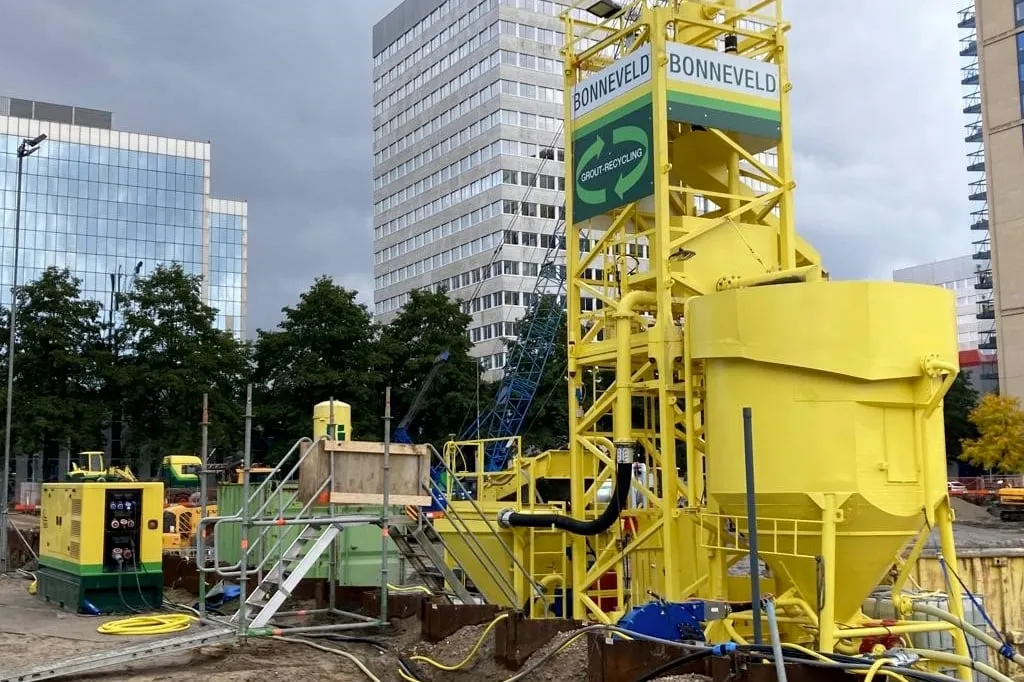
Bonneveld has added a further step to the grout plant. Van der Heiden explains: “Using a unique method, we can separate the high flow rate of 80 to 100 m³/hour of grout slurry per pile back into its original raw materials. This means 6 m³ of purified sand can be left on site, while 73 to 93 m³ of water is returned to the construction pit. The grout recycling plant therefore significantly reduces the number of transport movements to and from the site. This gives us control over the entire process. The only material left behind is 1 m³ of concentrated grout mixture. We are currently investigating whether it is of sufficiently high quality to be reused as a lubricant in the process. The signs are certainly promising.” The way the construction pit is built here, combined with the use of the grout recycling plant, saves a huge amount of material, time and emissions.
Question about this story? Ask your question
Keep following this
Get an email when a new story is published. No account needed.
- SubjectNews







