












Grid congestion: how can we avoid excessively long queues?
Text Valérie CouplezImage iStock
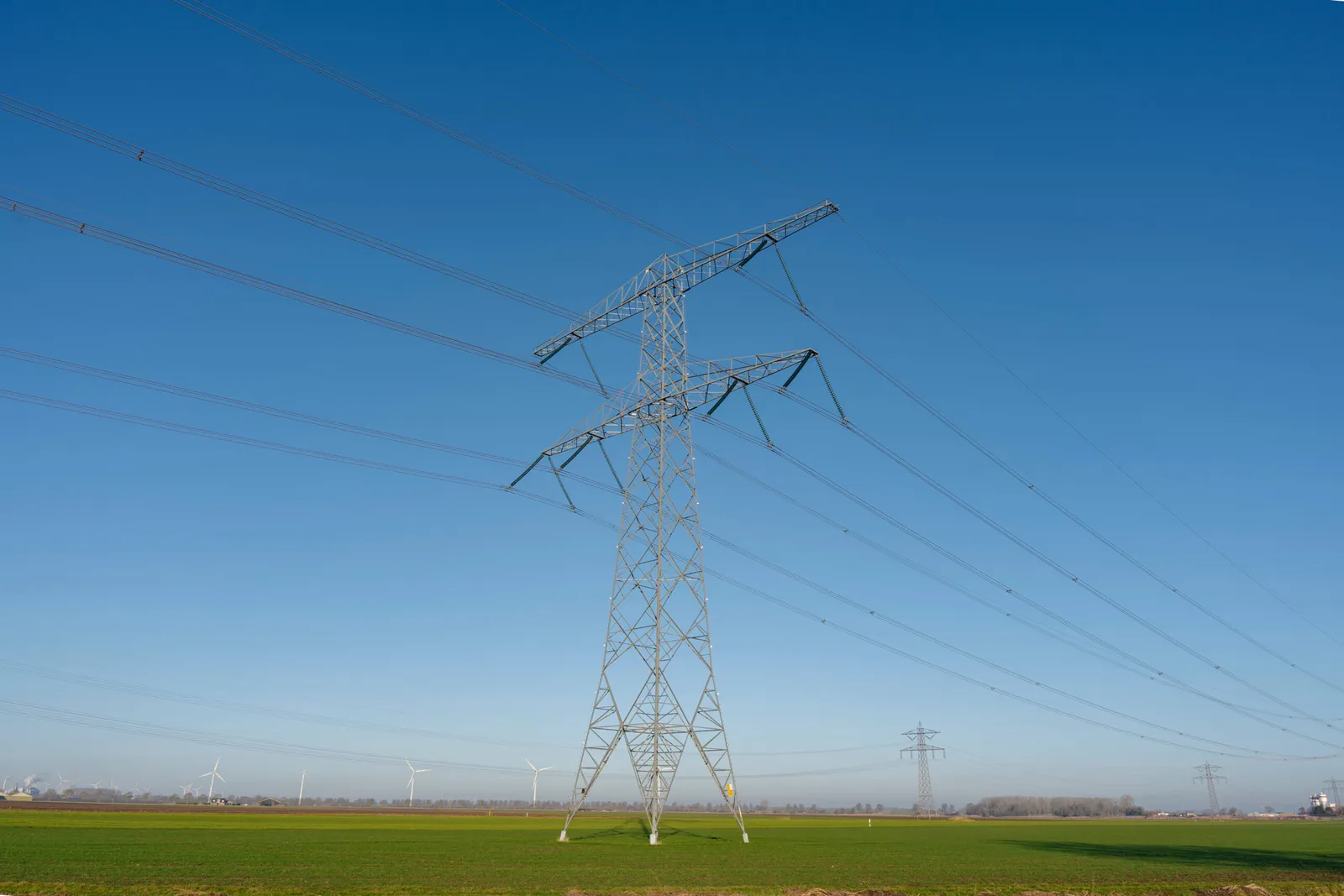
As businesses electrify and new technologies emerge, pressure on electricity grids in Flanders is mounting. The surge in applications means companies have to wait longer for a connection. A flexible connection is a solution for most applicants while they wait for investment. But the need to be able to make choices about who joins the queue is becoming increasingly clear.
Every grid component, such as a line, cable or transformer, has a maximum capacity: the amount of electricity it can safely handle. Anyone wishing to connect to the grid submits an application to the transmission system operator (large industrial customers) or distribution system operator (smaller industrial customers). Applicants may be generators injecting electricity, consumers drawing electricity, or both. The grid operator calculates whether there is enough capacity for all the requested flows to pass through every grid component at all times, including in the event of a fault. If this cannot be guaranteed, the grid is said to be congested. This can be compared to traffic congestion on a motorway. But electricity cannot queue, so everything must be calculated in advance to prevent overloading. Grid congestion is therefore initially the result of a calculation: we look at what is actually flowing through a component and add the volumes that must be taken into account, so that the component remains safe in future too.
Four to six times more applications
As a result, several locations in Flanders now have insufficient capacity at the connection point or on the high-voltage grid, meaning that connections are only possible with some form of flexibility. Since March last year, the number of applications from businesses for electricity connections has risen sharply. Compared with five years ago, Fluvius is receiving four times as many applications, and Elia six times as many. On the high-voltage grid, the number of study applications for batteries is currently ten times greater than the number of batteries already installed. In recent years, study applications for data centres have totalled 70 TWh, while Belgium's total electricity consumption is around 80 TWh. The same trend can also be seen on high-voltage grids abroad.
Three strands needed: investment, flexibility and choices
Elia expects that many of these applications will not lead to concrete projects, but they nevertheless lengthen the queue, significantly increasing lead times for more mature projects. Alongside investment and flexibility, Elia and Fluvius are therefore calling on policymakers to make clear choices in the public interest. Elia and Fluvius stress that a structural approach to congestion always requires cooperation between grid operators, government, regulators and industry, and a combination of three strands:
- Investment: continue investing heavily in expanding and strengthening the grid;
- Flexibility: use flexible connections and market mechanisms to free up more capacity and manage peaks;
- Choices in the public interest: clear policy choices and priorities are needed to allocate available capacity to projects that contribute most to Flemish and wider societal objectives.
Choices in the public interest
Grid operators are stepping up investment, with a peak in the coming years. By 2030, Elia will have tripled its investment in Flanders (excluding offshore). Fluvius is providing an additional €400 million a year, on top of the €700 million already planned, to strengthen the distribution grid proactively. Since such investments take time, flexible connections will remain part of the approach. They give businesses a temporary solution, allowing them to access the grid sooner. Given the large volumes of reserved capacity, stricter queue management is essential. Applying maturity criteria and the ‘use it on time or lose it’ principle prevents speculative or immature applications from blocking the queue and occupying valuable capacity. In addition, capacity allocation requires choices in the public interest based on the ‘swimming lanes’ principle. This allows different categories of users, such as industry, batteries, data centres and renewable energy, to use a share of grid capacity. The current ‘first come, first served’ principle means that the grid is not always used optimally to meet the societal objectives for which it was originally built.
Cooperation is essential
Elia and Fluvius stress that a future-proof, viable and affordable electricity system is only possible through close cooperation between grid operators, industry, policymakers and regulators. In recent months, all parties, from regulators to ministerial cabinets and policymakers, have taken valuable initiatives and concrete steps in this regard. Accelerating the energy transition calls for considerable resilience and a focus on finding solutions, with customers in mind. Only by investing, encouraging flexibility and making clear choices at the same time can Flanders deliver the energy transition without stifling economic growth.
Question about this story? Ask your question
Keep following this
Get an email when a new story is published. No account needed.
- ThemeCircular business under changing regulations
- SubjectNews







