












Fost Plus recycled almost 95% of all household packaging in 2020
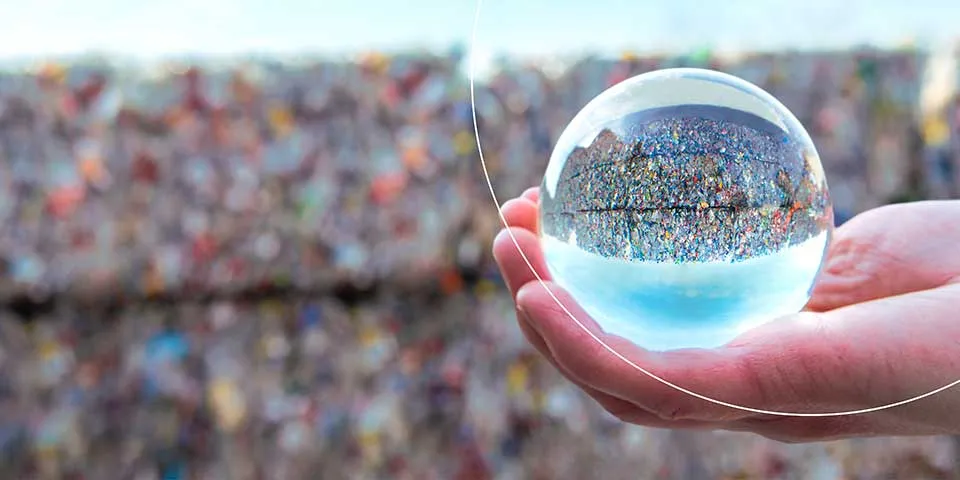
Belgium outperforms Europe in plastic recycling thanks to the further roll-out of the New Blue Bag.
Of the more than 805,000 tonnes of packaging placed on the Belgian market in 2020, 94.9% was recycled. Recycling rates for household packaging waste have therefore risen for the fifth year in a row. This is mainly due to the expansion of the sorting guidelines for plastic packaging. Thanks to the New Blue Bag, we collect an average of 8 kg more PMD per resident for recycling. This has raised the recycling rate for plastic packaging to 51%, five years ahead of the European target of 50%. We are also recycling more and more packaging in Belgium.
“Belgium is Europe’s leading country for recycling household packaging,” says Patrick Laevers, managing director of Fost Plus, which is responsible for the household packaging recycling chain. “Thanks to standardised systems and simple sorting guidelines, no other country collects more packaging waste than we do. And we also ensure it is actually recycled. By keeping as much of this recycling as possible in Belgium, we also guarantee the availability of high-quality recyclate for the local manufacturing industry. This is how we are building a local circular economy for packaging.”
More PMD and glass recycled
In 2020, we recycled 32.2 kg of glass, 16.9 kg of paper and cardboard packaging and 15.8 kg of PMD per resident. The tonnage of plastic and glass packaging recycled therefore rose compared with 2019, while recycling of paper and cardboard packaging remained virtually stable. The recycling rate for plastic packaging rose from 46% in 2019 to 51% in 2020. This means we have met an important target in Packaging Plan 2.0. Notably, Europe’s target of 50% plastic recycling does not apply until 2025.
Patrick Laevers explains: “In 2020, the expanded plastic collection scheme was rolled out to a further 900,000 residents, bringing the total to 4.1 million across 14 intermunicipal authorities. As a result, a significant additional quantity of packaging material is being collected separately for recycling. In addition, the intermunicipal authorities that had already been using the New Blue Bag for some time reached cruising speed. The average collection yield through the New Blue Bag is indeed 8 kg per resident higher than in intermunicipal authorities that have not yet introduced it.”
3,000 extra tonnes of PMD collected outside the home despite lockdown
Although we were able to leave home only to a limited extent, we reached a new milestone in out-of-home collection in 2020. The aim was to almost double the share of PMD collected outside the home between 2018 and 2023, to 26,000 tonnes. In 2020, the figure was 19,000 tonnes, or 3,000 tonnes more than the year before. This was mainly PMD collected at businesses.
Patrick Laevers: “The largest share of PMD comes from households. Just 10% of PMD is generated through consumption outside the home, most of it in the workplace. This makes sense, as we spend a large part of our time there, at least in normal times. Despite the requirement to sort waste, around 20,000 tonnes of PMD still end up in mixed business waste each year. We are fighting back with targeted initiatives and communications. And, as the results show, successfully.”
In 2020, 1,247 businesses received a grant to start a PMD sorting scheme. This start-up grant will continue in 2021 as part of a recruitment campaign to extend the sorting guidelines to businesses and organisations. In addition, in 2020 we launched specific projects at “staycation” destinations such as amusement parks, zoos and holiday parks to improve the quality of materials collected there. The focus included multilingual communications and the correct disposal of face masks, which belong in residual waste. In most cases, additional sorting stations were also installed in strategic locations. The results speak for themselves: at every location, at least 50% more PMD was collected per visitor.
More recycling in Belgium
98% of recycling takes place in Belgium and neighbouring countries, with 79% in Belgium itself, almost 4% more than in 2019. This mainly comprises paper and cardboard, glass and metals. Plastic packaging is currently recycled mainly in France, Germany and the Netherlands, with a small proportion recycled in Spain. Around 9% of plastic packaging is recycled in Belgium. This share is set to rise to more than 50% by 2023, with the opening of the announced recycling lines for PET bottles and PE films.
Finally, recycling household packaging waste costs society 15 euros per resident. This is one of the lowest costs in Europe, while our recycling rate of almost 95% puts us among Europe’s leading countries.
For more information and context, read the Fost Plus 2020 activity report.
Question about this story? Ask your question
Keep following this
Get an email when a new story is published. No account needed.
- ThemeMaking plastics and packaging circular
- SubjectNews







