“A combination of different solutions is needed”
Text Valérie CouplezImage Dieter Meyns
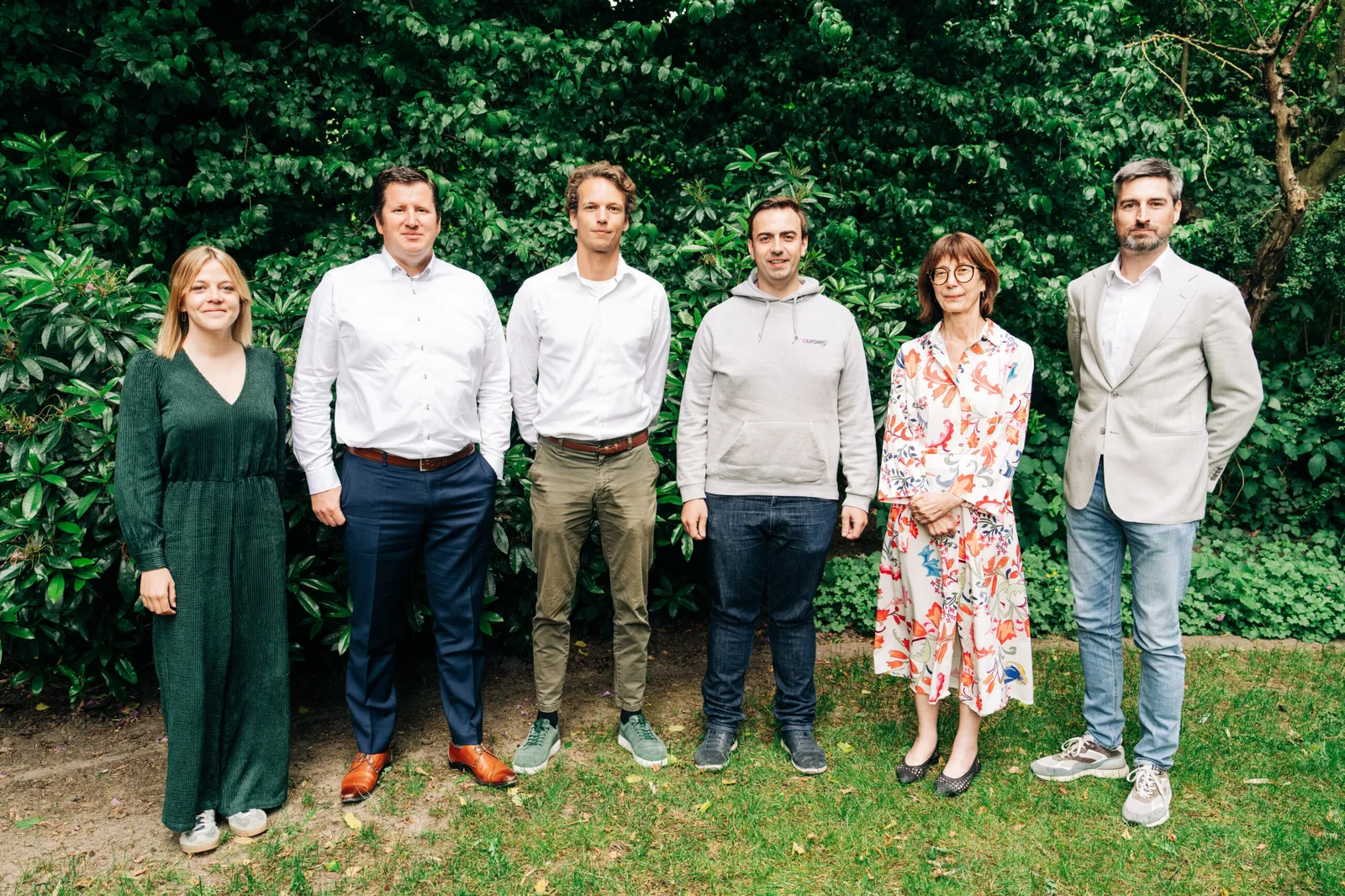
We cannot prove it to you in black and white, because there are no hard figures. But there is no doubt that lithium-ion batteries are a literally and figuratively burning issue in the world of recycling. In a first-ever round-table discussion, RecyclePro brought the entire chain together to talk about where things are going wrong, but above all about what we can all do to make recycling companies a little more fire-safe. Unfortunately, no holy grail that reduces the risk to zero has been found yet, but there is no shortage of tips & tricks to better protect your people, materials and buildings. We promise.
The lack of exact figures on incidents involving lithium-ion batteries may be the first issue to address. “The government should have required fire service zones to keep statistics on the causes of fires long ago. At the moment, it is all guesswork. And it is not just Belgium. I follow Ryan Fogelman online. Since 2016, he has been keeping statistics on fires at recycling companies in America and Canada through Fire Rover. He gets his information mainly from the media and fire department statistics, and finds that the number of fires is increasing year on year,” says Pieter Claerhout of Araani.
The tip of the iceberg
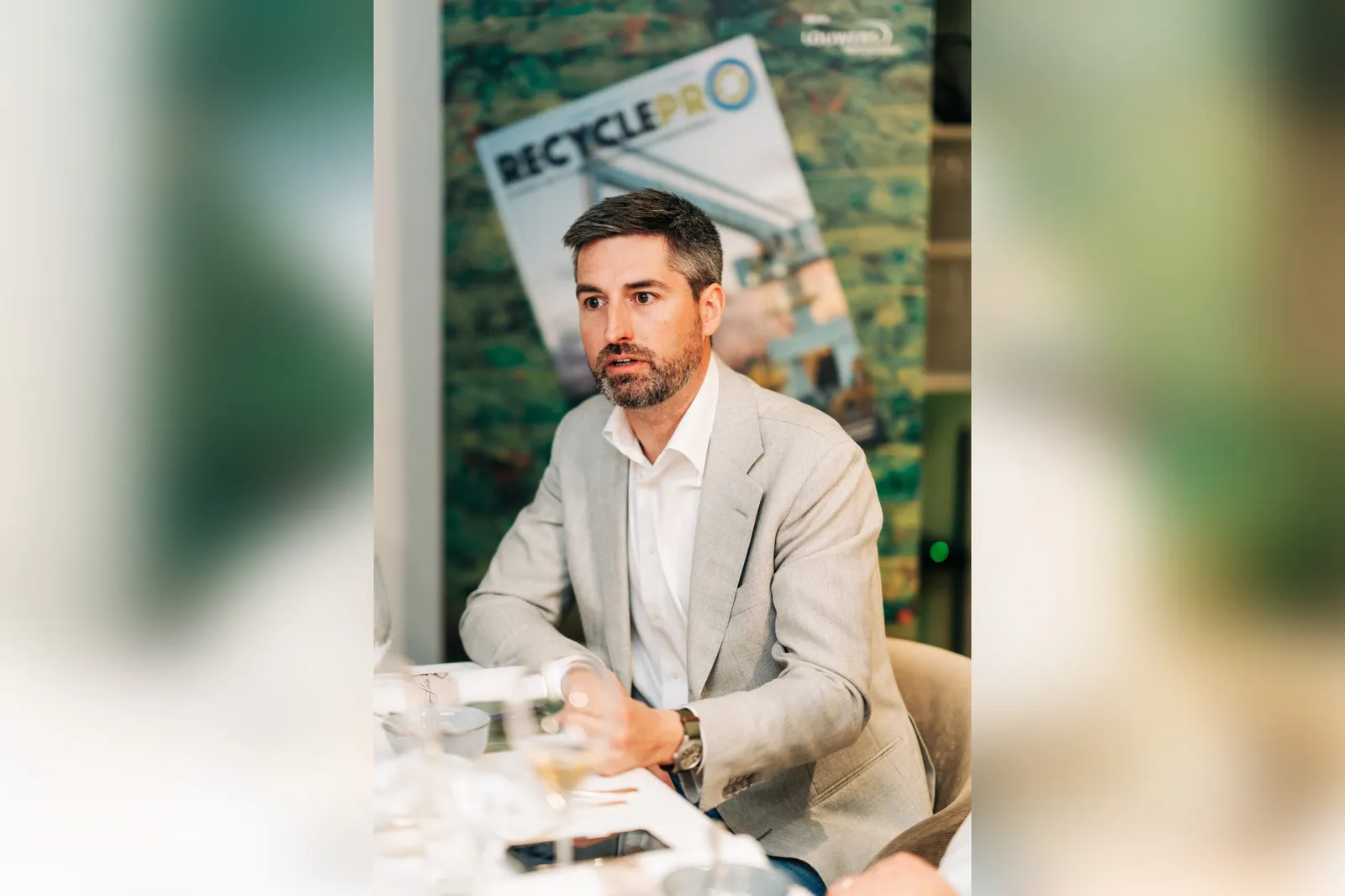
Everyone else at the table agrees that this is a trend. Does Bart Pieters of Group Casier Risk & Insurance also see a significant rise in the number of claims? “Recycling companies are not currently required to report incidents. So we see only the tip of the iceberg, because the excess is very high given the hazards in the sector. Unless a site goes up in flames, we are, so to speak, rarely called in. And even then, it is difficult to establish the precise cause of the fire.”
The cost of fire safety
This reluctance to talk about incidents has everything to do with the difficulties recycling companies already face in getting insurance. Tim De Schryver of YouPower speaks from experience. When setting up his company, he saw more than ten applications simply rejected. “In Hamme, we have a recycling plant where we dismantle, store and shred lithium-ion batteries. We process batteries and are therefore very aware of the risks, which is why we have invested in additional security systems: temperature detection, a water tank, sprinkler systems … This takes a big chunk out of the budget that you then cannot spend on fine-tuning your actual process, which surely should not be the intention.”
A risk everywhere
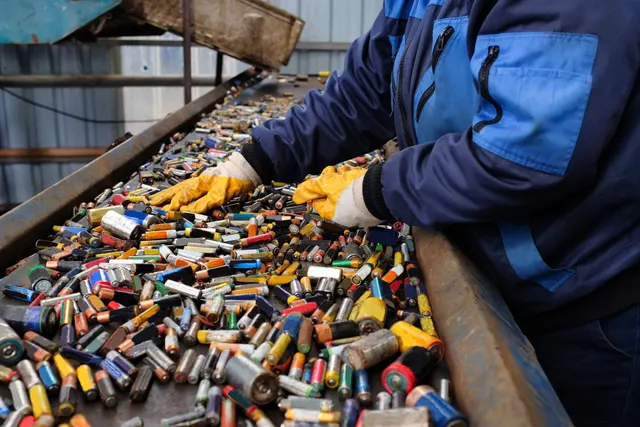
This is a concern shared by most members of sector federation Denuo. Advisor Marine Ronquetti says that no sector is immune to the risk of fire today. “Lithium batteries can be found in all sorts of things. From musical greeting cards that end up in paper and cardboard and electric scooters mixed in with scrap, to electronic toys in the PMD bag and shoes with lights in textiles, as well as e-vapes thrown away with residual waste. All our members are dealing with this, from the largest to the smallest, although larger organisations have more budget to protect themselves against the hazards. Lithium-ion fires start with sorting errors, which are the responsibility of the manufacturers of these batteries and electrical appliances.”
The lack of exact figures on incidents involving lithium-ion batteries may be the first issue to address. “The government should have required fire service zones to keep statistics on the causes of fires long ago. At the moment, it is all guesswork. And it is not just Belgium. I follow Ryan Fogelman online. Since 2016, he has been keeping statistics on fires at recycling companies in America and Canada through Fire Rover. He gets his information mainly from the media and fire department statistics, and finds that the number of fires is increasing year on year,” says Pieter Claerhout of Araani.

Raising awareness of batteries in products
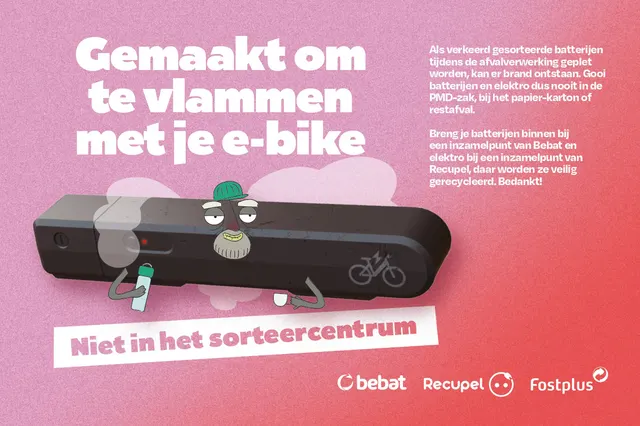
That is why Belgian management organisation Bebat and its director Martine Vanheers continue to emphasise the importance of raising awareness. “People are sometimes unaware that a battery is inside a product. Or they cannot simply remove it. That is why the European Battery Regulation stipulates that, for all devices placed on the market from 2027 onwards, the battery must be easy to remove.” Stef Koomen of Stichting Open, which collects both discarded appliances and batteries, also thinks this is a good thing. “Lithium-ion currently accounts for around 30% of the battery market. 90 to 95% of the lithium-ion batteries coming onto the market are integrated into a product.”
Raising awareness of the dangers
Denuo believes consumers should be made aware not only of the presence of batteries, but also of the dangers. Ronquetti: “A lithium-ion battery in the wrong waste stream can cause a catastrophe. People should be urged to sort waste not only for the sake of the environment, but also for the safety of everyone working in recycling.” ❯Bebat is very receptive to this idea. “Ultimately, we all want the same thing: fewer fires. And we will not achieve that with a single all-encompassing solution. It will take a great many initiatives.”

Battery quality
Manufacturers also have a role to play. De Schryver has found that too little attention is paid to quality. He gives the example of a home battery system. “An inverter has to comply with a whole range of regulations, but the battery does not. Yet if it has been fitted with a good battery management system, you can eliminate a lot of risks. For example, it will shut the battery down as soon as it gets too hot. That intelligence makes or breaks the quality of your battery and your risk of fire.”
Manufacturer responsibility
Most battery manufacturers, however, are on the other side of the world. Are they concerned about the fire hazards their products pose? Claerhout assures us that they are. “Society is much further along with electrification in China. The problem is actually even bigger there than it is here, although none of that gets reported. Under the new standard for batteries in electric vehicles, which comes into force in 2026, batteries must not catch fire or explode, even if thermal runaway occurs. There is also discussion about whether lithium-ion should be banned altogether and replaced with other battery technology.”

Risk managers
But that solution does nothing to eliminate the immediate fire risk facing the recycling industry today. How can recycling companies better protect themselves? Casier often works with external risk managers to map the hazards at a site. “We bring them in proactively, before negotiating with insurers over clients’ fire insurance. They can assess independently which preventive measures are needed to contain the risks as much as possible. If that groundwork has already been done, you can approach the insurer with a stronger case,” Pieters explains.
Basics first, then high-tech solutions
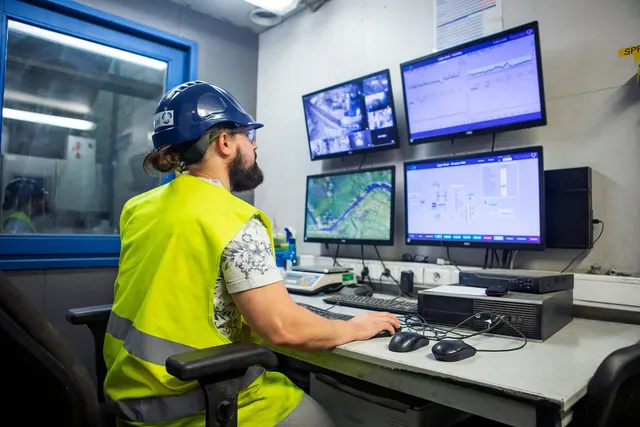
There is also an increasing range of advanced technologies available. The combination of artificial intelligence and cameras (video, X-ray, thermal imaging …) is gaining ground as a way to find batteries in the wrong waste streams or detect incidents at an early stage. Yet Claerhout says it is the basics that matter most. “What good is expensive technology if you do not have a safe foundation? If something is detected, it is already too late.” He points to three rules of thumb: good compartmentalisation, smart stock management with quarantine measures, and ensuring the electrical systems are in perfect order. “Those measures alone can greatly reduce the impact of incidents.”

The fire service, your best friend
Vanheers says the importance of education and training cannot be emphasised enough. “In 2019, we had a major fire at Sortbat, where we sort the batteries we collect. A year earlier, we had decided to do more to improve safety, but the right knowledge and mindset do not develop overnight. We therefore try to drill the right responses to incidents into our people through extensive training, so that they know what to do. Every second counts. The same goes for the fire service. We see them as our best friends: the better they know our site, the more effectively they can respond.”
Take-back obligation
Koomen expects the take-back obligation, which comes into force in the Netherlands from 2026 and is also included in the Battery Regulation, to have a very positive impact. “Lithium-ion batteries that end up in residual waste are often still inside electronic devices. E-vapes are perhaps the best-known example. The take-back obligation means that WEEE must now go to certified processors. That should help to contain some of the fire risk, while also helping us meet the ambitious European targets for battery collection. After all, there is still a great deal of valuable material in them that deserves a second life.” The only question left is who should foot the bill. At present, that is the recycling companies, even though they are not ‘to blame’ for the presence of batteries. Vanheers believes recycling companies should pass the additional costs on through their prices. Denuo takes a different view. “So we are calling for a contribution to be arranged through the existing EPR schemes towards a kind of prevention and emergency fund,” Ronquetti concludes.

With thanks to Pieter Claerhout (Araani), Tim De Schryver (YouPower), Stef Koomen (Stichting Open), Bart Pieters (Casier), Marine Ronquetti (Denuo) and Martine Vanheers (Bebat) for their valuable time and input.
Question about this story? Ask your question
Companies in this story
Keep following this
Get an email when a new story is published. No account needed.
- ThemeCircular processing of electronics and batteries
- SubjectFire safety
- CompanyCasier Risk & Insurance bv
- CompanyBebat vzw