Sustainable recycling of medical waste
Text Roel van GilsImage Blue2Green Recycling
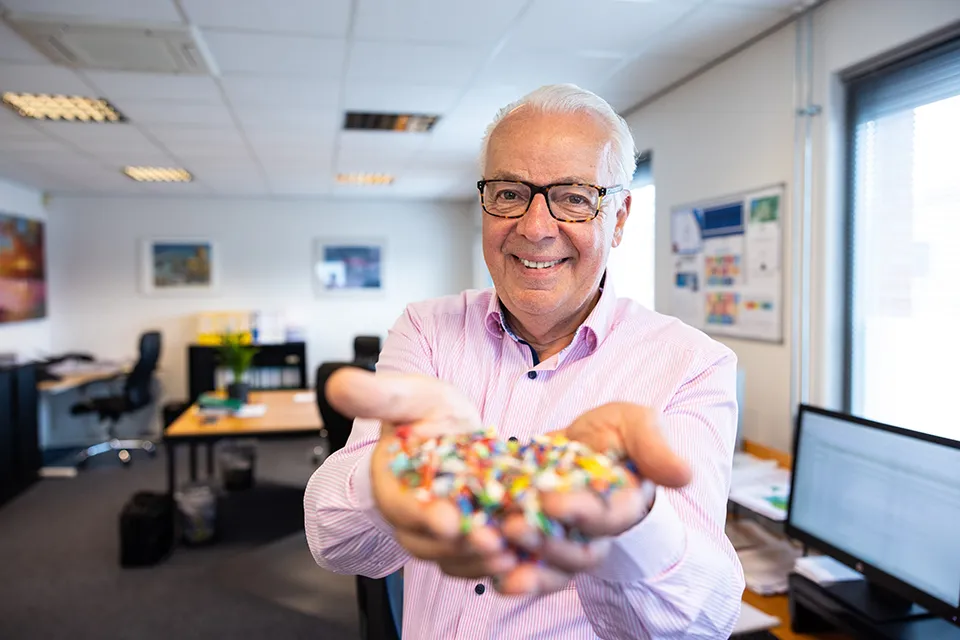
The healthcare sector is responsible for 7% of all CO2 emissions in the Netherlands. That is as much as Tata Steel! This runs counter to the healthcare sector’s original mission to improve people’s health and provide a good quality of life. Under the Green Deal on Sustainable Healthcare 3.0, the Dutch healthcare sector aims to cut CO2 emissions by 55% by 2030 and become climate-neutral by 2050. This includes reducing primary raw material use by 50% by 2030 and achieving fully circular healthcare by 2050. It clearly makes little sense to keep routinely incinerating medical waste. Blue2Green Recycling has a ready-made solution, turning medical waste into reusable raw materials.
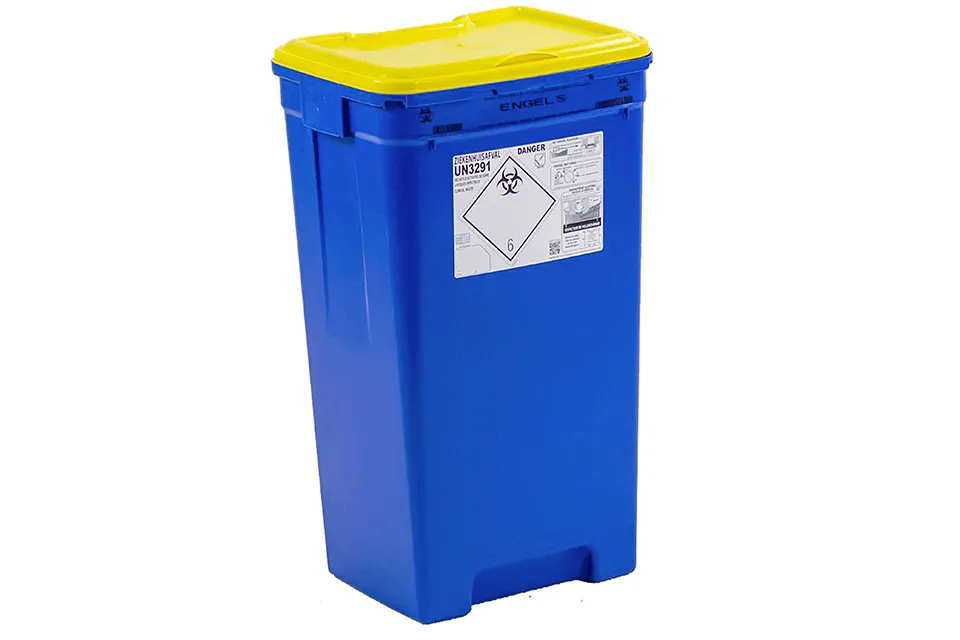
“Infectious specific hospital waste (SZA) is currently collected in the familiar blue WIVA containers,” begins Cees Duijn of Blue2Green Recycling. “The containers are closed, sealed and incinerated whole, with the incineration residues ending up in landfill. This is hardly sustainable or circular. As the new kid on the block, we offer a sustainable solution for medical waste based on the latest amendment to the National Waste Management Plan (LAP-3, sector plan 19) and looking ahead to the Circular Materials Plan (CMP-1), which comes into force on 1 January 2025. This will give a major boost to the reuse of secondary raw materials and limit the use of primary raw materials.”
Decontamination
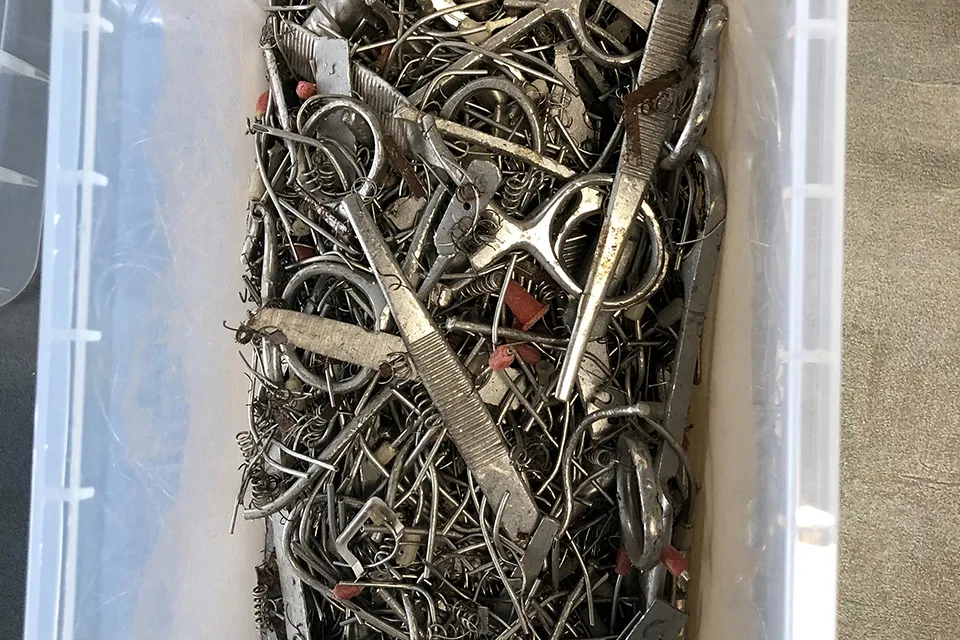
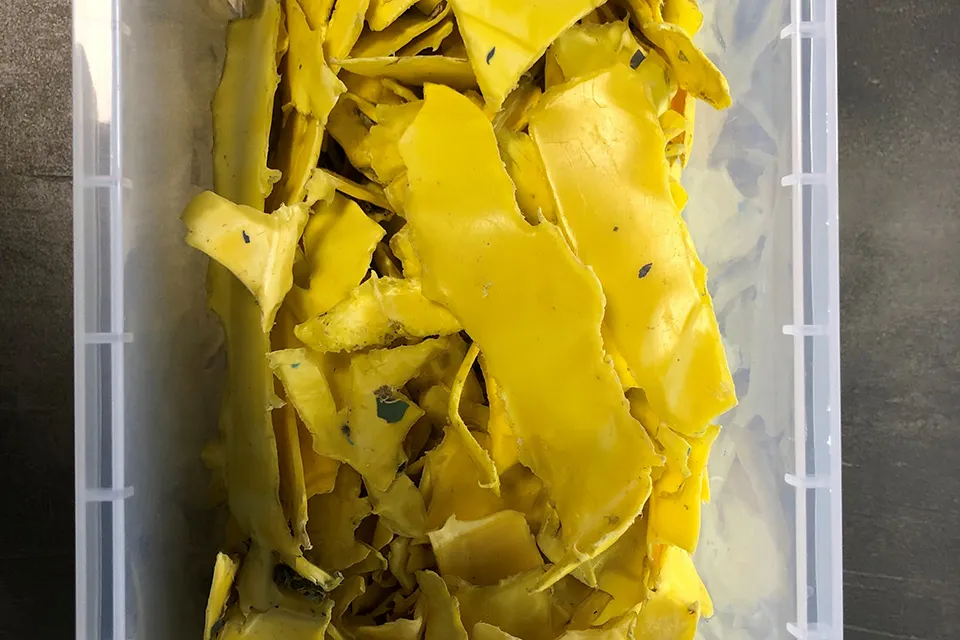
Blue2Green Recycling is already preparing for the new regulations. “In principle, nothing will change for hospitals,” Cees emphasises. “They can continue to use the same blue containers. The process downstream, however, is going to change completely.” Under Blue2Green Recycling’s approach, the medical waste is first decontaminated. “At this stage, infectious substances in the medical waste are neutralised,” Cees explains. “After decontamination, the medical waste is comparable to ordinary commercial waste and can therefore be treated in the same way. Drawing on InnoMax’s expertise in advanced recycling technologies, we then recover reusable raw materials from the waste, including various plastics, notably PP, PE and PVC, ferrous and non-ferrous metals, as well as glass, ceramics and an FLUF fraction. The latter is converted into oil by pyrolysis, providing the basis for virgin plastics. We produce only semi-finished products, which we ship to reputable companies in the Netherlands and Belgium for processing into recyclate. And so the circle is complete.”
Belgian invention
Blue2Green Recycling’s decontamination technology is based on the concept developed by Ecosteryl. “This Belgian manufacturer develops and exports machines to more than sixty countries worldwide, but not to the Benelux or Germany,” says Cees. “This is the result of excessive regulation and the fact that the established companies currently incinerating medical waste are monopolists. We intend to turn the tide and make a significant contribution to making healthcare more sustainable. And we will prove it. Our first site is currently being developed in Velsen-Noord, a facility with a maximum capacity to process 3,000 tonnes of medical waste per year. In the Netherlands, no more than five such sites would be needed to recycle to a high standard the equivalent volume of medical waste currently incinerated. This will achieve enormous CO2 savings. The aim is to have the first site fully operational in the second quarter of 2024. I would say, do keep following us.”
Du-Con Trade: Stand number D130
Question about this story? Ask your question
Keep following this
Get an email when a new story is published. No account needed.
- ThemeMaking use of textiles and other waste streams
- SubjectEvents