No more unpleasant odours or pests
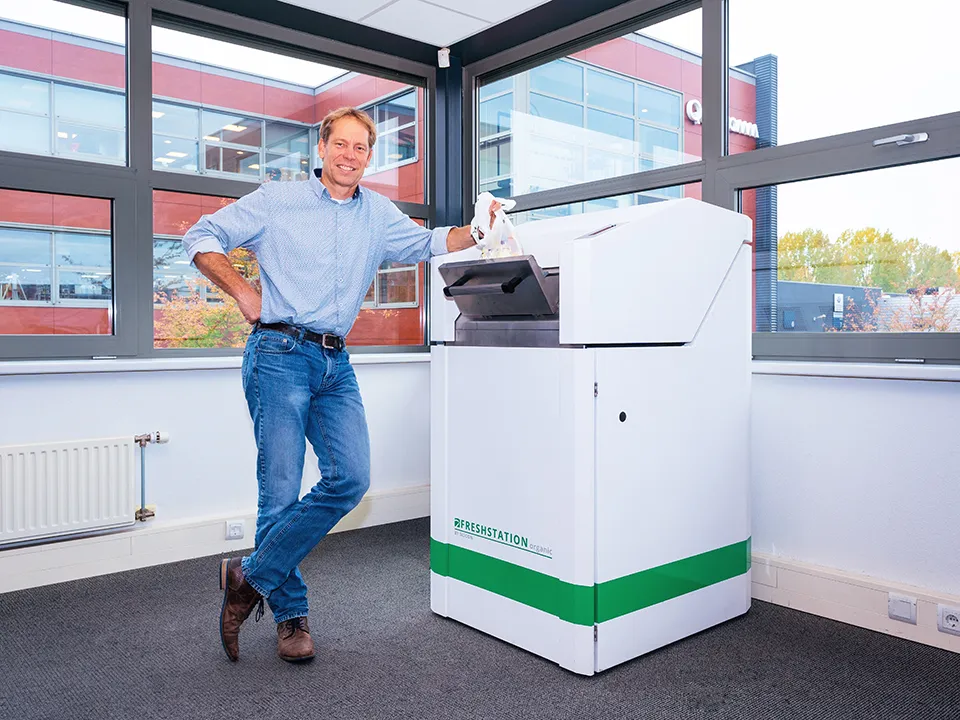
Sidcon is best known for its underground compactors for residual waste, PMD and OPK. The Nijmegen-based company has now brought a new, innovative product to market that addresses the problem of contaminated waste streams: the Freshtation Organic. This specially designed waste container makes it possible to handle food and garden waste (GFE) efficiently, without odours and in a tidy manner.
A solution for collecting food and garden waste in urban areas with multi-storey housing
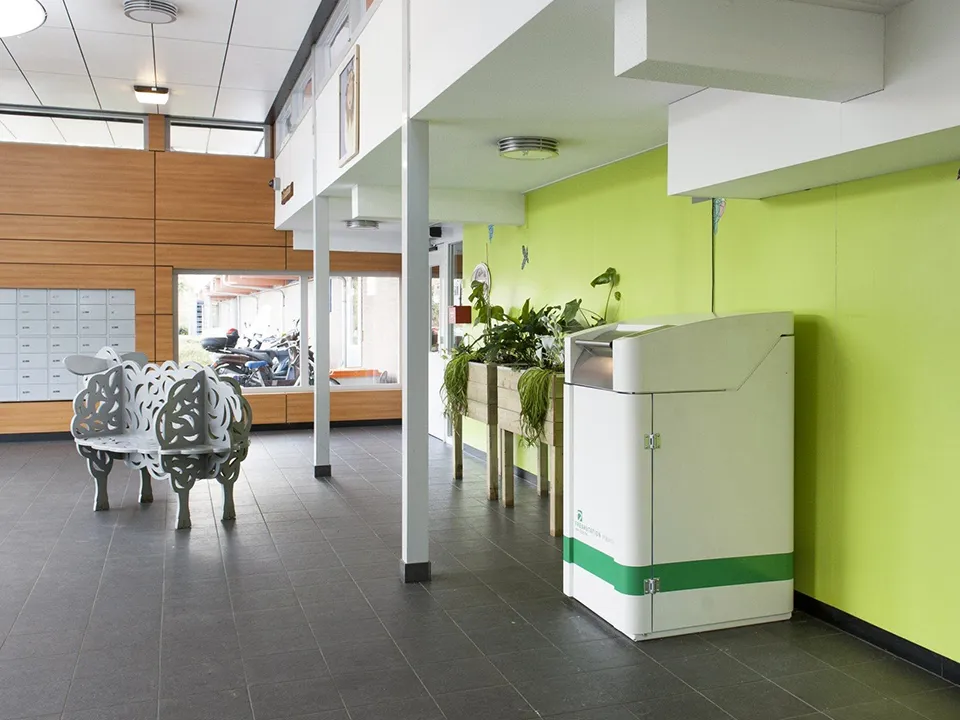
“The Freshstation Organic makes it much easier for residents of multi-storey housing, particularly in urban areas, to keep their food and garden waste separate from residual waste,” explains Boris Gubbels of Sidcon Milieutechniek. “We know, of course, that we need to use raw materials carefully. There is a good reason why waste streams are separated as much as possible so they can then be recycled. What fewer people know is that 40 per cent of our residual waste consists of organic material. Some of it can still be separated using various techniques, but then ends up in the incinerator anyway. By that stage, it is no longer suitable for composting. That is why separate collection of food and garden waste is also encouraged, but this has proved difficult, particularly in urban areas with a lot of multi-storey housing. People would rather not have a food and garden waste bin on their balcony because of the smell, and large containers outdoors also cause odours and attract pests.”

Fresh and hygienic
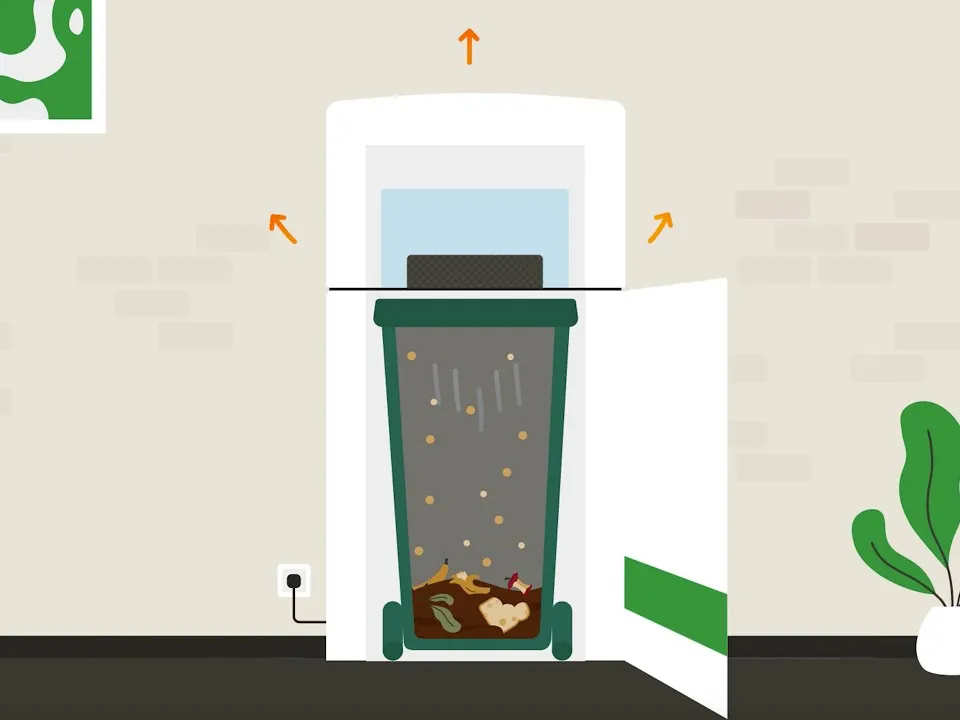
For this reason, Sidcon developed the Freshstation Organic. It consists of a modified 240-litre wheeled bin housed inside an insulated metal enclosure fitted with cooling and an ozone generator. “This keeps it fresh and hygienic,” says Gubbels. “The Freshstation Organic can be installed in the central hall of an apartment block, in the bicycle storage area or just outside, and needs nothing more than a power socket. Our trials have shown that you need to make it as easy as possible for people. If they have the opportunity to dispose of their food waste easily and cleanly every day, it becomes routine. We saw that up to 80 per cent of residents started separating their food waste.”
Another benefit is that these residents’ residual waste is cleaner and can therefore be recycled more effectively, as it no longer contains organic waste.
Sidcon chose a standard-sized wheeled bin for a reason. Gubbels says: “They fit on existing collection vehicles, which municipalities will of course need to use to empty them regularly.”
Cool box
Sidcon believes that separate collection needs to be as easy, clean and hygienic as possible if it is to succeed. “Simply telling people that something has to be done does not work,” says Gubbels. That is why the 240-litre wheeled bins have been modified. Gubbels explains: “A standard green bin absorbs odours. You can clean it as often as you like, but it will still smell. That is why we have applied a high-molecular coating to the inside that does not absorb odours. The bin is also insulated. In effect, it has become a cool box. Adding a heat pump to the enclosure, which extracts heat from, for example, lukewarm food waste, stops the rotting process. Ozone (O3) deals with the very last traces of condensation.”
Gubbels expects the Freshstation Organic to catch on. “We are currently approaching municipalities, housing associations and project developers. This solution helps give a building a green and sustainable image. And I can say from experience that it really works: there is one right next to my desk here at the office, and I can carry on working as normal. I can’t smell anything and I don’t see a single fly.”
Question about this story? Ask your question
Keep following this
Get an email when a new story is published. No account needed.
- ThemeImproving waste collection and transport
- SubjectEvents