NL | Digitalisation is no longer a vision of the future
Terms such as digitalisation and Waste Management 4.0 have long ceased to be visions of the future. What was presented as the future at the previous IFAT in 2018 has already become reality at the world’s leading trade fair for water, wastewater, waste and raw materials management. Whether in logistics, customer communication or the production process, current developments show that more and more digital technology is available to optimise material flows and transform waste management into an efficient circular economy.
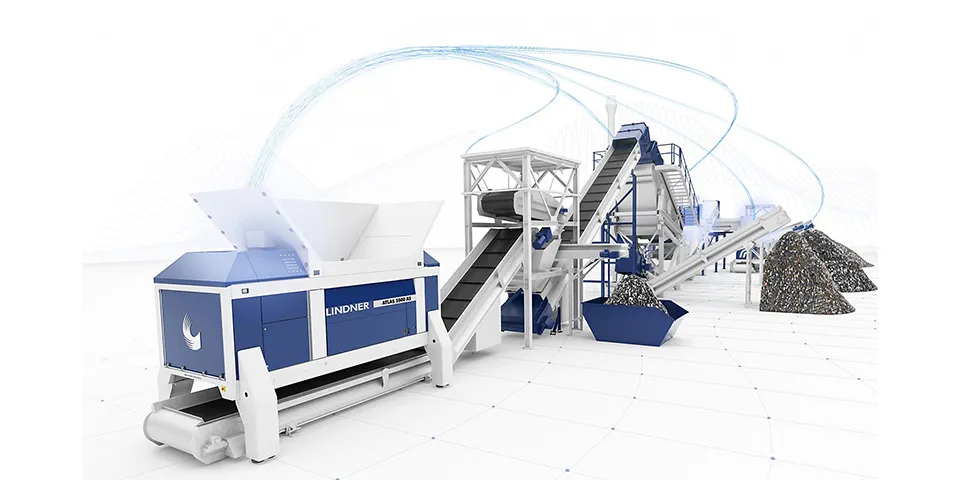
As a specialist in shredding technology and waste processing, Austrian company Lindner Recyclingtech therefore relies on intelligent system solutions to turn waste into valuable materials and produce high-quality alternative fuels.
Stefan Scheiflinger-Ehrenwerth, Head of Product Management at Lindner: “We have always been one of the pioneers in the recycling industry, which is why the mechanical components of our machines and systems are already highly developed. Digitalisation and the use of smart technology are now the next stage in this evolution. The concept of ‘Industry 4.0’ has ushered in an industrial revolution that will also significantly change the waste industry in the future. Our customers work with valuable raw materials. These must be processed into new products of the highest quality, with maximum productivity, whether as the ideal fuel for energy-efficient power generation or as raw material for high-quality products made from recycled material.”
Building on this principle, Lindner will showcase the latest generation of its highly efficient Atlas pre-shredder at IFAT 2020 in Munich, alongside intelligent system solutions that use digital technology to turn waste processing plants comprising different system components into smart factories.
Pre-shredding, or rather the optimal preparation of incoming waste for the next step in the recycling process, is essential,” explains Scheiflinger-Ehrenwerth, adding: “When it comes to secondary shredding, sorting, identification using NIR technology or online quality assurance, the right system feed rate or distribution also plays an essential role, alongside the optimal particle size.
To achieve this, it is essential for the individual machines to communicate with one another. By combining and using this data intelligently, you can easily get the most out of material flows. But more on that at the Lindner stand at IFAT.”
Question about this story? Ask your question
Keep following this
Get an email when a new story is published. No account needed.
- SubjectEvents