












Electric vehicles? Legal considerations for property development
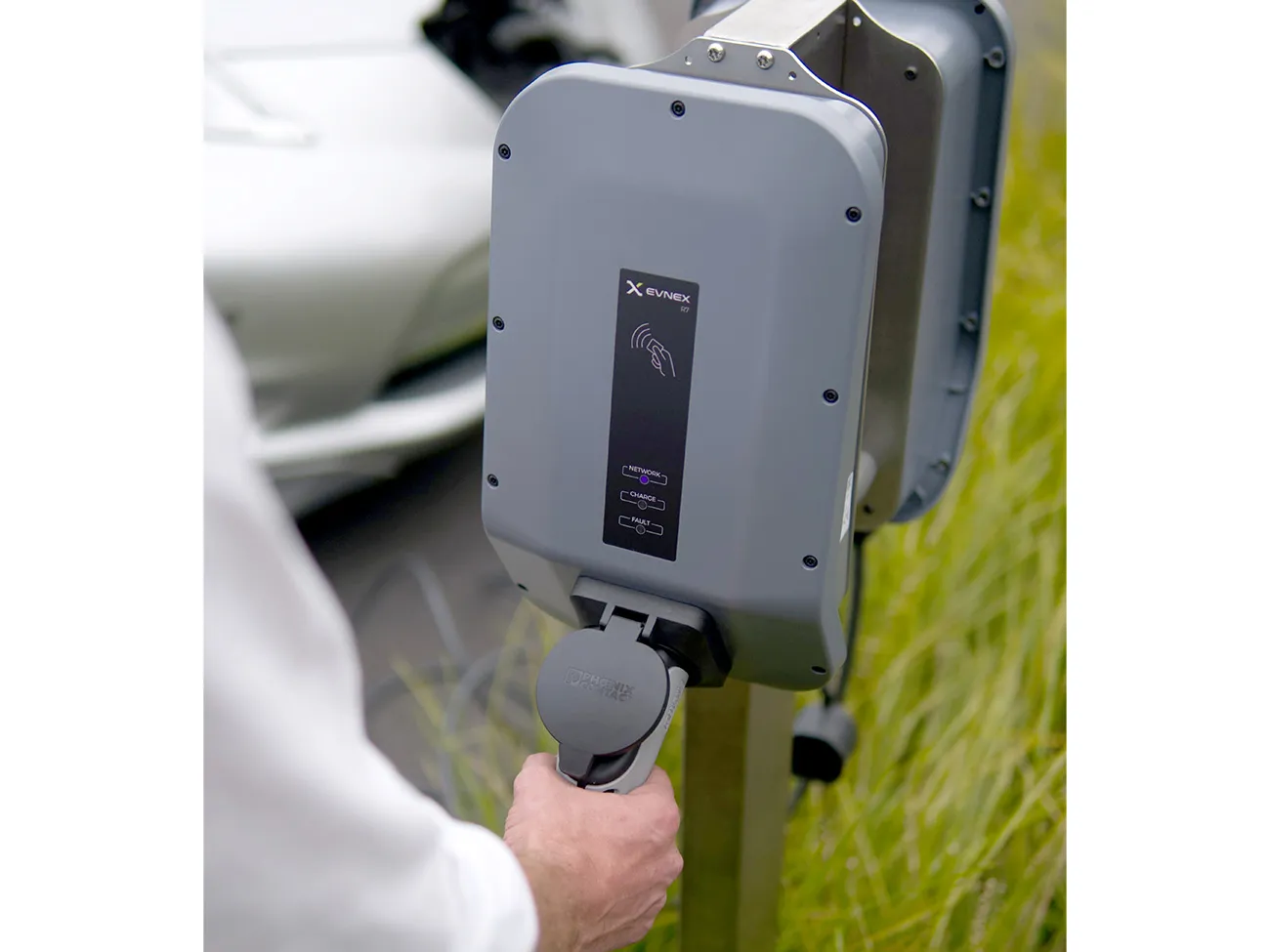
You will no doubt have heard that, in 2026, electrified company cars will be 100% tax-deductible. In implementing the European Commission’s plan, known as ‘Clean Energy for All Europeans’, the (federal) government is making a major push for electric vehicles.
As the fight against traffic congestion must also be tackled, this rate will fall to 95% in 2027, 90% in 2028 … and then to 67.5% in 2031. The aim is to promote the electrification of vehicle fleets, not just in the long term, but as soon as possible. 2026 will be the year for businesses to electrify their fleets. The transition to a (large) majority of electric vehicles now seems irreversible and is approaching at speed.
Charging points required
This trend naturally means that we urgently need to provide a sufficient number of electric charging points. The property development sector is already subject to a requirement to provide charging points. Article 9/1.1.1 et seq. of the Energy Decree of 19 November 2010 stipulates that charging points and/or infrastructure must be installed at certain buildings for which an environmental permit application is submitted from 11 March 2021. Specifically, this applies to:
- At least two charging points and ducting infrastructure for at least one in every four parking spaces at non-residential buildings with a car park containing more than ten spaces;
- Ducting infrastructure at every parking space in new residential buildings with two or more parking spaces;
- Ducting infrastructure at every parking space in existing residential buildings undergoing major renovation, with a car park containing more than ten spaces.
Aimed at larger projects
Infrastructure is defined as ‘ducting infrastructure, or at least cable trays for electrical cables, to enable the installation of normal or high-power charging points for electric vehicles at a later stage’. An important qualification for single-family homes is that the driveway does not count towards the number of parking spaces. It can therefore be concluded that the provisions are aimed primarily at larger property projects. If your new-build or renovation project does not meet the requirements, you risk a fine of €2,000 for each missing charging point and €1,000 for each parking space not equipped with
the necessary infrastructure.
What about installing electric charging points in existing apartment buildings?
What about existing apartment buildings? What rules apply to co-owners who wish to install a charging point themselves in the shared (underground) car park? In a rare moment of foresight, the legislator had already considered this when reforming apartment ownership law. The then Article 577-2, §10 of the former Civil Code (now Article 3.82, §2 of the new Civil Code) has, since 1 January 2019, allowed any co-owner (and recognised utility operators) to install cables, pipes and associated facilities in or on the common parts. The installation of charging points clearly falls within this provision. As a co-owner, there are in principle two ways to notify the other co-owners (and, where applicable, the building manager, owners’ council …) of your intention to install a charging point:
- If the apartment building has an owners’ association (VME), written notice must be sent by registered post to the building manager;
- If the apartment building does not have an owners’ association (VME), written notice must be sent by registered post to all co-owners.
In both cases, this notice must be given at least two months before the work begins. During this period, the owners’ association (VME) still has the opportunity to object to the installation works on reasonable grounds, usually by convening a special general meeting.
A few points to note
The installation of the charging point is entirely private. The costs of installation are borne in full by the person who wishes to install it. If the owners’ association (VME) decides to carry out the installation works itself (so that the entire car park can be equipped with charging points at the same time), the installation will of course become common property and the costs will be borne by the owners’ association.
The right to install cables and pipes applies only to co-owners. Tenants have no such right. If they wish to have an electric charging point installed at their parking space, they must always go through the owner/landlord.
Question about this story? Ask your question
Keep following this
Get an email when a new story is published. No account needed.
- SubjectNews







