












Digitalisation as a lever for circularity
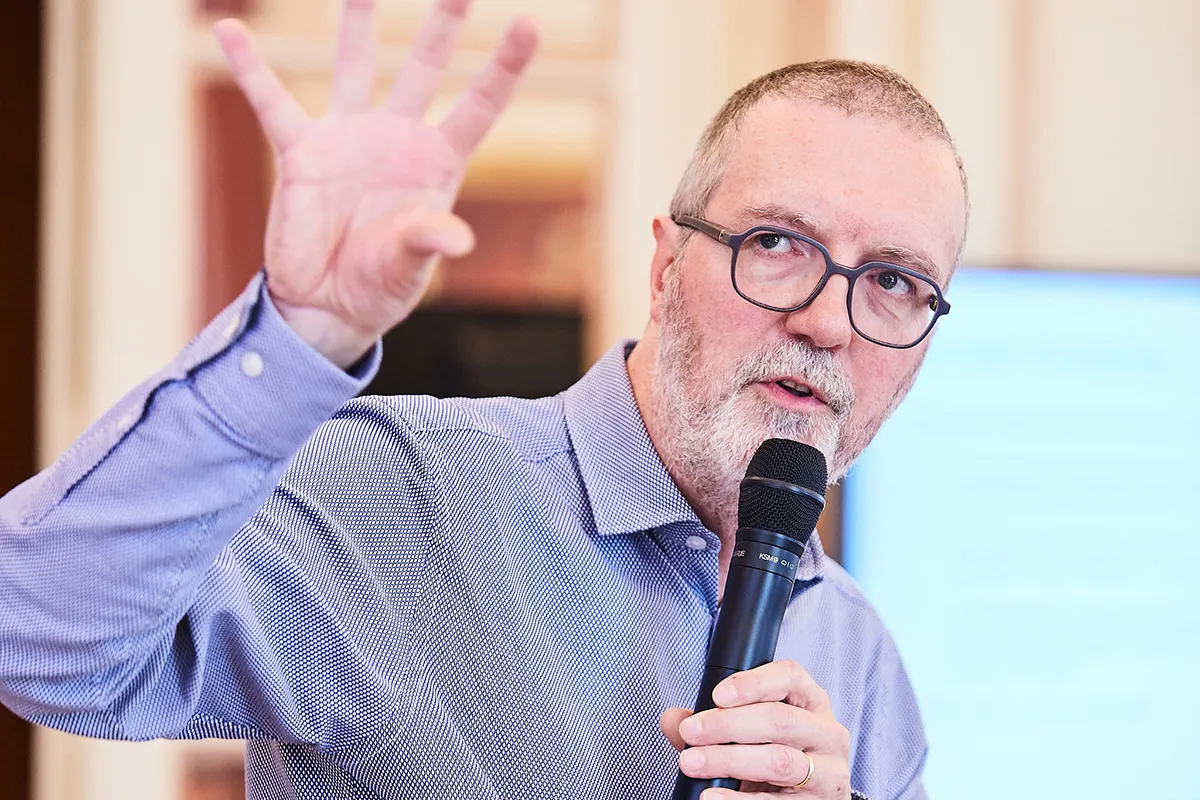
Prof. Karel Van Acker is professor of circular economy and chair of the sustainability council at KU Leuven. More than enough credentials to earn a place in these pages. His current research focuses on how we can make the circular economy measurable. “We certainly don’t do this from an ivory academic tower. We try to involve businesses. But research is still needed to assess what will be required in the medium and long term, and translate that into what needs to happen today.”
How can we use materials as sustainably as possible? This is the thread running through Van Acker’s career, which has by no means been confined to academia. He has also worked on this question in business and at VITO. “So many important steps have already been taken to close loops more effectively. Technological developments, for example, have made it possible to separate materials more effectively. Motivation for recycling has also changed. It is no longer just about reducing CO2 emissions. We increasingly recognise the value of reducing our dependence on distant countries for raw materials. Recycling now helps us keep what we have in society for longer. But we are seeing that the market is constantly changing. New production is coming on stream, requiring different recycling technologies. Research therefore remains essential for establishing new processes and developing systems.”
Sharing more information
Van Acker identifies digitalisation as an important area of research for the coming years. “How can we find relevant data and share it appropriately throughout the value chain? Recycling is just one cornerstone of a larger value chain. Recycling companies can play an important role as stewards of material loops. But there are other stakeholders too: producers, governments and citizens. The challenge will be to establish effective information systems to share more information.” Van Acker points to the benefits of the repairability index that is set to be introduced. “There is currently little data on the repair economy because it is fragmented across different actors. But if we can bring together data on the materials contained in products, in what quantities and how they are connected, we will already be much further ahead.” The circular economy therefore needs a digital infrastructure. “Through our research, we want to provide insights and the capacity to support everything that will come onto the waste market in the years ahead.”
New business models
He therefore sees digitalisation as the way forward for recycling in the coming years. “Because it will enable us to move beyond simply recovering materials by weight and start thinking about how to extract more value from end-of-life products,” he predicts. “Do we have to shred everything into recyclate? Or can certain components still be used as spare parts? Or can we further promote a repair economy? Digitalisation gives us more information, naturally leading to new business models and a higher R-strategy. Economic and environmental benefits can indeed go hand in hand.” And what role does government have in this? “We need to be cautious about introducing additional legislation, which has not always had the right impact on the circular economy in the past. New regulations should primarily aim to create a stable investment climate. Taxes on raw materials with a higher environmental impact, for example, could help create a more level playing field.”
Question about this story? Ask your question
Keep following this
Get an email when a new story is published. No account needed.
- ThemeCircular business under changing regulations
- SubjectNews







