












Circular use of ammonia water
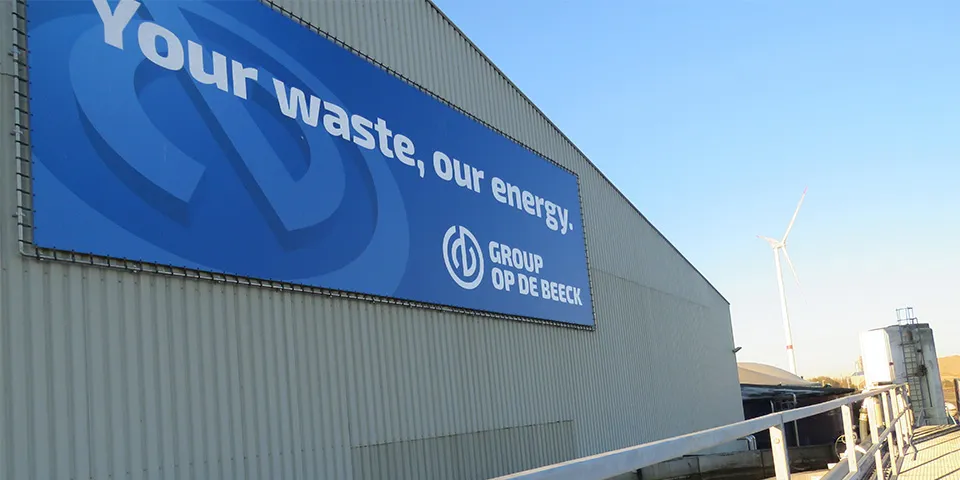
If we are serious about becoming circular, we should close our cycles completely. Group Op De Beeck and Sleco are already setting a good example. The ammonia water produced as a side stream when Group Op De Beeck recovers value from organic waste streams can help Sleco meet its emission limit values. It is used in the deNOx installation as a replacement for fossil-based urea. Initially, this will amount to 850 tonnes a year.
Group Op De Beeck has been processing organic waste streams for many years. Ben Leroy, responsible for business development at Op De Beeck, is based at the site on Linkeroever. “The 4.5 ha site in the Port of Antwerp is the nerve centre of Group Op De Beeck. Our focus here is on producing organic fertilisers, on the one hand, and recovering value from 100% of organic waste streams, on the other. We do the latter by producing green electricity and heat through anaerobic digestion, followed by the full recovery of all the nutrients in this organic waste.”
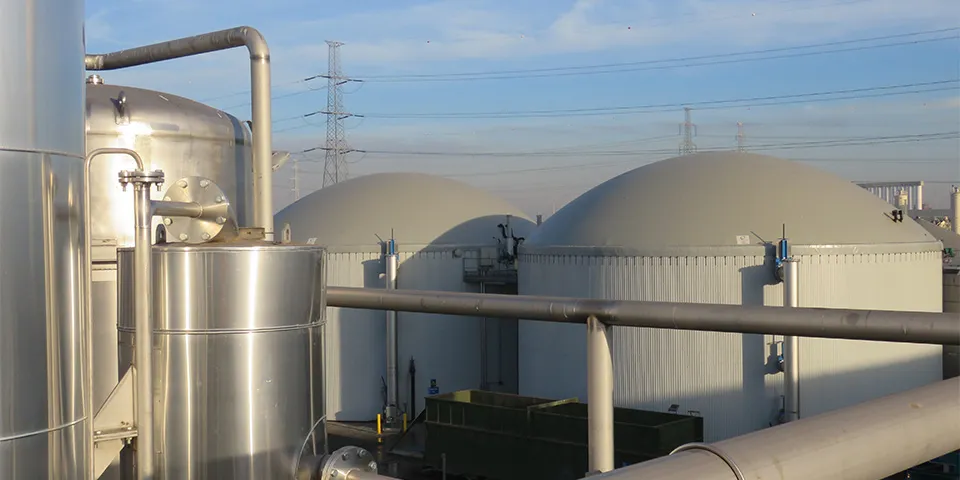
A pilot plant is currently running to test the quality. Full-scale operations on one line will begin in March. It will use around 850 tonnes of ammonia water a year.
Waste processors, not energy producers
Leroy is responsible for finding solutions for the industrial organic waste streams generated by Group Op De Beeck’s customers. In total, this amounts to 350,000 tonnes of organic waste a year being given a second life. This includes food products from supermarkets (out-of-date products), recall operations, overproduction and by-products from the food industry, by-products from the biodiesel industry, rejected fruit and vegetables arriving at ports, excise goods, and sludge streams from wastewater treatment plants at food-producing companies … “Organic waste of biogenic origin that complies with Vlarema legislation is in principle welcome at our site,” says Leroy. “Although we have Belgium’s largest operational biogas plant, supplying green electricity to 23,000 Flemish households, our starting point is not simply that we want to produce green energy. We need to be able to process all our customers’ organic waste streams at any time. That is why lower-grade streams with less energy potential also come here.” This requires greater and more flexible processing capacity. Over the next two years, capacity is set to increase by a factor of one and a half.
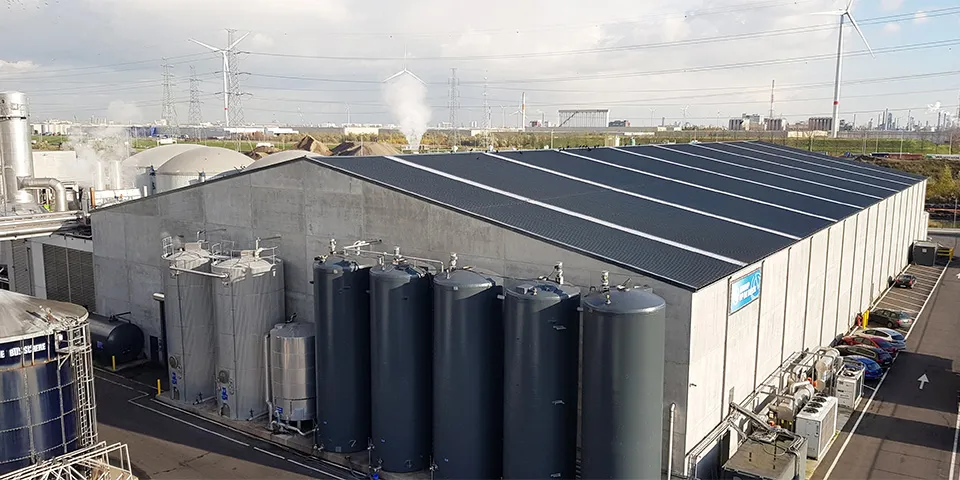
The 4.5 ha site in the Port of Antwerp is the nerve centre of Group Op De Beeck.
The entire process managed in-house
That is why Op De Beeck handles the entire processing process itself. Leroy: “We cannot depend on other parties to process the residual streams from our operations, or we risk problems on the supply side. Our customers must always be able to bring their waste here.” In addition to the biogas, which generates electricity and heat, digestion produces digestate. After drying, the solid fraction can be used as a soil improver, but Op De Beeck also wanted to find a useful application for the residual streams from the liquid fraction. This is achieved through evaporation to produce a concentrate that can be used as an organic fertiliser. After evaporation, an NH4 condensate remains, which is then further stripped to produce NH3 water and purified water suitable for discharge. “What remains is water that meets all Flemish discharge standards for surface water and is reused on site. We are also currently looking at working with a nearby company that could use it as process water. The NH3 water contains around 20 to 22% ammonia, so it is a fairly concentrated product. After treatment, it can be used as a liquid fertiliser or as a fuel, but we were looking for a new application. Tests showed that it was a perfect alternative to fossil-based urea in deNOx installations,” says Leroy.
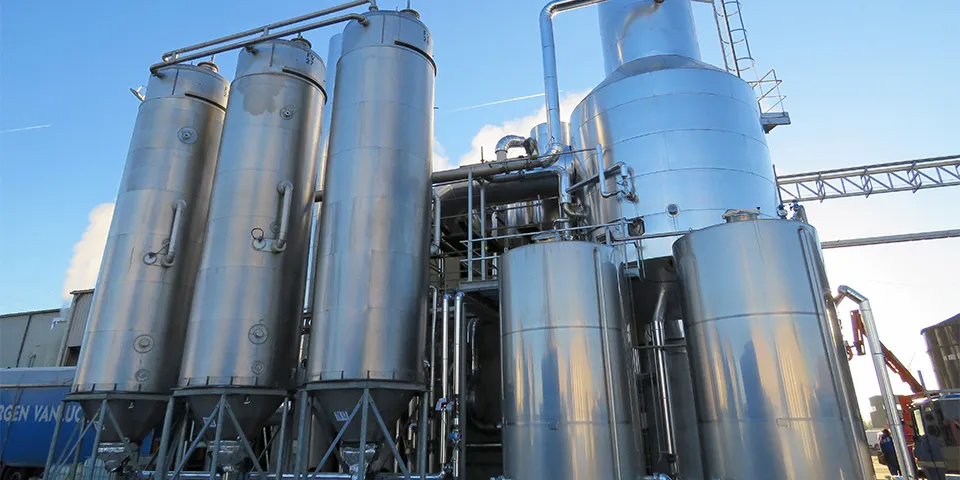
Leroy: “Fossil-based urea is currently used to meet NOx emission limits. By switching to our biogenic ammonia water, they no longer have to use an expensive petroleum derivative.
Neighbouring partnership
The search did not have to go any further than the other side of the street. That is where Sleco is located, an initiative by Indaver and SUEZ that uses a fluidised-bed installation to address the shortage of sludge incineration capacity and process solid industrial waste that can no longer be landfilled. The installation comprises three identical furnace lines, which together process around 600,000 tonnes of waste a year. Leroy: “Fossil-based urea is currently used to meet NOx emission limits. By switching to our biogenic ammonia water, they no longer have to use an expensive petroleum derivative.” A pilot plant is currently running to test the quality. Full-scale operations on one line will begin in March. It will use around 850 tonnes of ammonia water a year. “Everyone talks about circular initiatives, but most exist only on paper. This is one that puts the idea into practice and combines financial and environmental sustainability. We have not chosen the easiest or the cheapest route in pursuing such extensive waste processing. But we have made a conscious choice to be a sustainable processor and produce green energy from genuine organic waste streams, rather than, for example, from energy crops grown specifically for that purpose. Hopefully, this partnership will be an inspiration,” concludes Leroy.
Question about this story? Ask your question
Keep following this
Get an email when a new story is published. No account needed.
- ThemeCircular business under changing regulations
- SubjectNews







