












Asbestos protocol finally ends legal uncertainty
Text Valérie CouplezImage iStock

Is the transport of bonded asbestos waste subject to the ADR rules? Until recently, this question seemed open to interpretation. The competent authorities said one thing, while industry federations said another. The same ADR rules also appeared to be interpreted differently in each of the neighbouring European countries. That legal uncertainty is now coming to an end in Flanders. All parties have sat down together to develop a constructive alternative solution that still makes safety the number one priority while remaining pragmatic.
Whether special provision 168 in the ADR regulations exempted the transport of bonded asbestos waste from the ADR rules, and exactly how that provision should be interpreted, has been a matter of debate for years. However, anyone who failed to follow the ADR rules risked fines of thousands of euros if the enforcement authority concerned interpreted them differently. In response to this uncertainty, Embuild, Bouwunie, Denuo, VVSG, VAB-ABD, OVAM and DEMOW jointly developed the new asbestos protocol after more than a year of constructive discussions. It has been formally converted into ADR permit 2024/42, which entered into force on 1 October. This means that, for these transports within Flanders, it is now also possible to operate under the new ADR permit 2024/42, which sets out a number of very specific measures to ensure the safe transport of asbestos. The standard ADR rules can still be applied as well.
Safety first
First of all, the new rules do not mean that transport was unsafe in the past. Bonded asbestos waste has always been transported in sealed, dust-tight bags. However, the ADR regulations impose additional obligations on those transporting bonded asbestos waste, which are not always relevant to this specific type of transport. Given the ambition to make Flanders asbestos-safe as quickly as possible, a large number of additional ADR-qualified drivers would need to be recruited to transport the extra tonnage in the coming years. Those drivers simply are not available today. A pragmatic approach that was just as safe was therefore needed. Taking a constructive approach, the parties named above entered into discussions with one another.
Driver training
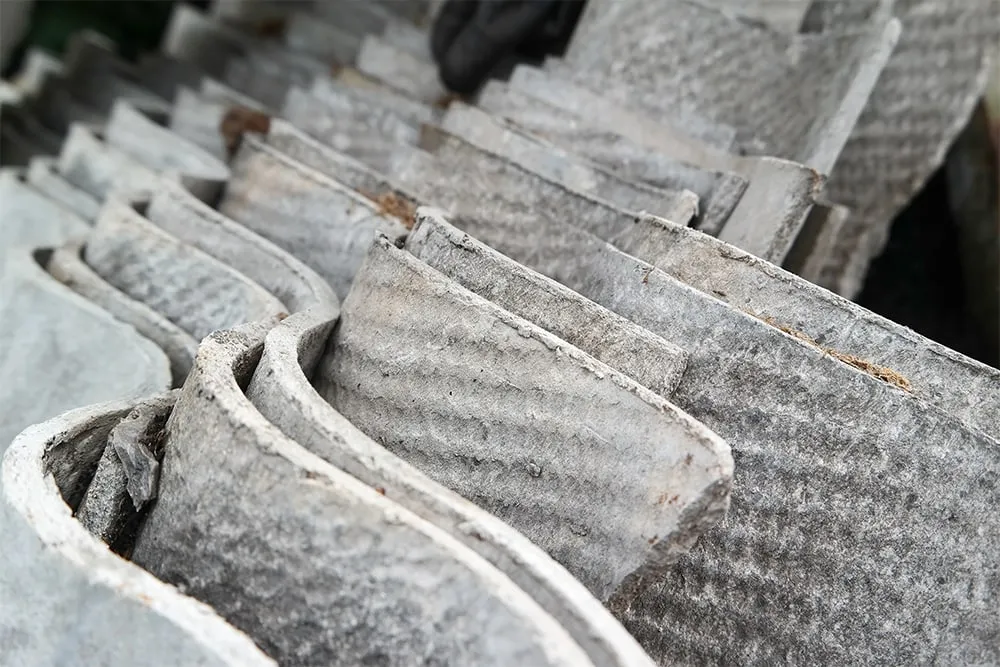
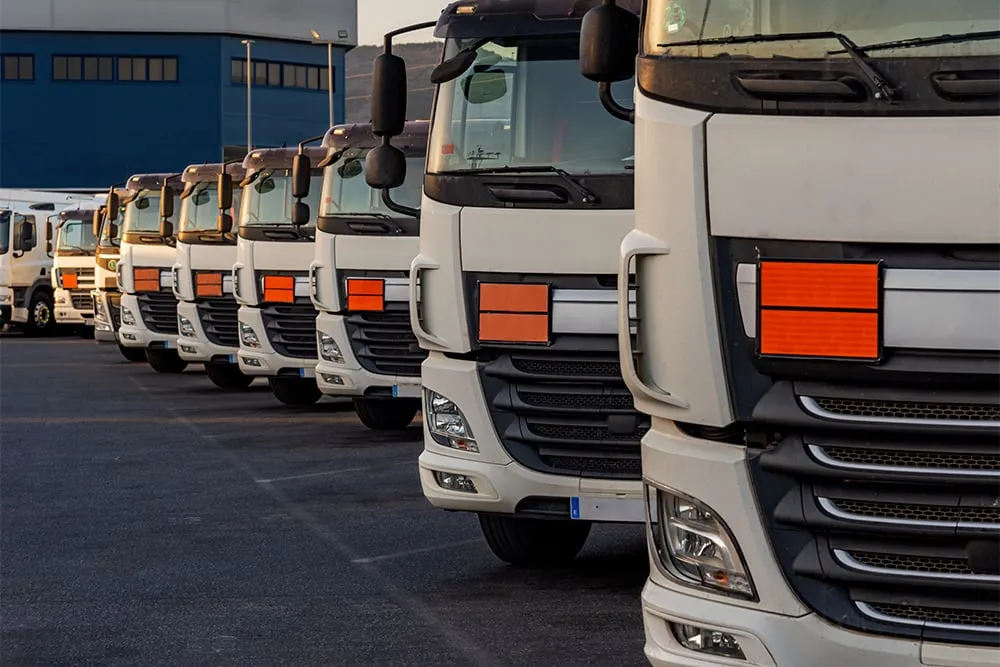
The main requirements in the asbestos protocol, in force since 1 October, are summarised in Article 6. First of all, they apply to asbestos materials that can be dismantled using the method for simple operations. The best-known examples of such products are asbestos cement sheets and corrugated sheets. The signage required for ADR transport, the well-known orange plates, must be displayed on the lorry. Specific training is also provided for drivers as part of their Code 95 training (7 hours) or their simple operations training. This training will be very practical and focused on asbestos, its hazards, how to handle it safely and what to do in an emergency. Companies have one year to ensure their drivers complete the training. Drivers without ADR certification will also be able to take the training and operate under the asbestos protocol.
Requirements for big bags
The second key consideration is the use of the big bags in which the asbestos is packaged. They must ensure that respirable asbestos fibres cannot be released during transport. For smaller quantities of asbestos waste (up to 3 m³), UN-approved big bags must be used. For larger quantities, container bags can be used, provided they meet the requirements set out in Annex II to the protocol. These include the thickness (160 mm) and a preference for a zip closure. These decisions were based on practical considerations: what is available on the market and what poses the least risk. Drivers must also carry the correct PPE and documentation (training certificate, individual permit, transport document, etc.).
Further rollout to other regions?
The sector has breathed a sigh of relief now that there is finally a clearer framework in which safety remains the absolute top priority. The first transports under the new asbestos protocol rules are expected to get under way in the coming weeks. Companies will need some time to prepare for the new rules. The asbestos protocol also provides for consultations every six months to assess whether everything is working well and whether adjustments or further clarification are needed. The aim is also to open discussions with the authorities in the other regions to establish a similar approach in Brussels and Wallonia.
Question about this story? Ask your question
Companies in this story

Keep following this
Get an email when a new story is published. No account needed.
- ThemeSafe and clean processing
- SubjectNews
- CompanyOVAM







