Recovering more materials with AI and data
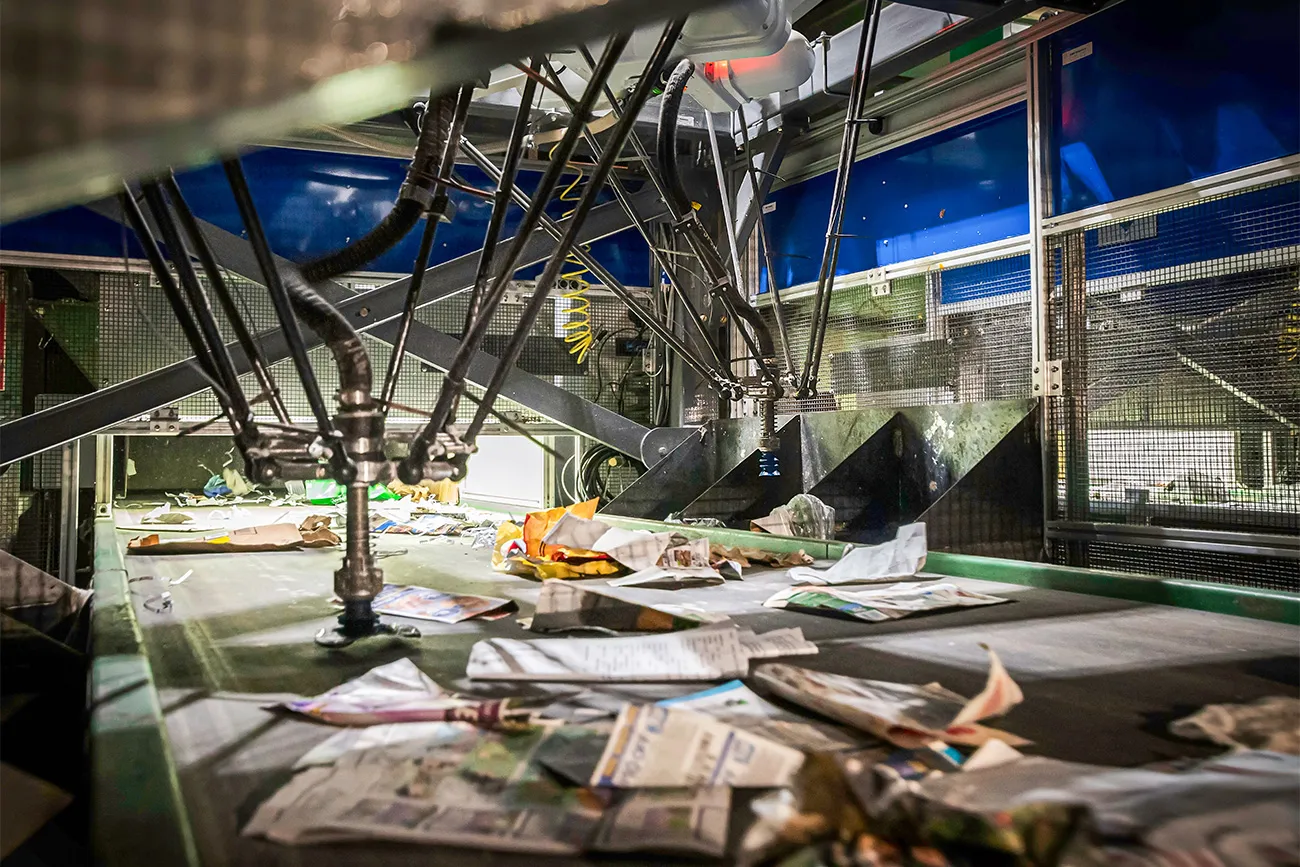
Every load of waste that arrives on the conveyor belt at recycling facilities is different. This complexity makes it harder to produce very pure streams and, in turn, recover more valuable materials. But the advent of artificial intelligence (AI) opens up new opportunities to analyse incoming materials and improve quality at the end of the line. This is exactly what AMP Robotics’ technology is designed for.
The complexity of mixed material streams has been a challenge for the recycling industry for years. It makes it difficult to capture accurate data and understand what comes in and goes out at the various processing stages. Audits and manual observations provide only snapshots of a materials recovery facility (MRF). Periodic audits are of course valuable, but provide insight into only a sample of the entire material stream. They are also expensive, time-consuming, carry safety risks and can quickly be overtaken by changes in the market. In a circular economy, MRFs are hubs where materials come together. Mixed material streams come in, and sorting produces commodities and residuals. If you do not know what is coming in, it is difficult to manage and adjust processes to account for variations in the material. The industry has therefore built MRFs with wide tolerances for the specifications of incoming streams, which are ultimately converted into products with limited marketability. The result is too much residue and products with too little value. Characterising material at the start of the conveyor belt would be a major opportunity to improve the hub’s performance.
AMP Robotics’ networked intelligence
Understanding what a material stream looks like is key to recovering more materials for reuse. The data generated can boost efficiency and help recycled materials better meet the needs of the rest of the value chain. AI is needed to generate and capture this data. Vision-based AI software can identify and characterise objects in a waste stream in real time by digitising every item that passes by. This creates a data stream that records information such as the number of objects and their packaging characteristics. AMP Robotics has already deployed hundreds of robots and sensors that process millions to billions of objects on MRF conveyor belts. This helps automate the continuous characterisation of materials. The more robots are installed, the more the industry can benefit from this networked intelligence. The network effect therefore improves sorting intelligence. When a challenging new packaging type or material appears, the AI can be trained quickly to identify it. This knowledge is then shared across the entire robot fleet.
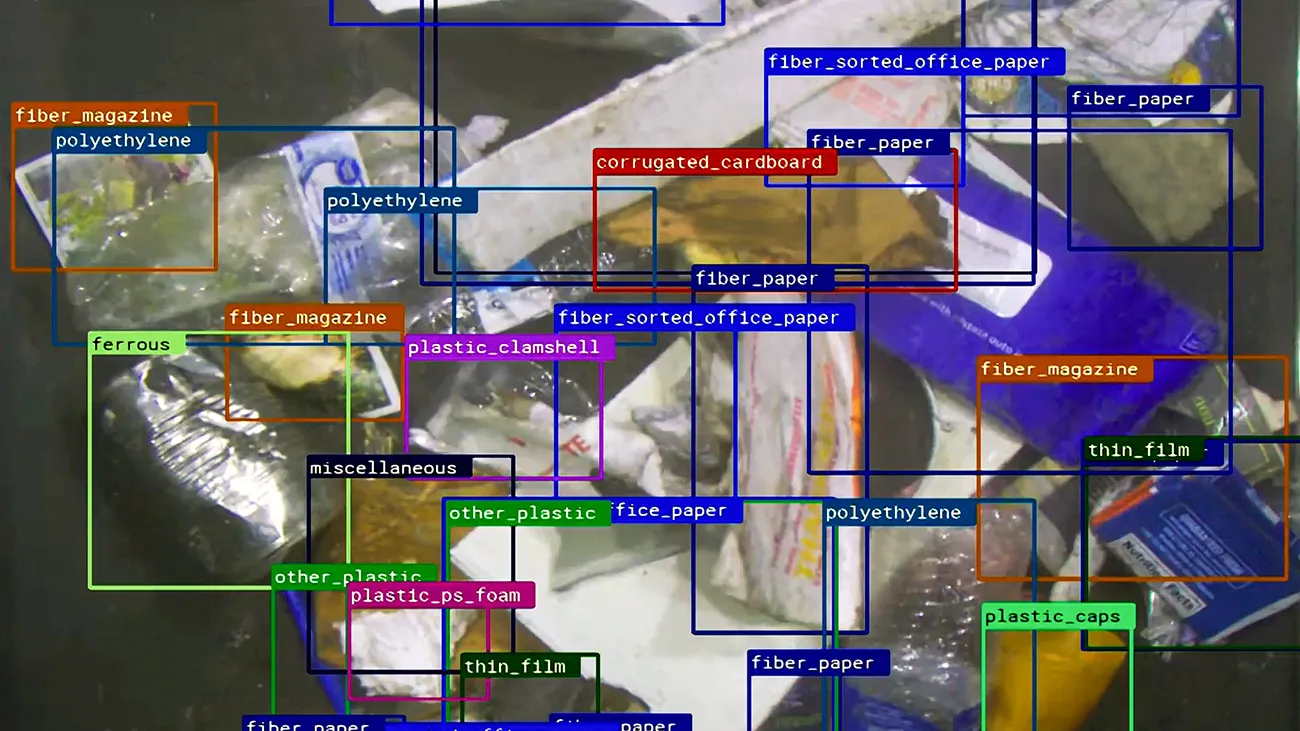
Insights to improve quality
MRFs can use this data to improve the quality of incoming and outgoing materials. They can compare material stream data graphically with historical data, set thresholds for the volumes of particular materials and trigger alerts when those volumes fall above or below them, export data for further analysis and integrate it into intelligent platforms. Real-time monitoring and analysis of material streams provides insights and feedback. With tangible data, processors can communicate clearly with partners or employees, for example about:
How much contamination enters the production process, and where does it come from?
How much valuable material is still being lost as residue?
Can I secure a higher price by using data to demonstrate the quality and quantity of material in the bales?
Useful for everyone in the value chain
There is no shortage of potential applications. Today, most focus on robotic sorting and diagnostic analysis using stand-alone sensors. As more sensors are introduced, AMP can help MRFs become data-driven processors, reducing costs and increasing revenue. The data can also help inform the design of new MRFs. AMP’s application of AI has already enabled companies to set up secondary sorting stations that are economically viable, for example to further sort small volumes of mixed plastics, paper or metals. Better data and improved capture technology offer unprecedented opportunities to understand the quality, flow and recovery of specific containers and packaging. AMP’s technology can help producers launch initiatives to increase recycling rates and create new value streams for recyclable materials. Sensors, which are being used increasingly widely in MRFs, can meet the demand for data to support comprehensive reporting on recovery rates. Data capture, measurement and material characterisation for recycling provide a mechanism for meeting legislative requirements around recycled content and moving towards a more circular economy.
Question about this story? Ask your question
Keep following this
Get an email when a new story is published. No account needed.
- SubjectDetection equipment