Two electric cranes perform a perfectly choreographed ballet
Text & foto’s Luc Ophals
Optimised processing of the new blue bags
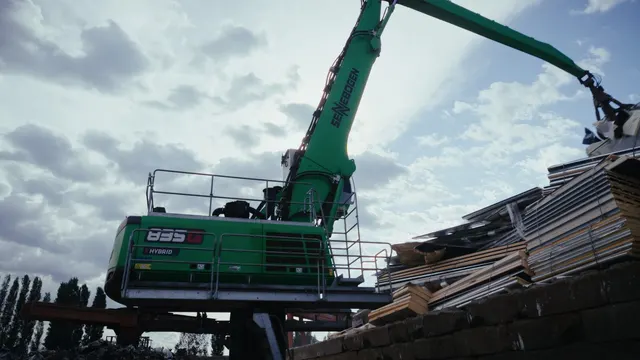
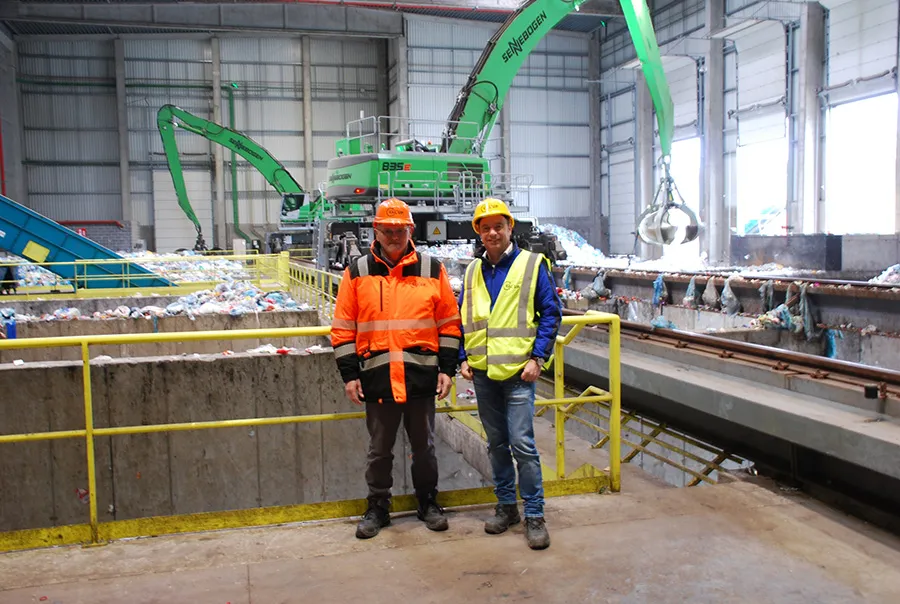
Since their delivery and commissioning in November 2021, the two impressive Sennebogen 835 electric cranes have been busy transferring bags of waste from one pit to another in the vast shed at the Val’Up sorting centre in Ghlin. Five days a week. They work at a steady, consistent rate of no less than 12 tonnes/hour, while waste transport trucks unload with equal diligence in the feed area of the PMD waste sorting process.
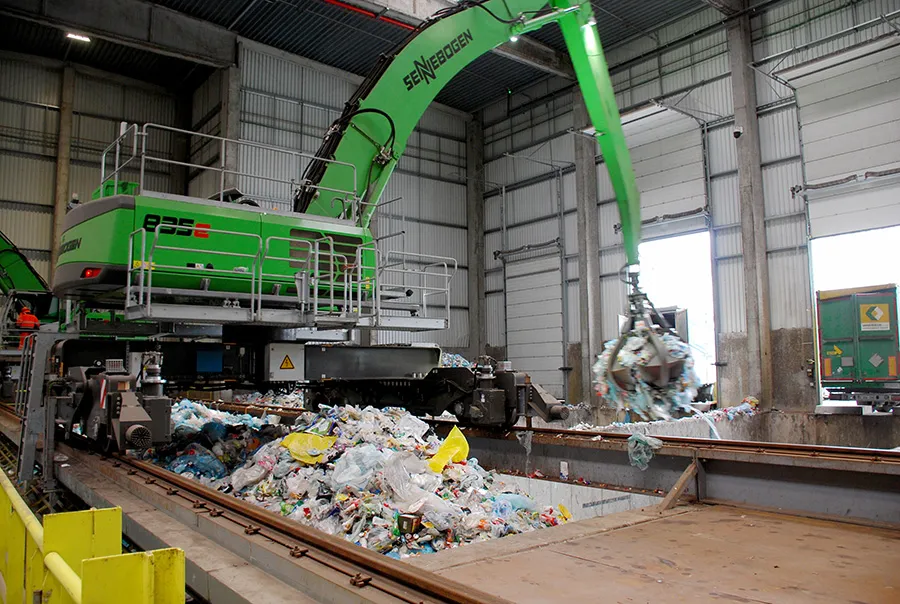
Val’Up (formerly Valodec) is the largest sorting centre for mixed PMD packaging in Wallonia and receives impressive quantities of waste from the blue bags collected from households. At Val’Up, there is naturally no question of allowing this waste to accumulate any longer than necessary, given the volumes arriving each week. The site processes no less than 50,000 tonnes of PMD waste, which is separated and shredded into fourteen reusable fractions.
The project
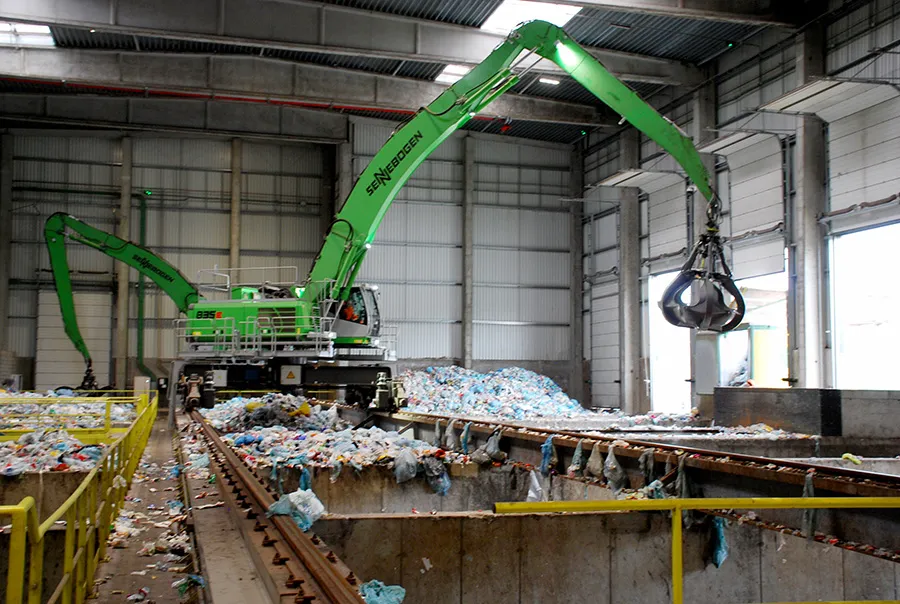
The new sorting centre in Ghlin-Baudour was built by the joint venture between Jan De Nul and Vauché and was inaugurated on 10 May 2022. It was at the initiative of Jan de Nul Group that SMT Belgium, a full-service distribution specialist for the construction, processing and recycling sectors and the exclusive Sennebogen distributor in Belux, became involved in the project to design a sustainable solution for sorting the new blue bag that could meet the challenge of the growing volume of mixed PMD waste. Stéphane Meunier, operations manager at the Ghlin site, explains the challenges: “Under the former name Valodec, we used a grab and a remote control. For this project, we wanted to use pits for safety reasons, to avoid any co-activity between the trucks and the production equipment. Six pits were installed here to receive incoming blue bags. From the outset, the intention was to install electric cranes. Blue bags are fed into three pits while trucks unload into the other three. So, as a truck tips waste into a pit, one of the cranes pre-sorts the bags and moves them to the relevant pit, while the second crane feeds a hopper that sorts the bags further. The Sennebogen 835 electric model was chosen because of its grab capacity (3,000 l), which had to be able to feed a pit at a rate of 12 tonnes per hour. Another key feature was a hydraulically height-adjustable cab, allowing the operator to see down to the bottom of the pit.
Implementation and customisation
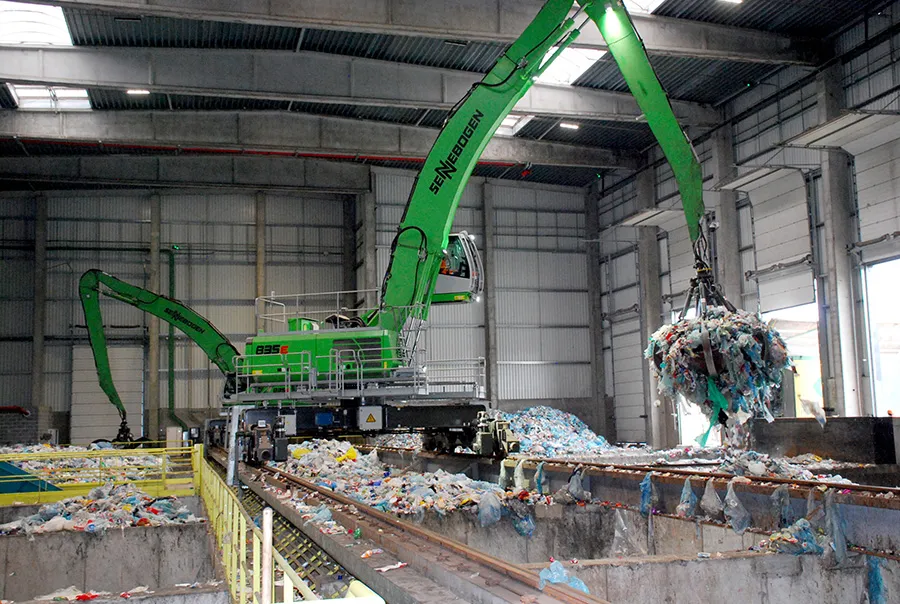
Other features also played a part, as Dirk Philippe, Sennebogen account manager at SMT, explains. “The Sennebogen 835 electric crane, with a power output of 160 kW, is equipped with a banana boom with an 18 m reach, LED lighting, an automatic lubrication system and cameras. The upper structure is standard, but a few modifications were made. The two cranes (each with a specific weight of 56 tonnes) run on rails with a total length of 55 m and draw their three-phase electrical power from cables buried alongside the rails. In fact, the crane was assembled outside and then rolled into the hall. Jan de Nul first laid the rails outside to move the crane into the hall. The rails were then dismantled and reinstalled inside the hall. The three-phase cabling was subsequently installed in the hall. A serious challenge! The installed solution has been operating at full capacity since November 2021. ‘The cranes are running at 100% and we are very satisfied with this installation,’ concludes Meunier.”
Question about this story? Ask your question
Keep following this
Get an email when a new story is published. No account needed.
- SubjectMaterial handlers