“An electric crane was the obvious sustainable choice”
Text Valérie CouplezImage Capture Photography
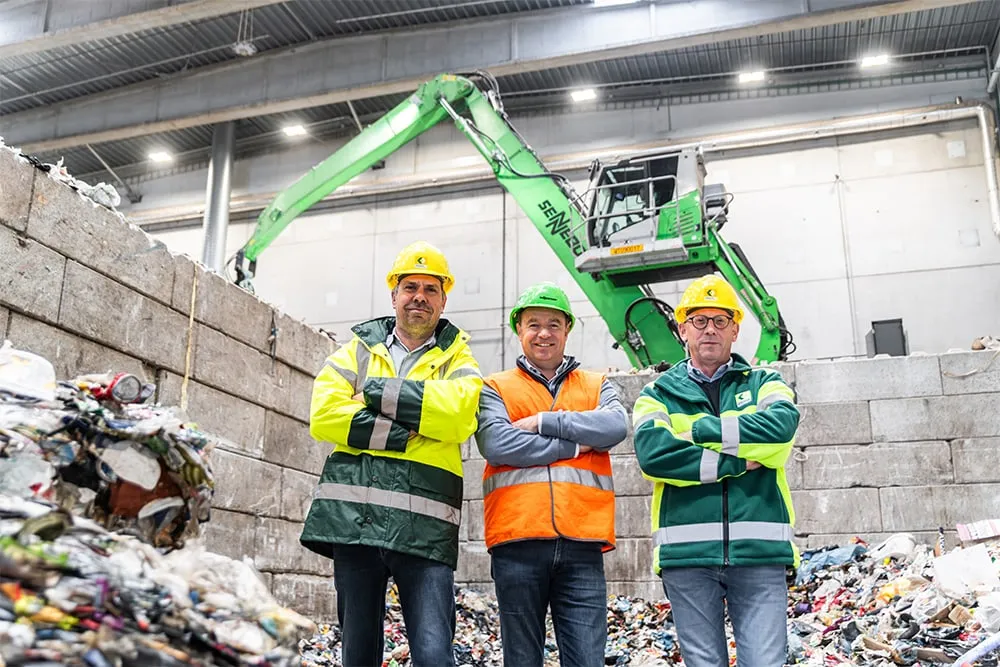
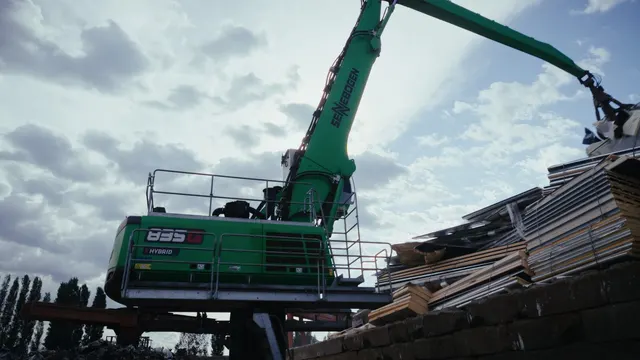
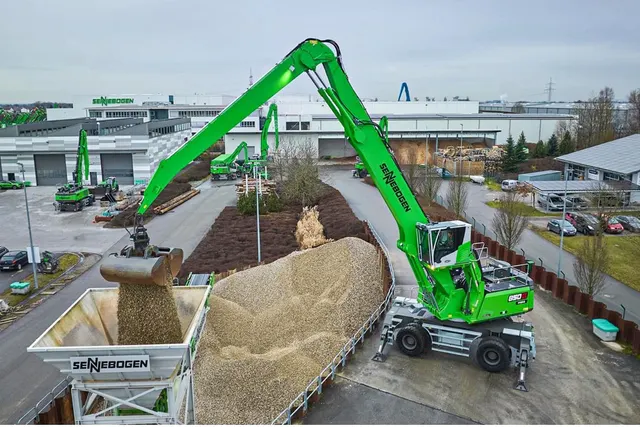
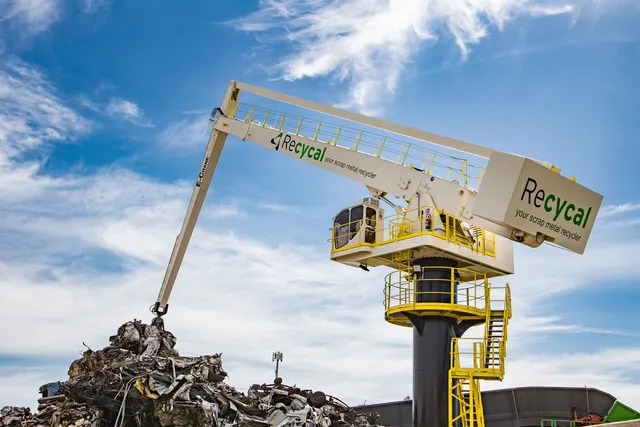
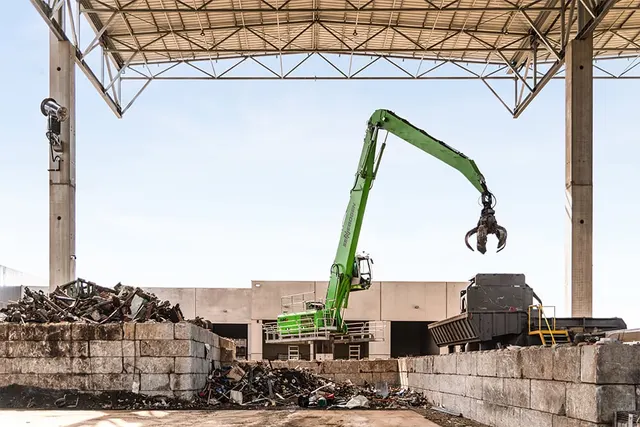
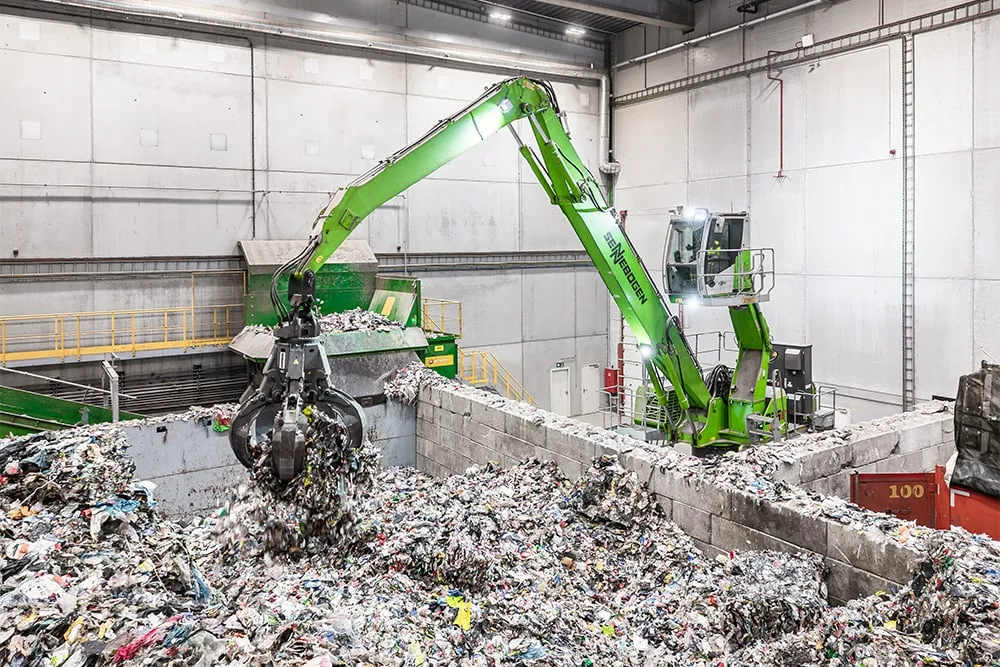
Vanheede is constantly looking to recover more raw materials from waste streams. The family-owned company, headquartered in Geluwe, already recycles or finds a useful application for 98.4% of the waste it collects. It continues to invest in getting closer to 100%. A state-of-the-art sorting line was recently added in Rumbeke to recover even more materials that were once considered lost. Feeding the line is another sustainability champion: a Sennebogen crane, available in electric variants for more than 25 years. The 825 E supplied by SMT to Rumbeke is one of them.
One of the major players in waste management. That is the least you can say about family-owned Vanheede. Today, it serves 20,000 customers in Belgium, Luxembourg and France and processes 1.2 million tonnes of waste into new raw materials across around 20 sites. Through its activities, Vanheede helps shape the circular economy. “Above all, we want to set a good example ourselves,” explains Vanheede Operations Manager Tom Maroy. “We try to carry out everything we do as sustainably as possible, and to get better at it every day.”
State-of-the-art sorting line
One good example is the site in Rumbeke, where residual waste from businesses, among other materials, has been processed for many years. Maroy: “The new Vlarema regulations require us to sort out even more fractions. Traditional work with a crane is no longer enough to meet those requirements. That is why we decided to build a state-of-the-art sorting line here to separate around eight waste streams.” In time, it will process 100,000 tonnes of commercial residual waste. For now, a further 45,000 tonnes of PMD residue also passes through it so that every possible raw material can be recovered. “By sorting out purer fractions, other Vanheede sites or external processors can turn our recyclable materials into higher-value applications. We will close the loops,” Maroy is convinced.
Working as sustainably as possible
Since the line started up in February, Vanheede has relied on a Sennebogen 825 E to feed it. It was the obvious sustainable choice. “We want to eliminate CO2 emissions from all our activities, from collection through to processing. For example, we want 20% of our trucks to be electric by 2030,” Maroy explains. At Rumbeke, Vanheede already meets a large part of its energy needs by converting the biogas produced into electricity and heat. Through a heat network, it also supplies heat to the spray booths at neighbouring company Dewulf. “Since we needed a stationary crane here, the choice of an electric model was an easy one. We try to embed sustainability throughout our entire business. An added benefit is that there are no emissions in the production hall, because our people’s wellbeing comes first,” Maroy adds.
40% lower costs
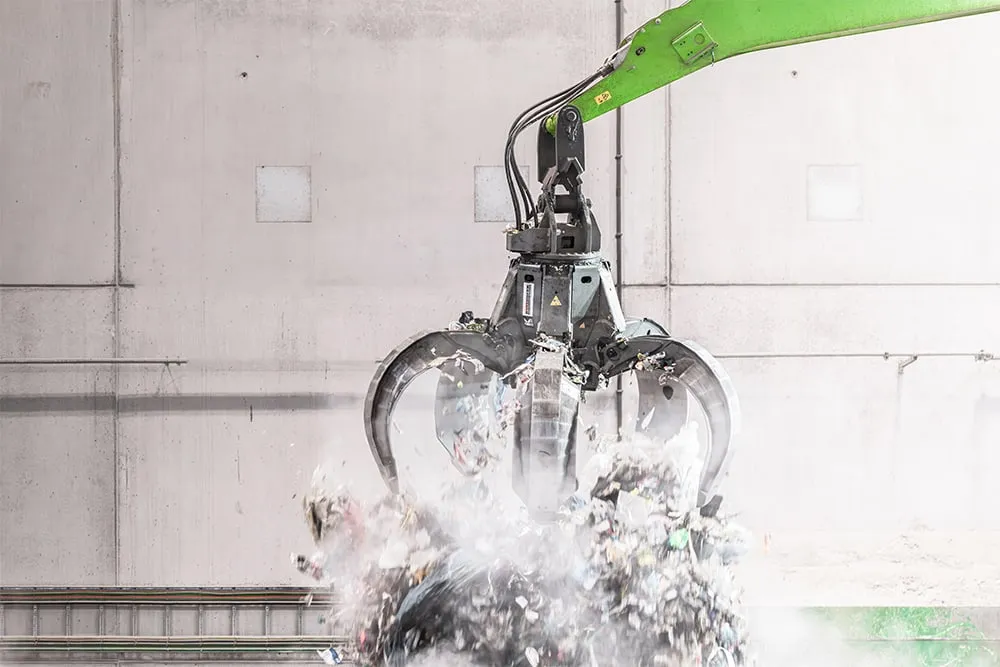
Vanheede had done its homework, including on the make. Vanheede Fleet Supervisor Lucas Ossieur: “We had already seen Sennebogen machines at work during visits to similar facilities. We knew what they could do and that they offer a very attractive total cost of ownership, up to 40% lower than a conventional diesel engine, partly thanks to their longer service life and lower maintenance costs. And since supplier SMT is already a familiar presence here, with Volvo wheel loaders among other things, we are also assured of good service. That matters, because this is a critical asset. We can manage without the feed for a while, but the crane needs to be back up and running as quickly as possible.”
Safety first
So far, it has performed admirably. Since it was introduced in February, it has clocked up more than 1,000 operating hours without any significant problems. “The big test is still to come,” Maroy laughs. “We are now scaling up to two shifts, and in January, even three. But I have every confidence in it. SMT trained eight people to operate it and carry out its daily maintenance. We rotate the work between the wheel loaders, wheeled material handlers and the Sennebogen, so it never gets monotonous.” The cab was also fitted with every possible option to make operation as effective and safe as possible. “First of all, it is positioned higher up to provide an optimal view of the filling line. It is also pressurised, and the incoming air is filtered through a HEPA filter (to protect the crane operator’s health). Thirdly, it is fitted with armoured glass in case of an explosion. With all the issues surrounding nitrous oxide cylinders, these are factors we take into account when making decisions,” Ossieur adds.
Een zakelijke vraag aan SMT Belgium NV/SA? Get in touch
Companies in this story
Keep following this
Get an email when a new story is published. No account needed.
- SubjectMaterial handlers
- CompanySMT Belgium NV/SA