












Businesses join forces for a circular economy
‘The Dutch government cannot afford to lag behind’
“What we need are clear targets and a stable support policy. That would enable businesses to develop more circular business models. Naturally, they also need sufficient funding to innovate and compete with fossil-based and other raw materials, as well as with the incineration of reusable materials.”
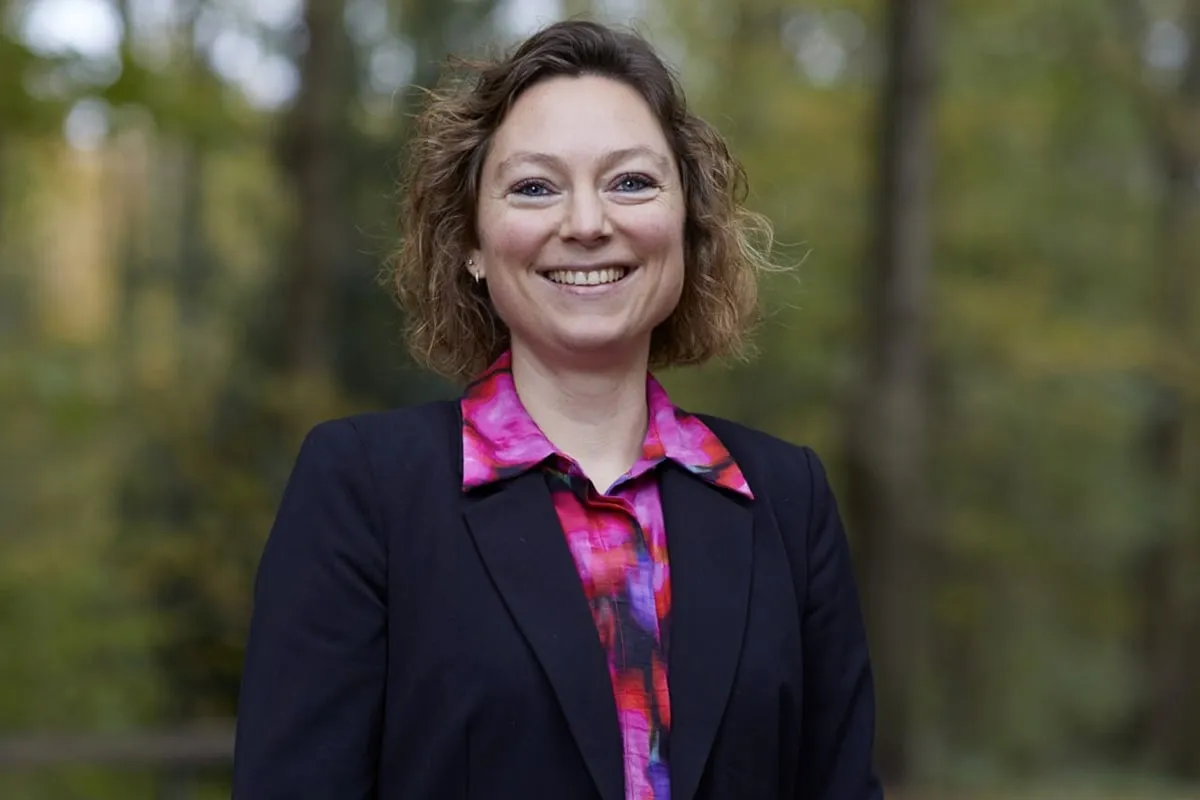
Sanne Westra, strategic policy adviser at business organisation VNO-NCW, has a very clear view on how the Dutch government should support businesses on the path to a circular economy by 2050. “This is incredibly important, because it will make us less dependent on imports for our raw materials. The Netherlands is the European champion in recycling, but political support is essential.” For many businesses, this is becoming unaffordable, for example because energy costs are soaring or virgin materials are cheaper than reusing recyclate. Westra says: “I share the waste sector’s view that the government should buy more recycled plastics itself and set a fixed price per tonne of recyclate. If it does not, cheaper raw materials will be bought from abroad and recyclate production will grind to a near halt.”
Willingness
According to Westra, the decline in the collection, sorting and reuse of raw materials affects more than just waste companies. “That is why we are working together with MKB-Nederland, VNCI (the trade association for the chemical industry, ed.), FME (the business organisation for the technology sector, ed.) and environmental organisation Natuur & Milieu to move towards a circular economy. We have built a complete recycling system, and there is a willingness to invest further in new technology. But first, we need to work with the government to stop the looming crisis in recycling.” Westra is positive about the efforts the Dutch business community is already making. An implementation plan for the circular economy has now been drawn up, based on input from businesses and other organisations. One example is the so-called ‘acceleration hub’. “This is a partnership between the Ministry of I&W, MVO-Nederland, VNO-NCW and MKB-Nederland,” Westra explains. “The aim is to launch breakthrough projects that will significantly accelerate the circular economy.”
Dependent
A look at the VNO-NCW website reveals around twenty projects, including chemical recycling of plastics, textile recycling and mattress recycling. Westra says: “We are focusing in particular on the principles and recommendations needed to speed things up. We are also partly dependent on European legislation governing the administration and import and export of waste between countries. We benefit when waste is seen as a source of raw materials.” Climate, energy and raw materials are inextricably linked. “You cannot view them separately, or tackle them separately,” Westra stresses. “Take the National Circular Economy Programme, for example, which started in 2023 and runs until 2030. Its aim is to use fewer raw materials, extend the useful life of products and recover materials from collected waste. This will make us less dependent on other countries. As Dutch businesses across several sectors, we are working towards this.”
Procurement
“Reusing materials or using them for longer has to pay,” says Westra. “As long as primary raw materials are more readily available in terms of cost and volume, that ‘shift’ will be very difficult to achieve. We therefore see the government as having an important role to play. For example, make it standard practice in tenders to require at least 10% secondary material, or award extra points for circular design. When the government sets a good example, others usually follow. We also advocate product standards at European level.” Westra has also found that the Netherlands is a relatively small player. That is why lobbying is also taking place at European level. “Fortunately, Europe is heading in the same direction. It has announced a Circular Economy Act, and a great deal of product policy is already under way. But now we need to step up our efforts and ensure
that rules are introduced for recyclate, along with requirements for the reuse and use of secondary materials.”
Transition
For Westra, circularity means more than just recycling. “It also includes re-use, rethinking and other business models. And we need to ask: what are the business case and the practical options for all those businesses that also recognise that the goal must be a circular economy? The way we produce and consume now is not sustainable in the long term. This is the major transition we need to set in motion, alongside the energy and climate transitions. One of my tasks is to communicate this vision to politicians, the government, our members and knowledge institutions.”
Question about this story? Ask your question
Keep following this
Get an email when a new story is published. No account needed.
- ThemeCircular business under changing regulations
- SubjectBRBS Recycling






