Waste Conference 2025: red alert for the waste sector
Text and images Vereniging Afvalbedrijven
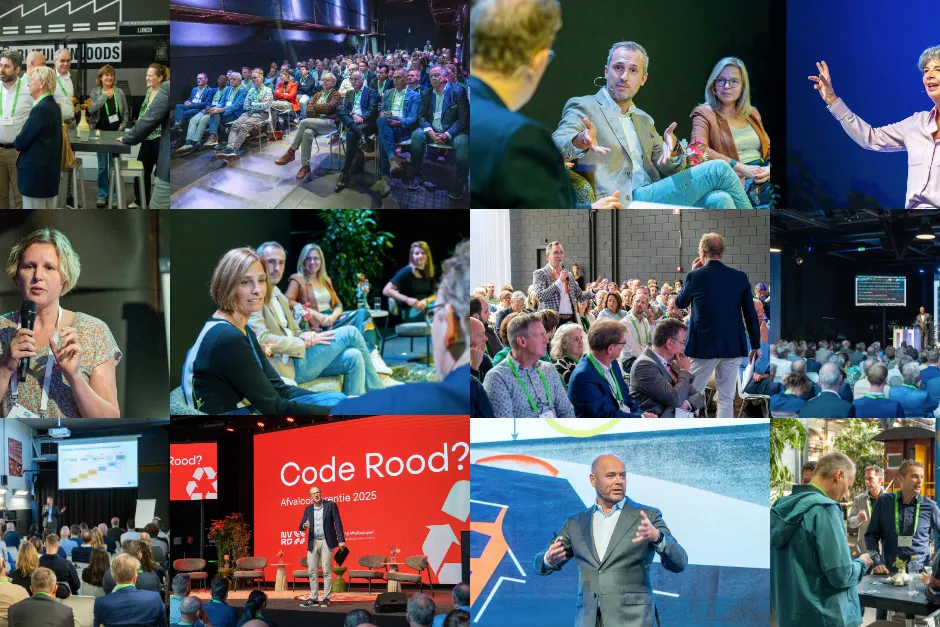
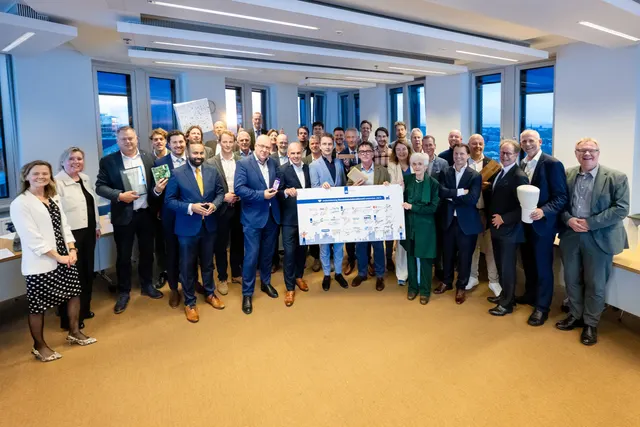
At the Waste Conference 2025, attended by 300 professionals, it became clear that the circular economy is under severe pressure. Bankruptcies, regulatory burdens and geopolitical uncertainty are already posing a threat, but the additional €567 million tax burden for the waste sector, announced on Prinsjesdag, is the last straw for many.
During an election debate, (prospective) MPs from VVD, CDA, D66 and GroenLinks-PvdA admitted that the decision was ill-judged. VVD MP Martijn Buijsse expressed regret on behalf of the governing party. D66 called the decision ‘stupid’, CDA called for reliable policy, and GroenLinks-PvdA announced a motion to reverse the measure, but to no avail: it failed to secure a majority. Conference chair Rens de Jong rhetorically asks whether recycling should disappear from the Netherlands. Politicians advocate incentives such as a levy on raw materials and mandatory recycled-content requirements.
An incentive at the start of the chain
Keynote speaker and economist Mathijs Bouman criticised the tax as an ineffective behavioural incentive. “Put the incentive at the start of the chain,” he said, referring to reports by the CPB and the World Bank. Bouman sees hope in Europe, where recycling is seen as a strategic way to reduce dependence on countries such as China. The effects are already visible: twelve recycling companies have closed, and Healix in Maastricht is considering relocating to a low-wage country. Renewi invested millions in a sorting plant, but is now facing additional costs due to the CO2 levy. “Relocating to Belgium is a serious option,” said Kim Meulenbroeks of Renewi. The chemicals industry is also under pressure. VNCI warns that it is ‘five minutes to midnight’. Nevertheless, the sector aims to use 30% recycled material by 2030.
Circular procurement
There are some bright spots. More than twenty manufacturers are willing to procure circular plastic voluntarily. Hagar Ligtvoet (Ministry of Infrastructure and Water Management) believes the government should also make greater use of its purchasing power. Emma Rotman of Strukton sees opportunities in the infrastructure replacement programme, but points to obstacles such as certification and costs. IKEA is leading the way: all its products must be circular by 2030. The second-hand market is growing, and in 2027 the company will launch a platform for used furniture. “We need partners from the waste sector to close material loops,” said sustainability partner Gilbert De Jong. The message from Amersfoort is clear: without a change of course, the Netherlands risks losing its leading position in recycling, and the circular economy will remain out of reach.
Question about this story? Ask your question
Keep following this
Get an email when a new story is published. No account needed.
- ThemeCircular business under changing regulations
- SubjectVereniging Afvalbedrijven