Government’s climate plans are counterproductive
Text and images Vereniging Afvalbedrijven
The Vereniging Afvalbedrijven is deeply disappointed with the government’s climate plans. The government has scrapped both the previously announced ‘standard’ requiring a minimum percentage of recycled plastic in new products and the Circular Plastics Levy. The intended revenue of 567 million euros from the levy will now be placed entirely on the recycling and waste sector. This plan increases costs for households and businesses and undermines ambitions for the circular economy and the climate transition. Thousands of jobs are at risk.
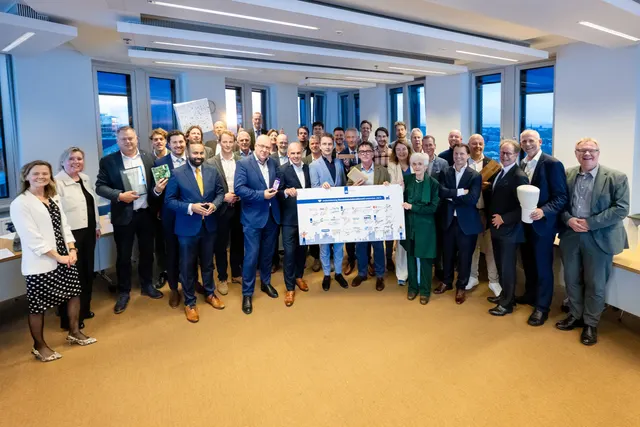
At the ‘Plastictafel’, established at the initiative of the House of Representatives, the waste sector is discussing with government ministries and value-chain partners how to make the entire plastics chain circular while keeping it competitive. In scrapping the plastics levy, the government now says that if no alternative is found at this ‘table’ to achieve a 2 megatonne reduction in CO2 by 2030, greater circularity in the plastics chain and the intended revenue, the waste sector must provide ‘cover’ for the levy. This means that the waste tax (Wbm) and the CO2 levy on waste-to-energy plants (AECs) will be adjusted. The parties at the Plastictafel can, however, discuss fiscal alternatives for only 167 million euros of the total 567 million euros.
Damaging to the circular economy and the climate
Placing a levy of 567 million euros on the waste and recycling sector will leave everyone worse off. Higher rates will make waste processing in the Netherlands unaffordable. The result will be large-scale waste exports, as other EU countries often have no levies or levy much lower rates. Recycling companies will become less competitive still, as the cost of processing residual streams from recycling rises sharply, making recycled materials much more expensive. Investment in new recycling technologies and capacity will decline, as companies using the same technologies in other EU countries have lower costs. Investment in new CO2-reducing technologies will grind to a halt because of the lack of long-term certainty. Investment in CO2 capture by AECs will also be held back, as will investment in transport infrastructure, underground CO2 storage and the supply of CO2 to the Dutch greenhouse horticulture sector. The tightening of the waste tax and changes to the CO2 levy will inevitably be passed on to households, directly affecting their finances through higher waste collection charges. This increased burden runs counter to the government’s policy, which aims to reduce costs for households. Losing our domestic waste and recycling infrastructure will make the country increasingly dependent on foreign raw materials and energy at a time of great geopolitical uncertainty. As activity declines, employment in the circular economy sector in the Netherlands will suffer a major blow.
The Vereniging Afvalbedrijven is urging the government and politicians to reconsider the policy and seek funding from areas where it would genuinely help make society more sustainable.
Question about this story? Ask your question
Keep following this
Get an email when a new story is published. No account needed.
- ThemeMaking plastics and packaging circular
- SubjectVereniging Afvalbedrijven