












Who can process big bags and low-grade coloured films from Belgium?
Text Valérie CouplezImage Valipac
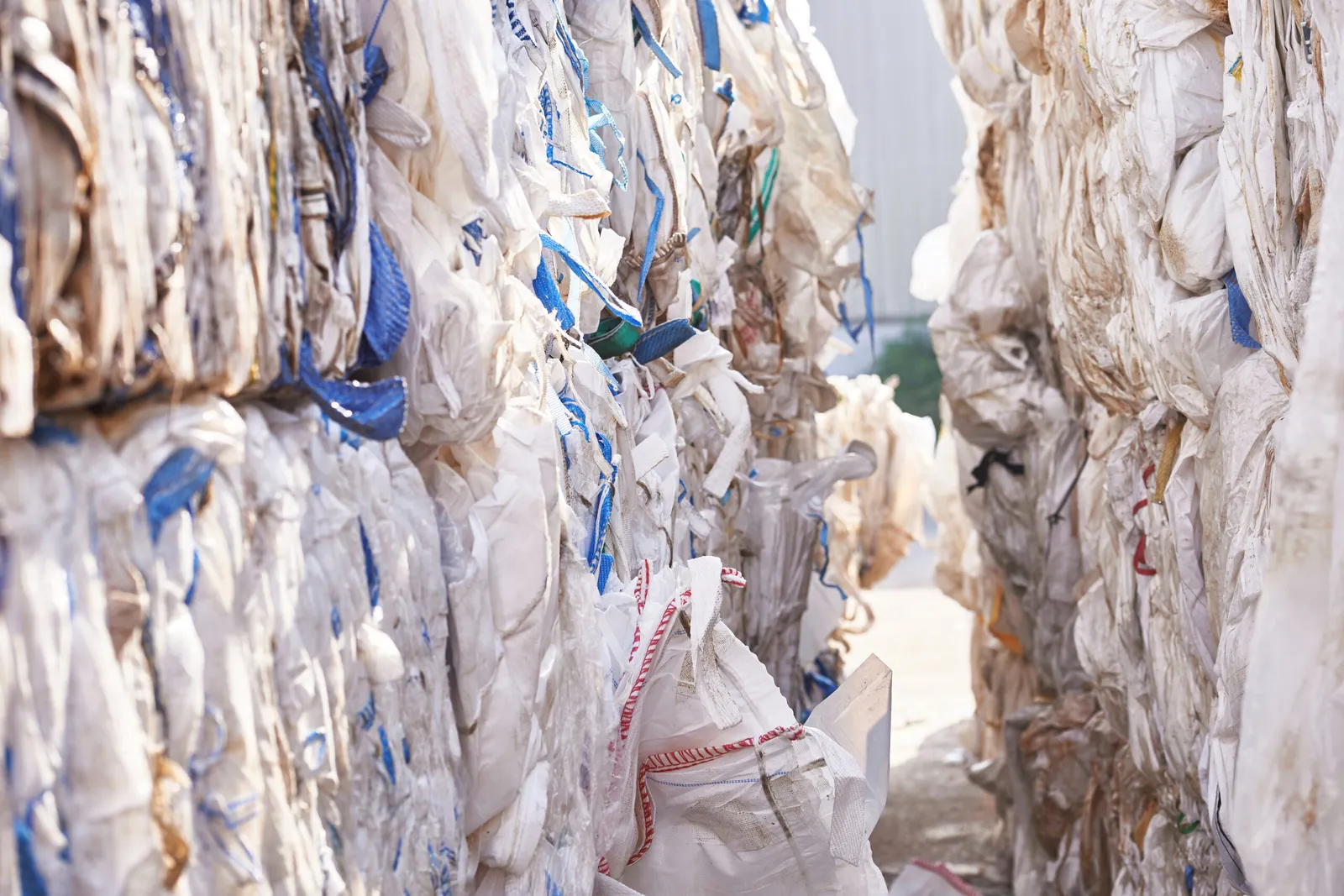
Plastic recycling is under pressure. That much is obvious. But the outlook threatens to become even bleaker with the ban on exports to non-OECD countries imposed by the Waste Shipment Regulation from November. We risk being left sitting on a mountain of waste, consisting mainly of low-grade plastics. Through a market survey, Valipac wants to identify recycling companies with the capacity to give two notoriously difficult streams, big bags and low-grade coloured film, a second life. Valipac wants to secure the capacity to recycle these two streams of commercial packaging waste and make it available to its affiliated operators.
The Waste Shipment Regulation enters a new phase in 2026. From 21 May, additional administrative requirements will apply. Exporting waste will henceforth require prior notification. From November, exports of plastic waste to non-OECD countries will be banned outright. “In practice, we will see a significant increase in the volumes of plastic waste staying in Europe as early as spring. Applications require bank guarantees and must also be approved by the relevant authorities in the country of destination, a process that can take months. Many companies will save themselves the effort and expense if exports are to be banned altogether in November,” explains Xavier Lhoir, deputy managing director at Valipac, outlining the urgency of the issue.
The whole chain under pressure
“We risk being left sitting on a mountain of waste if we cannot find recycling capacity and applications for it. These are not available for all streams today, and that is a problem for the whole chain,” warns Lhoir. “Plastic recyclers are already under considerable pressure because of difficult market conditions. The export ban will push prices down further. But if they stop taking in these materials, that will also affect Valipac’s recycling figures, operators’ service and, ultimately, source separation by waste producers, which we have supported for years through our premiums.”
Market survey
It is precisely for this reason that Valipac wants to take responsibility. It is therefore launching a market survey for two streams for which it sees no market in the short term. These comprise around 6,000 tonnes of big bags (grades A, B and C) and at least 10,000 tonnes of low-grade coloured film (50/50, 60/40, construction film and shredder film), which would otherwise risk being incinerated here and which Valipac would prefer to recycle as locally as possible. By offering payment, Valipac hopes to find plastic recyclers with the required capacity to recycle these streams into regranulate and willing to reserve that capacity for Valipac’s affiliated operators. Prospective recyclers can register by emailing [email protected]. “For both materials, we are preferably looking for recycling partners that can process the full volume and all grades of big bags or film, and produce regranulate from these streams. Please also mention in your email any partners you might work with to pre-treat the materials,” Lhoir adds.
A helping hand
Companies with questions about this market survey can also contact Lhoir. Applications are open until the end of March. “We really hope this initiative can give the entire plastic recycling value chain a helping hand and, by extension, the circular economy as a whole. We must do everything we can now to ensure that the recycling capacity we have built up is not lost before the tough targets for mandatory recycled content in products come into force in 2030,” Lhoir concludes.
Een zakelijke vraag aan VAL-I-PAC? Get in touch
Companies in this story
Keep following this
Get an email when a new story is published. No account needed.
- ThemeMaking plastics and packaging circular
- SubjectNews
- CompanyVAL-I-PAC







