












What happens to flood waste?
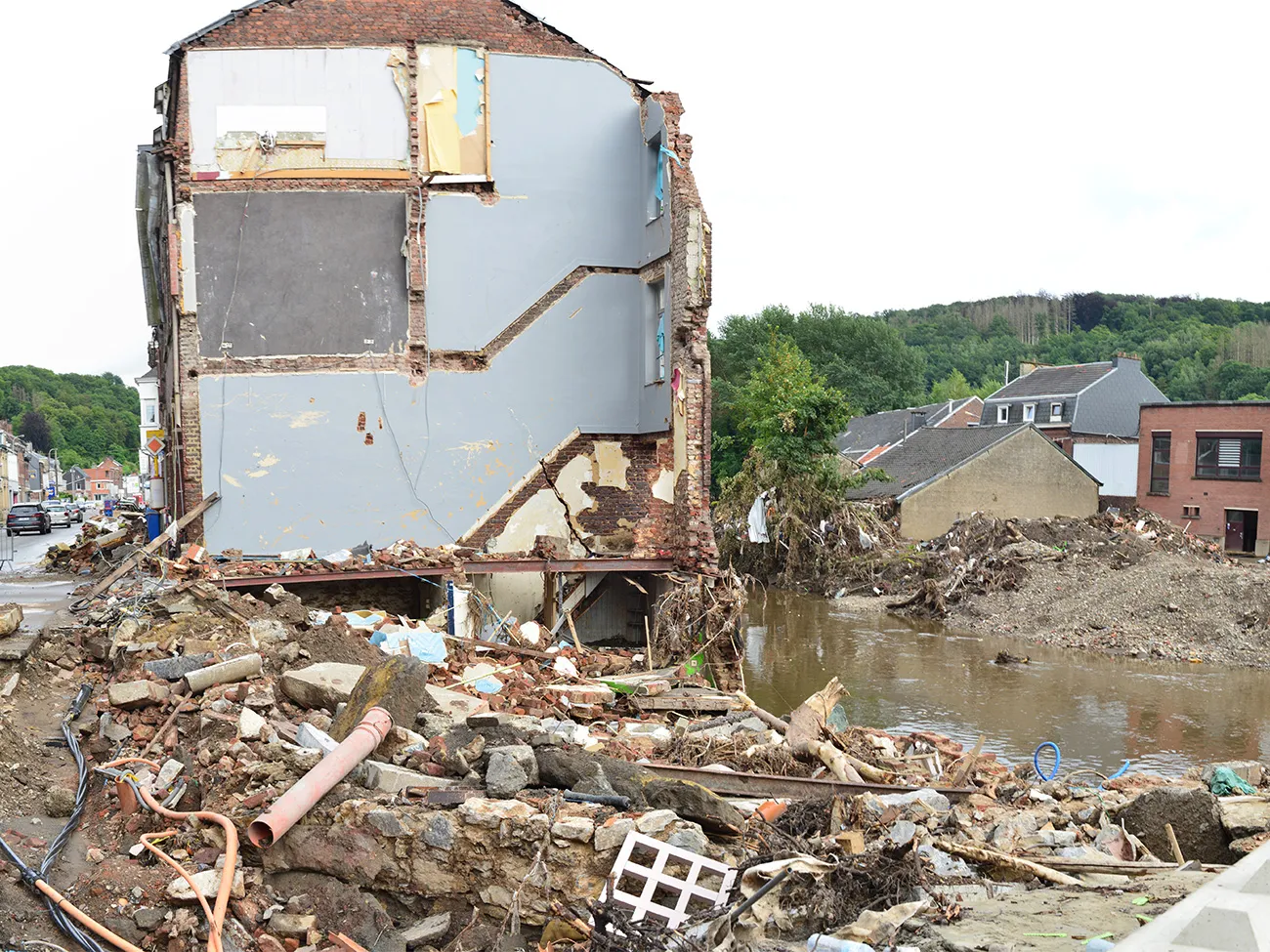
An estimated 160,000 tonnes. The waste mountain left behind by the severe flooding in Wallonia this summer is spread across three temporary sites in the wider Liège area. The Walloon government would also like to see the waste mountain completely cleared before next summer, before temperatures start to rise and it causes too much odour nuisance for local residents or pollution seeps into the soil. It has set a recycling target of 60%.
The heavy rainfall this summer left a trail of destruction, particularly in the south of the country. This resulted in at least 160,000 tonnes of waste. By comparison, around 4.885 million tonnes of waste are produced in Belgium each year. The waste mountain is therefore relatively modest, but the condition of the waste will present a challenge. The Walloon Region had as much of the waste as possible brought together and stored at three different sites: Friche Wérihet in Wandre, an industrial estate in Engis and the disused A601 motorway in Liège.
Tender specifications: 60% recycling
The guidelines issued by the Walloon government focused initially on the Wérihet site in Wandre, as it is closest to local residents. The tender specifications were drawn up jointly by SPAQUE, Copidec (two Walloon operators specialising in the remediation of contaminated sites and soil respectively) and Denuo. The Walloon government was presented with several scenarios and ultimately chose to prioritise recycling, setting a target of 60%. The contract to clear the waste from the three sites was awarded to Aertssen-Bruco-Maes, a consortium formed by three Flemish container companies. Conditions were also imposed to minimise the impact on local residents. Regular air-quality measurements are intended to prevent excessive dust or odour nuisance. A fire safety plan was also drawn up to enable a rapid response in the event of a fire. The public tender was worth just under €7 million.
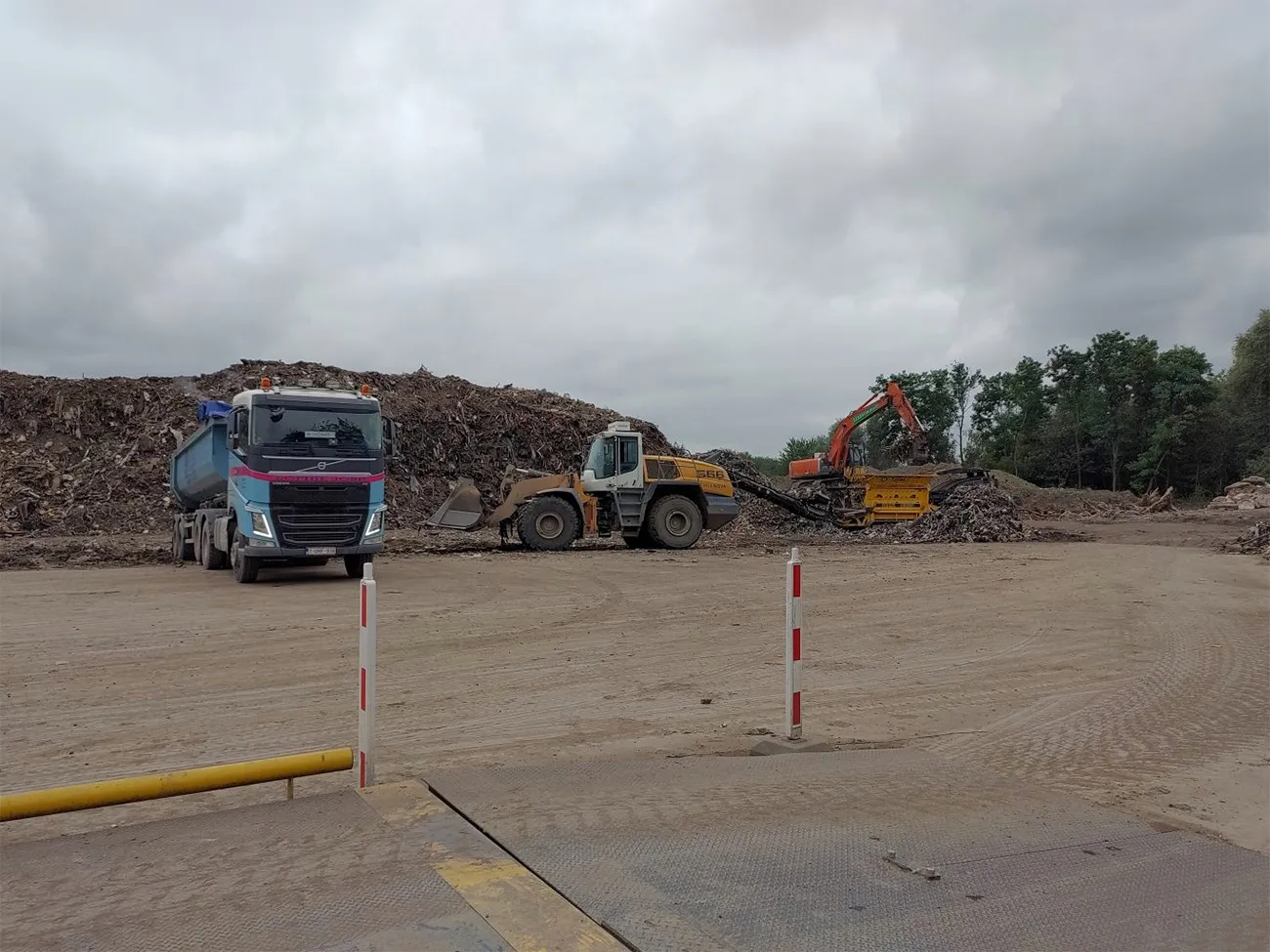
Wérihet and Engis
Initially, Aertssen-Bruco-Maes had to remove the waste from Wérihet by 31 October. There is not enough space to carry out the sorting work on site. Around 33,000 tonnes of waste were eventually transported from Wérihet to sorting centres, by road (30%) and by water (70%). This was mainly mixed waste, which was much more decomposed and contained fine and residual waste. Around 35,000 tonnes have been collected at an industrial estate at the Engis site. Work to clear the waste began there at the end of October, as there is also no room for sorting at source. With direct access to the Meuse, almost the entire volume will be transported by water to sorting centres. The work is due to be completed by the end of the year. The aim is to recycle 26,000 tonnes, either as material or through energy recovery from incineration.
A601 motorway
The biggest challenge will ultimately be the disused A601 motorway. More than 100,000 tonnes are already there, and lorries carrying flood waste from the disaster areas continue to arrive regularly. Work began there on 14 October, in the presence of Minister-President Elio Di Rupo and Environment Minister Céline Tellier. “Here too, 70% of the waste will be transported by water. We want to recover 75,000 tonnes of materials from this waste mountain for a second life. The remaining 25,000 tonnes will be incinerated with energy recovery,” Tellier said. The clean-up work here is expected to take nine months.
Question about this story? Ask your question
Keep following this
Get an email when a new story is published. No account needed.
- SubjectNews







