












What does better sorting and recycling actually achieve?
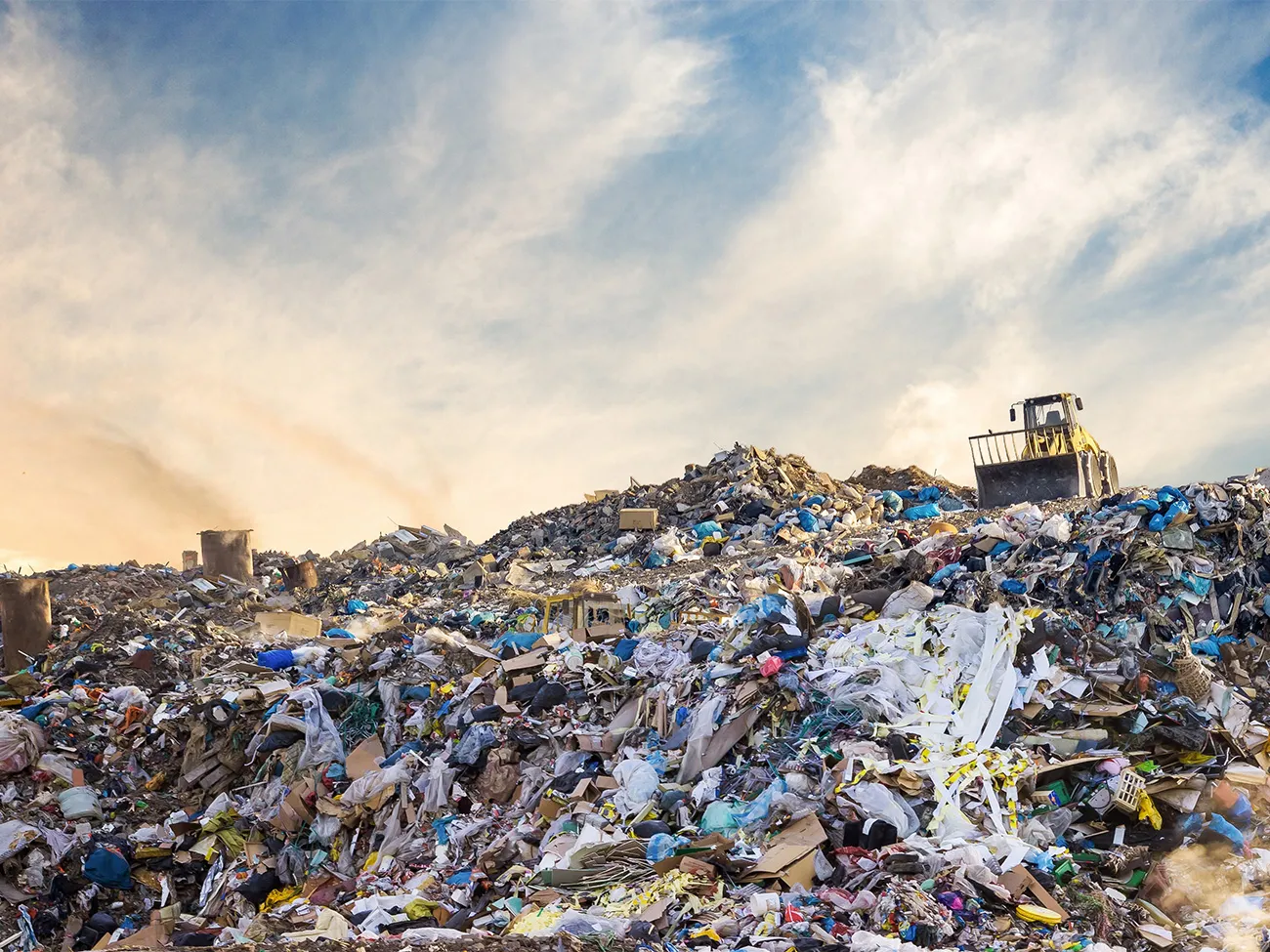
With the new VLAREMA rules, Flanders hopes to recover more useful materials from companies’ residual waste and send less of it to incineration. But what are all these efforts actually meant to achieve? A new European study, due to be published in December, shows what Europe’s efforts to recycle rather than landfill waste can achieve, and how they contribute to meeting the climate targets Europe has set itself.
The study, carried out by the renowned research institutes Prognos and CE Delft, was commissioned by the European waste federations FEAD, CEWEP, RDF Industry Group and Vereniging Afvalbedrijven. It highlights the causal link between increased recycling efforts, in line with policies in both Europe and the United Kingdom, and the resulting CO2 reductions for the waste streams concerned. If Europe succeeds in meeting its shared target of 65% recycling and a maximum of 10% landfill, this will result in an annual reduction in emissions of 150 million tonnes of CO2 compared with 2018. This takes into account the emissions avoided in the energy and manufacturing sectors, which will no longer need to use fossil fuels or virgin materials. The study also points to the importance of recovering as much value as possible from waste and further rolling out circular economy policies.
Towards carbon negativity
The CO2 reductions we can achieve by reusing raw materials will become an important tool for reducing our material consumption and meeting the targets designed to protect the climate. These savings will be further supplemented by energy recovery from the incineration of non-recyclable materials at energy-from-waste facilities and by producing fuels recovered from waste. The study predicts that Europe’s waste sector can become not only climate-neutral but even carbon-negative, contributing not only to a healthy and safe environment but also to Europe’s ever-expanding green economy.
Recycling reduces greenhouse gas emissions
The decomposition of waste in landfills generates methane, a greenhouse gas that, according to the IPCC, is 86 times more potent than CO2 over a 20-year period. The EU has recently joined the Global Methane Pledge to help reduce methane emissions worldwide. The analysis in the study confirms that the greatest CO2 reductions can be achieved by reducing the quantities of biogenic material in waste streams, such as paper, cardboard and biowaste, sent to landfill. Under the ambitious second scenario put forward by the study, which assumes higher recycling targets and an end to landfilling all recyclable and recoverable waste streams, the CO2 emission savings would double and methane emissions would be completely avoided. The waste sector invites all stakeholders to come together and join forces to make this transition happen over the next nine to fourteen years.
Maintaining and stepping up efforts
Achieving the potential for CO2 reductions will be possible across Europe, provided that efforts continue to expand recycling capacity, including government support for separate collection systems, that new measures are introduced, such as mandatory recycled content, and that progress is made on ecodesign and product recyclability. EU policy and taxes must focus on the entire waste management chain to support this transition. Using and sharing energy recovery capacity is one of the keys to diverting as much waste as possible from landfill.
Landfill as a last resort
To achieve the more ambitious second scenario, the study concludes that waste targets must be extended to industrial and commercial waste, recycling targets must be made more stringent, and as few recyclable and reusable waste streams as possible should end up in landfill. The study also recognises that landfill should really be a last resort, used only to treat very specific waste streams such as asbestos, which cannot even be used for energy recovery.
Question about this story? Ask your question
Keep following this
Get an email when a new story is published. No account needed.
- ThemeCircular business under changing regulations
- SubjectNews







