












Waste streams virtually turned inside out
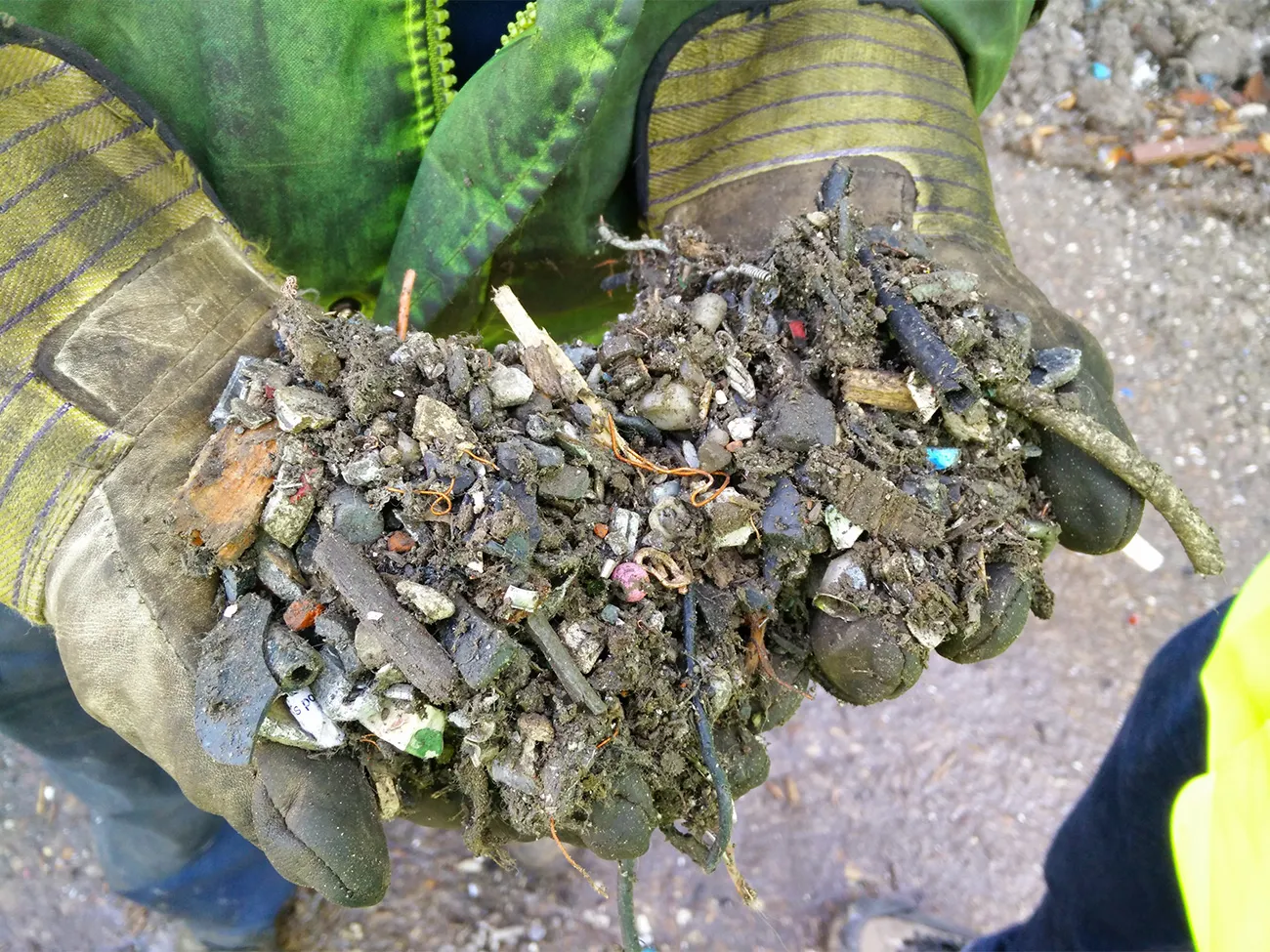
Technology can sometimes emerge by chance. When VITO wanted to find ways of modelling waste processes, it lacked the right data to get started. The only way to fill the gap? Develop characterisation technology of its own. The waste industry was keen to see this happen, because the better streams are characterised, the more efficiently they can be sorted. SUEZ applied the technology to refine its bottom ash processing operation. But its potential reaches much further. A new research project is now set to scale up the technology further to meet industrial standards.
More efficient sorting and much more with innovative characterisation technology
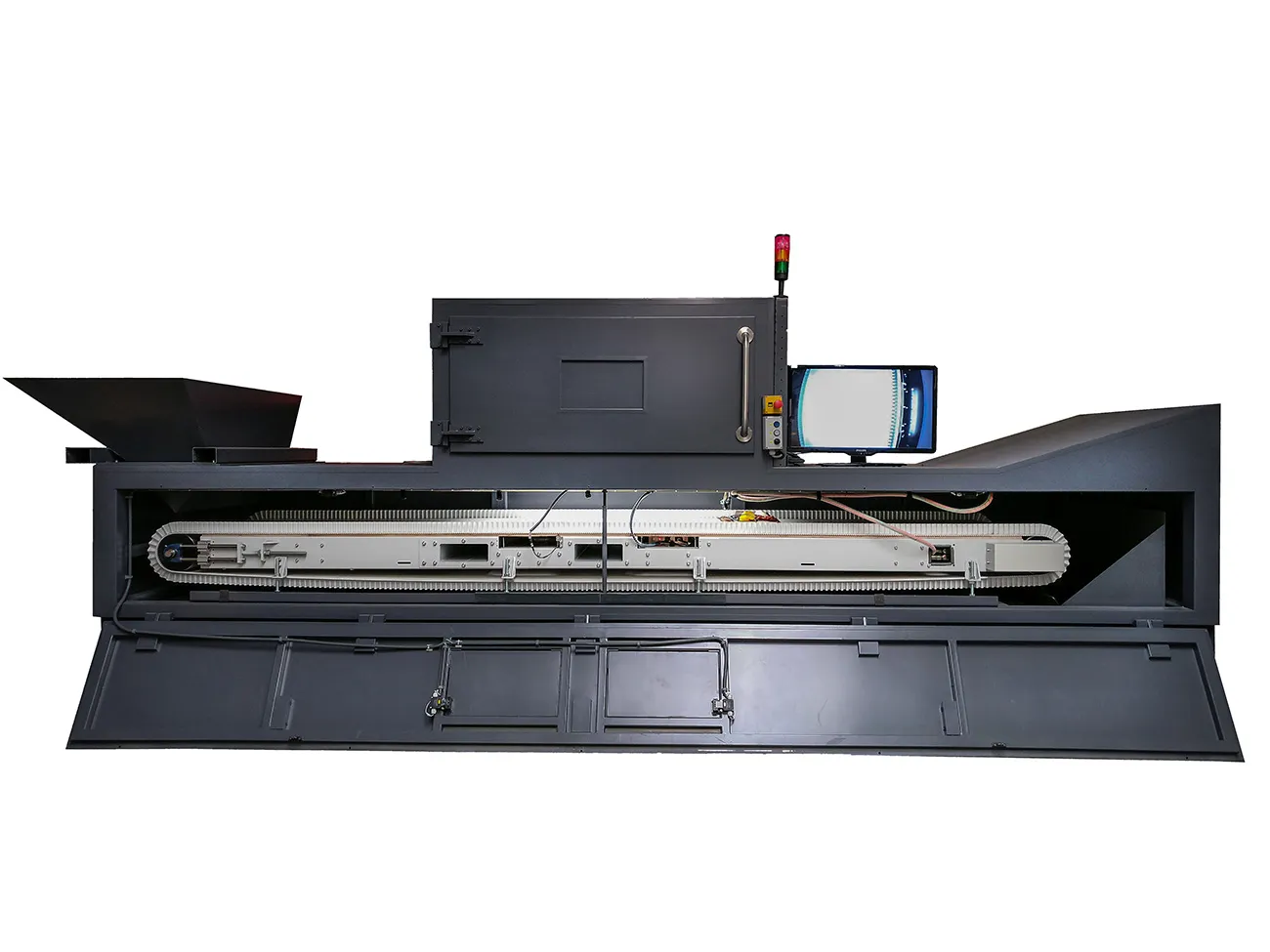
The idea behind the Characterise-to-Sort project (CtS) first emerged in 2014 and was ambitious from the outset. Its initiator, VITO, wanted to be able to characterise waste streams, which are often highly heterogeneous, in real time. Kris Broos (business developer) and Roeland Geurts (researcher) have been involved in the project since day one. Broos: “At present, finding out exactly what a waste stream contains involves taking samples. This has two major drawbacks: test results take a long time to come through, and they only show a tiny part of the picture, because they can tell us about just a very small portion of the waste stream. By contrast, the technology we developed with the other project partners virtually reveals the full mass balance of the waste stream. This enables recycling companies to make smarter decisions: to maximise the recovery of value from the waste stream, improve quality control, optimise their own processes, test new techniques… in short, the possibilities are endless.”
Three techniques in one
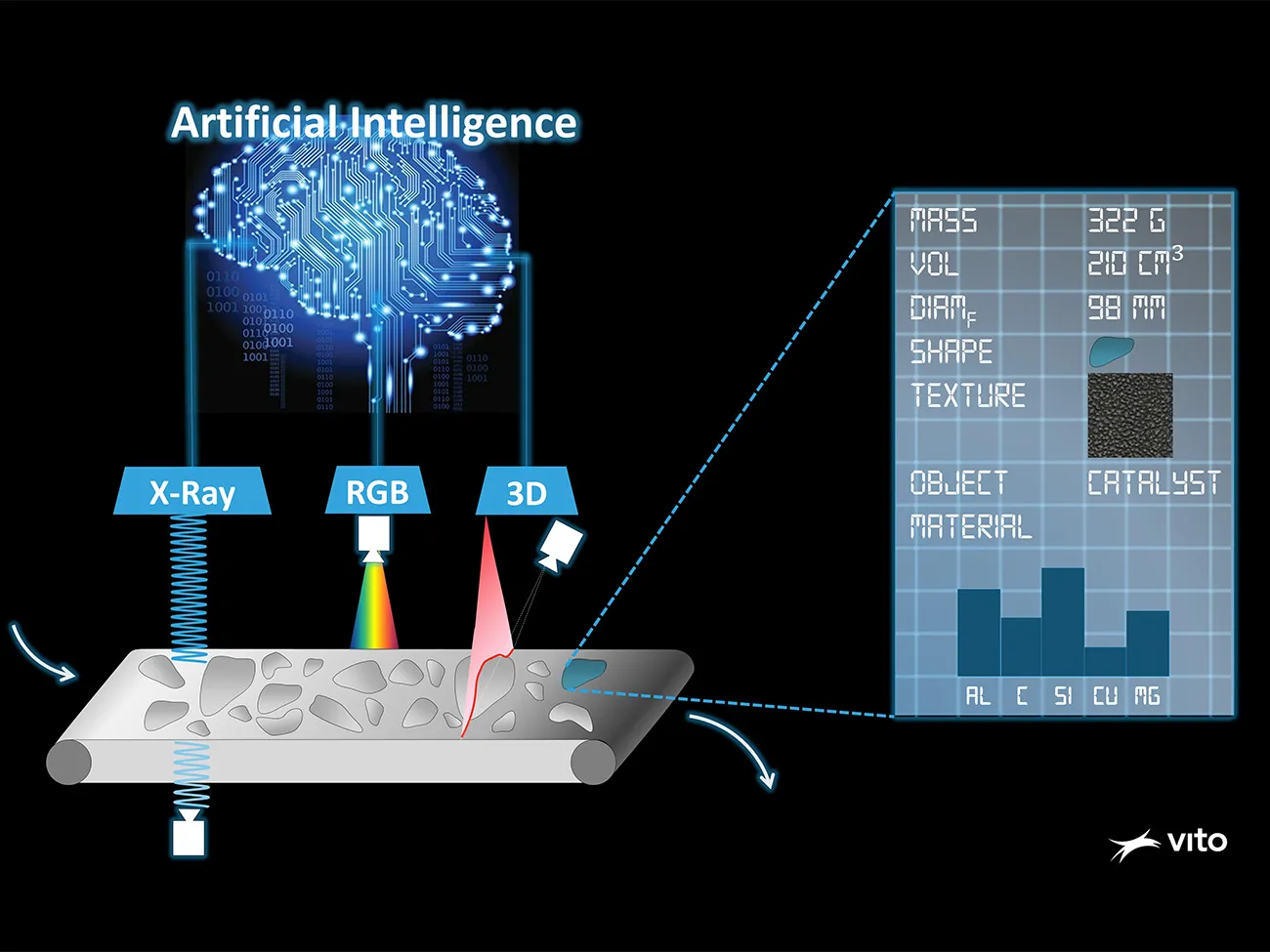
This is achieved by combining three different techniques in one unit: X-ray transmission technology, a 3D camera and a colour camera. “So we look beyond the surface, and also through the materials, in order to characterise them,” Geurts explains. “The techniques were in fact selected with the waste stream in mind. Given VITO’s existing expertise in mineral waste streams, this was an obvious starting point. We will not be able to distinguish every type of plastic from the others, but the techniques we selected have potential for a wide range of materials. X-rays tell us something about the density of materials. By opting for the dual-energy variant in combination with a 3D camera, we can determine the density, mass and atomic number of every particle in the waste stream. The colour camera provides further confirmation.”
Software provides the intelligence
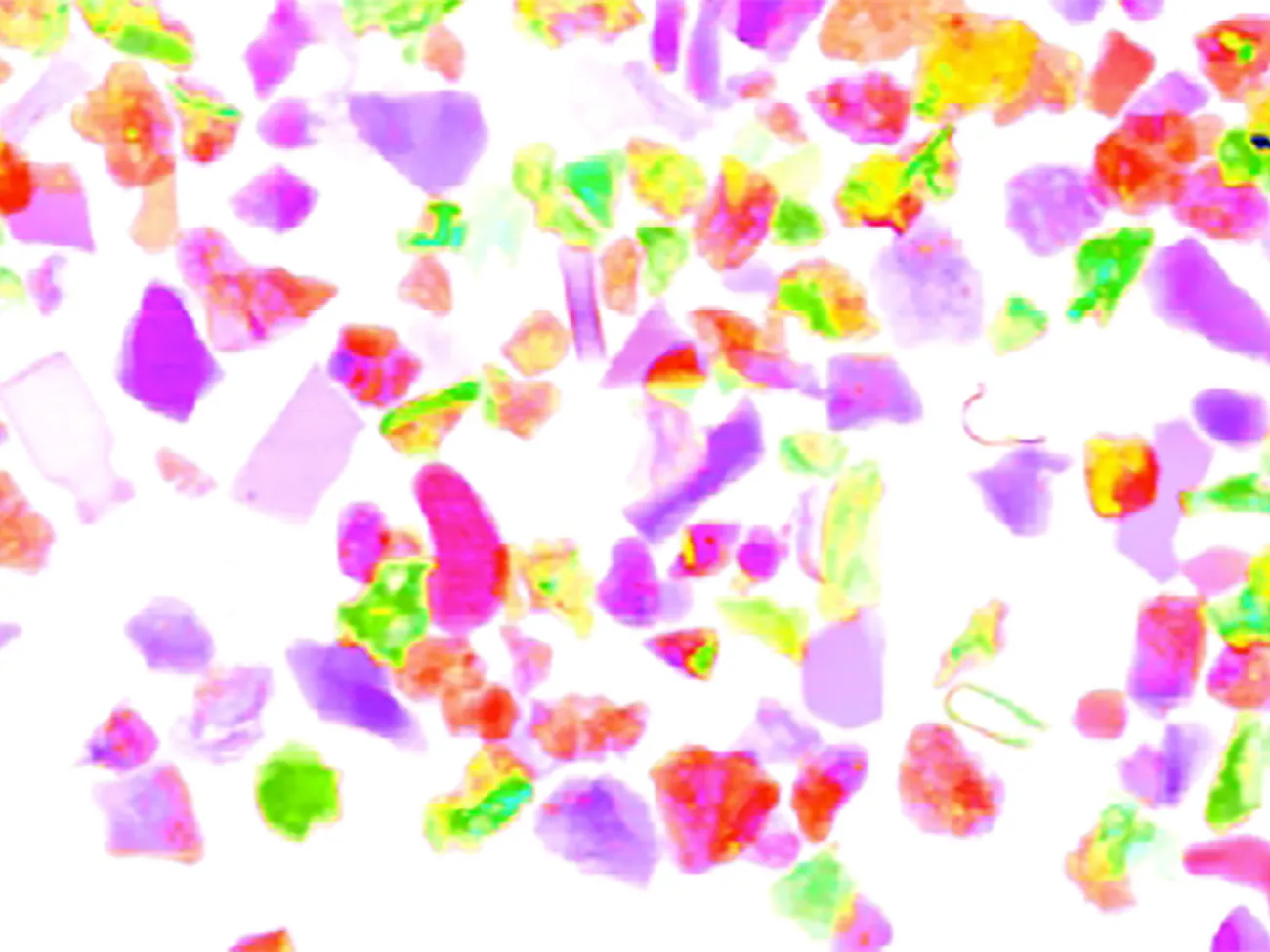
The hardware was consolidated into a 6 m-long unit, through which a 1-metre-wide conveyor belt runs. Material is fed in via a vibrating chute, which ensures it is laid out in a monolayer. “That is one side of the coin; the software we developed is the other. First, it combines data from the various sensors into a single, perfectly aligned image. It then uses labelled training materials. These include materials such as stone and glass, as well as various metals such as copper, aluminium, gold and silver. Models based on artificial intelligence are then used to recognise and quantify these materials in a mixed input stream,” says Geurts.
More than just sorting
In its first tests with construction and demolition waste, the CtS technology achieved 96% accuracy in recognising six different materials. “I’m confident that if we repeated those tests today, we would easily exceed 99%,” Broos adds, “but the research is now mainly focused on more complex and higher-value material streams.” The range of potential applications is extremely broad. The machine developed can handle particles from 1 to 200 mm, but in principle there are no limits. The speed depends on how detailed the desired picture needs to be. In any case, once the follow-up project CHARAMBA is complete, the technology should be ready for industrial use. “Initially, as characterisation technology to optimise sorting processes in the recycling sector, but we are already looking much further ahead than that: towards producing mass balances on the fly, real-time monitoring and virtual experiments. The more complex the software model you build, the more data you can extract from a given heterogeneous stream. And that is where the real gold is to be found,” Broos concludes.
Question about this story? Ask your question
Keep following this
Get an email when a new story is published. No account needed.
- SubjectNews







