












‘Waste collection stands or falls with behaviour’
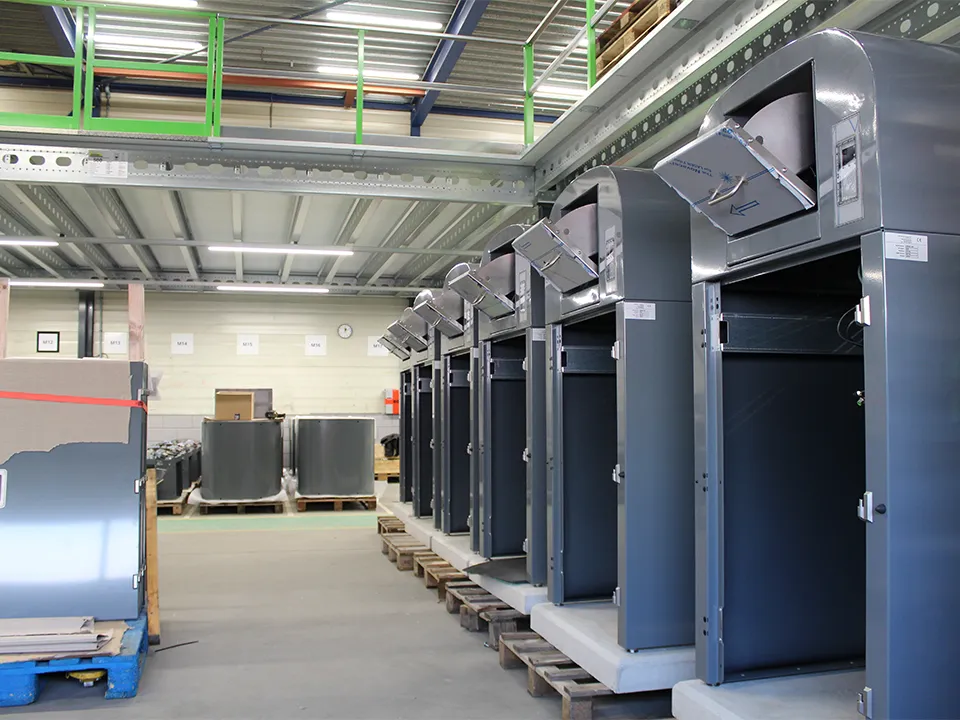
Waste streams are becoming increasingly contaminated, according to MCB Milieu & Techniek, a designer and manufacturer of waste collection systems. The company therefore increasingly gets involved with its clients, mostly local authorities, at an early stage. “We believe in tailored solutions. Our collection systems are a means of getting waste into the right streams, from consumers to processors, so it can be turned into new raw materials.”
“By 2050, our economy must be fully circular and therefore free of residual waste,” says Mark van Beers, sales manager at MCB Milieu & Techniek. “But what we are seeing increasingly often is that the various waste streams are so contaminated that they end up back in the residual waste pile. Food and garden waste and textiles are examples. We are working on solutions to this with our waste collection systems.”
His colleague Gerwin van der Welle adds: “We are seeing a divide emerge between source separation and post-collection separation. With source separation, the challenge is increasingly about the quality of the waste streams. Contamination is on the rise. As a manufacturer and developer of waste collection concepts, we want to respond by helping to collect raw materials to a high standard. Working with our clients, we want to improve the quality of the raw materials collected.”
MCB Milieu & Techniek does this, among other things, with a roadmap developed specifically for local authorities. Van der Welle says: “Waste collection in city centres will change enormously in the coming years, and we can help put those changes into practice. Clean source separation stands or falls with people’s behaviour. Positively influencing that behaviour is a major challenge for local authorities. Using the roadmap we have developed, which involves working with residents right down to their kitchens, we can provide tailored solutions for each local authority or even each neighbourhood. Waste collection cannot be approached generically. The collection method depends on the type of neighbourhood, the population mix and how people are communicated with. And it is not just about residents’ behaviour, but also that of collection crews. We design and advise throughout the entire process.”
Van Beers says: “For example, textile containers can be designed more intelligently so they do not need to be emptied by a heavy crane vehicle. Instead, they have a pull-out mesh basket that can easily be unloaded by hand. This allows the collector to check first whether the contents are too contaminated and remove any contaminants straight away. That way, you avoid an entire collection route’s contents being rejected because a few contaminated containers have ended up in the load.”
Question about this story? Ask your question
Keep following this
Get an email when a new story is published. No account needed.
- ThemeImproving waste collection and transport
- SubjectNews







