












Towards mandatory separate collection of kitchen waste and food scraps
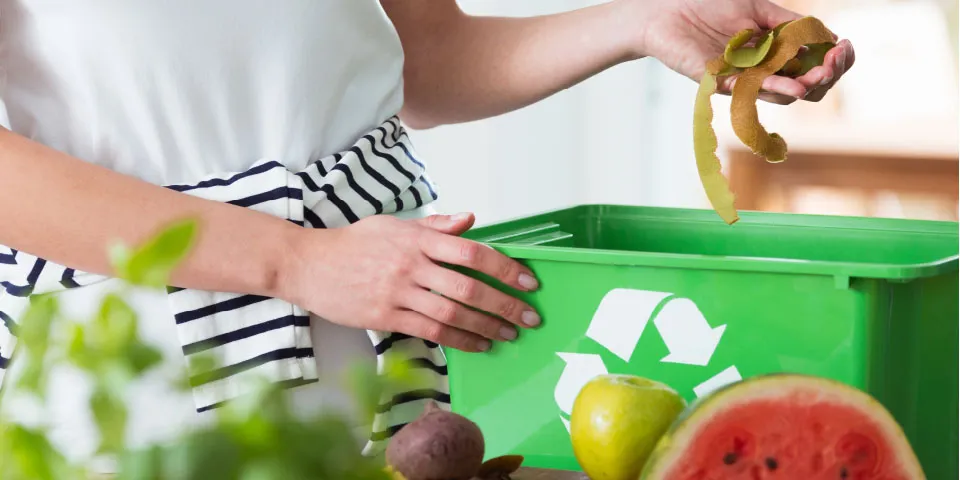
From 1 January 2021, businesses will be subject to a new waste-sorting requirement. Kitchen waste and food scraps, known as organic-biological waste, must be collected separately from that date. The measure is intended to support two ambitions: reducing food waste and shrinking the volume of valuable waste that still ends up in residual waste.
All businesses are required to sort their waste into different waste streams. Sorting kitchen waste and food scraps will further reduce commercial residual waste and ensure that this stream is put to beneficial use. The requirement will be introduced in stages. From 1 January 2021, it will apply to businesses that serve hot meals at least once a week and operate in one of the sectors listed below. The requirement also applies to supermarkets and hypermarkets with a net sales area of more than 400 m². They must collect unpackaged and packaged food products and food scraps in separate containers. From 31 December 2023, the requirement will apply to all businesses.
- businesses and institutions with more than 100 employees
- military barracks with more than 100 employees
- prisons
- function rooms and multi-purpose halls with more than 250 seats
- catering companies
- hospitals and psychiatric hospitals with more than 25 licensed beds
- residential care centres with more than 30 beds
- educational institutions with more than 300 pupils
- restaurants, brasseries and hotels serving more than 50 meals a day.
Which waste streams belong in it?
Businesses have two options for meeting the legal sorting requirement for kitchen waste and food scraps. They can enter into a contract with a private collector, or join the municipal green waste collection round, but only if their waste is comparable to household waste in ‘nature, composition and quantity’. OVAM has also made a clear distinction in a brochure between what can and cannot be included.
- peelings, scraps and leftovers from fruit and vegetables
- cooked, fried, baked … food scraps
- vegetable, meat and fish scraps from soup, collected using a sieve
- coffee grounds
- bread scraps
- kitchen roll
- paper and napkins
- wilted cut flowers
- meat and fish scraps (fat scraps …)
- unpackaged food products (not the packaging)
- liquids (for example, soup, milk, coffee …)
- sauces, fats and oils (except dishes containing a small amount of sauce)
- tea bags and coffee pods
- treated wood (with paint, varnish or preservative)
- bones and animal (slaughter) waste
- animal carcasses
- shells from mussels, oysters …
- manure from large domestic animals or in large quantities
- coarse, unshredded pruning waste and thick branches
- cat litter and birdcage sand
- vacuum cleaner dust
- ash and charcoal
- earth and sand
- disposable nappies and other hygiene waste
- plastic, glass and metals
- cork
- cigarette butts
- packaged food waste
Why this requirement?
To minimise the environmental impact, it is important to produce as little food waste as possible. In Flanders, around 907,000 tonnes of food are lost every year. The climate impact of the food we throw away amounts to a substantial level of CO2 emissions each year. Businesses should therefore aim to produce as little food waste as possible. Less waste means less sorting and less space needed for different bins and containers. Kitchen waste and food scraps also contain many valuable materials. These can be recycled and used, among other things, to produce biogas and digestate. Finally, there will be less residual waste. Under environmental legislation, waste collectors may not simply collect waste from businesses subject to this sorting requirement from 1 January if it still contains kitchen waste and food scraps. They risk inspections and fines.
Question about this story? Ask your question
Companies in this story

Keep following this
Get an email when a new story is published. No account needed.
- ThemeImproving waste collection and transport
- SubjectNews
- CompanyOVAM







