












Three years of asbestos certificates in figures: an estimated 3 million tonnes of asbestos still in circulation
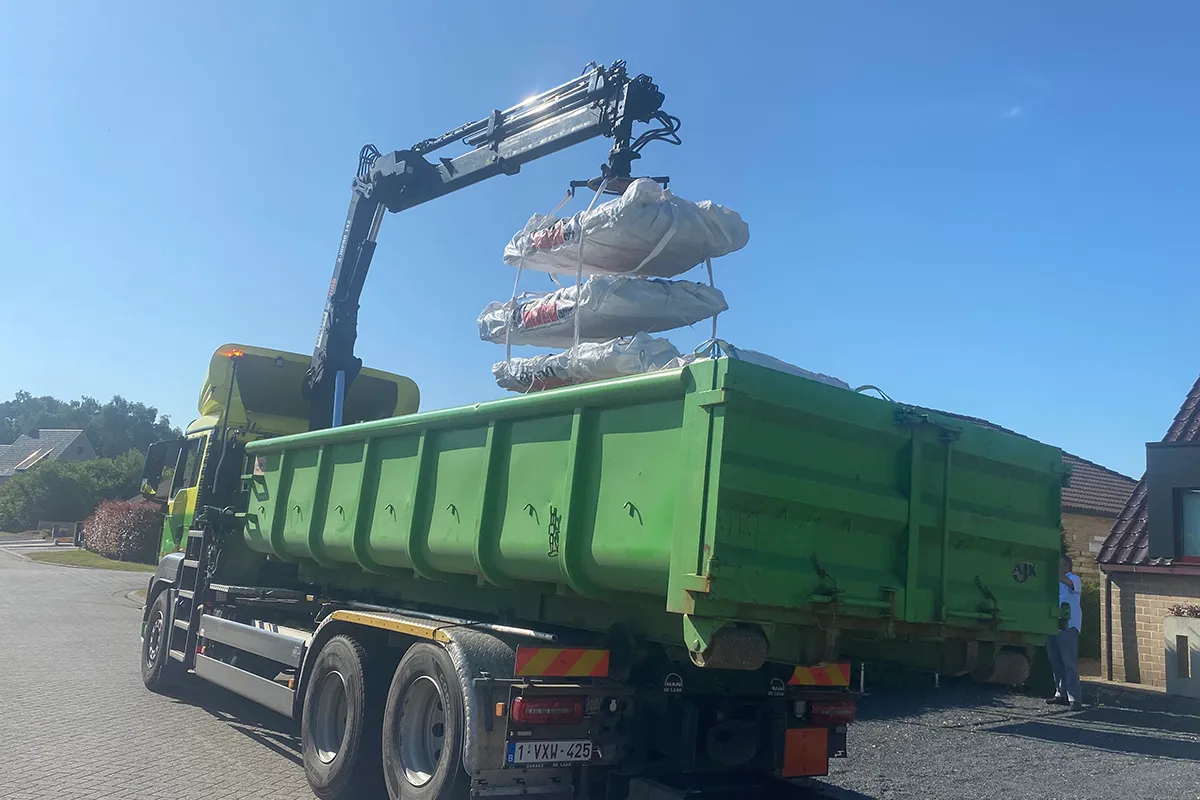
The asbestos certificate turns three on Sunday. It indicates whether asbestos is present in a building and what condition it is in. A certified asbestos expert issues the certificate after an inspection. It is currently required when a property built before 2001 is sold. Just days before the anniversary, the total stands at 422 584 certificates. Using data from these certificates, OVAM has forecast the amount of asbestos likely to remain in Flemish buildings. The previous estimate (2019) predated the introduction of the asbestos certificate and was based on sampling and literature data. Analysis of the certificates suggests that an estimated 3.18 million tonnes remain in circulation. The 2019 estimate proved particularly low for houses and flats. For schools and farms, the analysis indicates that there is less asbestos than previously estimated, by 35% and 57% respectively.
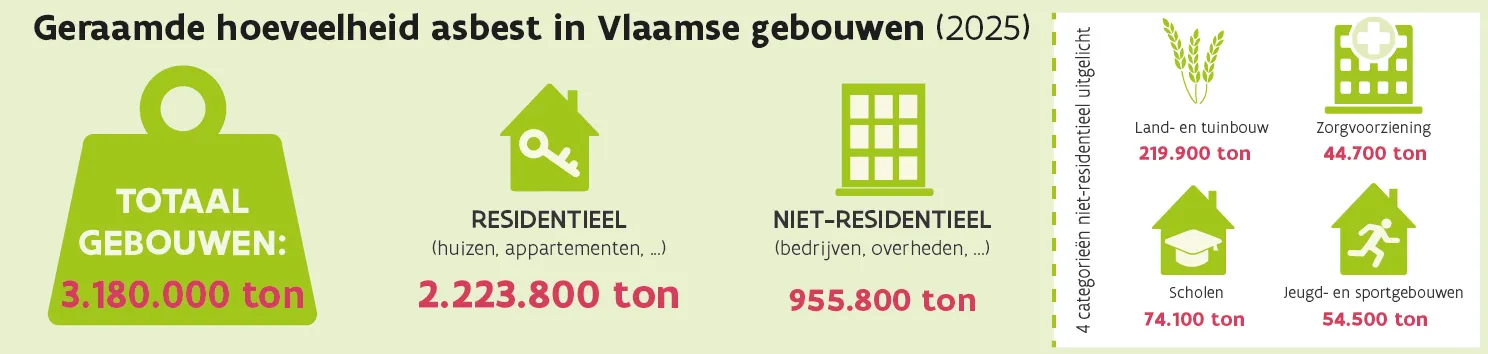
Two thirds of the asbestos legacy is in residential buildings
The most striking finding from the analysis is that two thirds of the asbestos legacy is in houses and flats. More than 2 million owners of houses and flats still do not have an asbestos certificate, and therefore do not know where asbestos risks are present. These figures highlight the importance of issuing asbestos certificates even when no sale is taking place. Asbestos is found in far more materials than people generally realise.
A better understanding of the asbestos legacy will help us make the right policy choices in the coming years to make Flanders asbestos-safe by 2040. Support for private owners, such as low-cost collection of asbestos cement from homes, grants for asbestos roofs and local group purchasing schemes for asbestos certificates, therefore remains crucial to helping them make their homes asbestos-safe.
Asbestos found in 59% of buildings built before 2001 that were inspected
Since the certificate was introduced, 422 584 asbestos certificates have been issued. One or more asbestos-containing applications were found in 59% of the buildings inspected (built before 2001). In just over 40% of the buildings inspected, the certificate concludes that the building is not asbestos-safe. The certificate indicates the condition of the different applications and what needs to be done to achieve an asbestos-safe situation.
More than 80% of the asbestos legacy consists of different types of asbestos cement applications, such as slates, corrugated sheets, pipes and panels. However, the most hazardous non-bonded asbestos applications are in the other category. They generally contain much more asbestos but weigh less because the binder is weaker or absent, allowing asbestos fibres to be released easily.
The finding that more asbestos is present in Flanders than estimated in 2019 is no cause for concern, as this analysis is much more precise than the 2019 estimate, but it is a call to action. The first step is to continue cataloguing the asbestos legacy in buildings built before 2001. More than 2 million buildings still need to be inspected. At present, this is only mandatory when a building is sold. VME’s must have an asbestos certificate by the end of next year at the latest. All buildings must be inspected by 2032.
Question about this story? Ask your question
Companies in this story

Keep following this
Get an email when a new story is published. No account needed.
- ThemeSafe and clean processing
- SubjectNews
- CompanyOVAM







