












Thermal cleaning of TAR is a unique industry worldwide
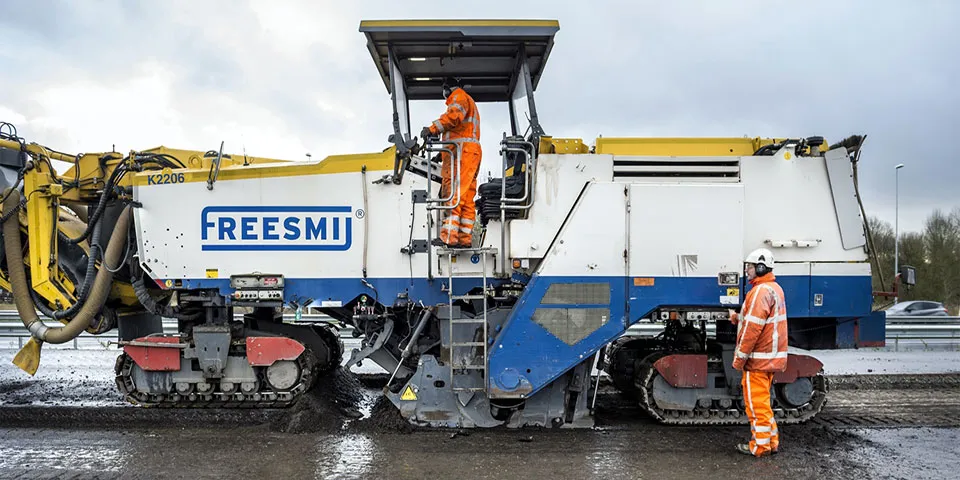
‘Asphalt recycling yields millions of tonnes of clean sand and gravel’
Since the decision was taken in 1999 to remove tar from the chain completely and permanently because of the harmful substances in the binder, the Netherlands has been leading the way in recycling tar-containing asphalt granulate (TAR). The National Monitoring Consultative Group (LMO) TAG plays a major role in this innovative industry. “We ensure that the approximately 1 million tonnes generated in the Netherlands each year stay in the Netherlands.”
“In fact, it’s very simple,” says Max de Vries, formerly director of BRBS Recycling and now secretary of the National Monitoring Consultative Group TAG. “You take a piece of asphalt, heat it to extract the tar, and what you’re left with are attractive-looking stones. These can then be processed by, among others, the asphalt industry.”
There are four companies in the Netherlands with the technology to thermally clean tar-containing asphalt granulate (TAR). According to De Vries, this makes them a unique industry worldwide. “These companies, ATM, A. Jansen BV, Theo Pouw and Recycling Kombinatie REKO, can destroy a substance of very high concern (SVHC), namely carcinogenic PAHs in tar, in such a way that a high-quality raw material is left behind. You cannot talk about the circular economy without mentioning this industry.”
Road authorities
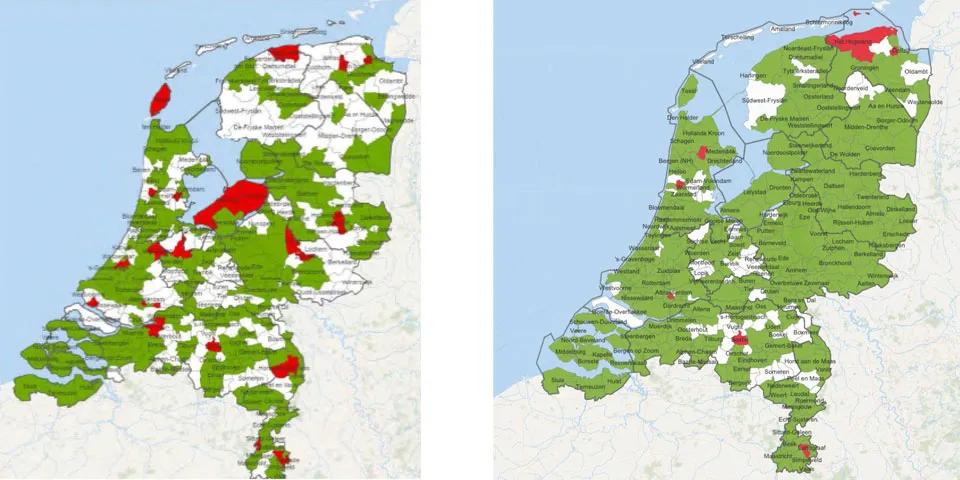
The industry emerged more than 20 years ago, when Jan Pronk, then Minister for Housing, Spatial Planning and the Environment, decided to remove tar from the chain permanently because of the harmful substances it contains. For this reason, the National Monitoring Consultative Group (LMO) TAG was established in 1999. This consultative body brings together government organisations and businesses and monitors the processing of TAR in the Netherlands. The LMO also ensures that as many road authorities as possible (Rijkswaterstaat, provinces, municipalities and water boards) sign the Environmentally Responsible Road Management Code (MVW). The code stipulates that TAR arising from road maintenance must always be cleaned and must not be dumped or exported to countries with less stringent regulations. CROW guideline 210, ‘Guideline for dealing with recovered asphalt: selective removal of tar-free and tar-containing asphalt’, sets out the procedure road authorities and contractors must follow when dealing with tar-containing or tar-free asphalt. CROW is responsible for the Code MVW.
Clean construction materials
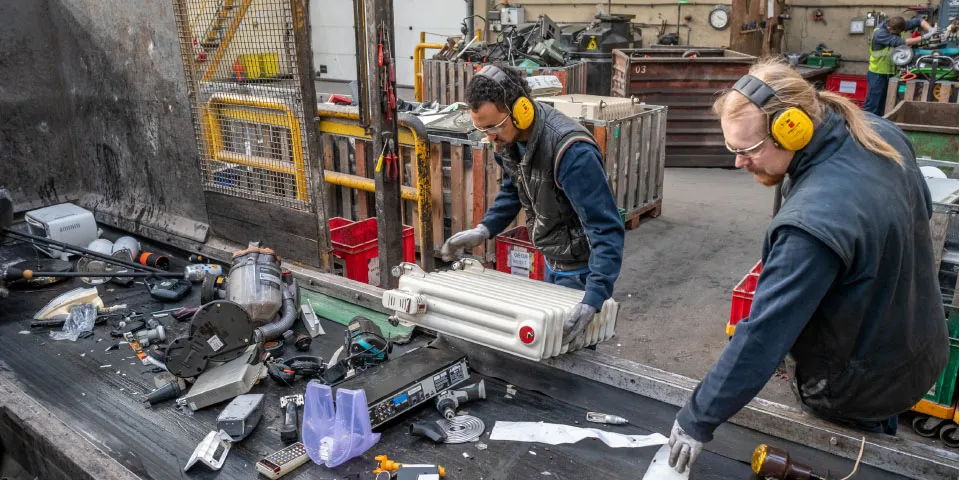
Van Bentum/REKO was the first company to say it could thermally clean tar-containing asphalt; the other three companies followed later. In recent years, each has made substantial investments in facilities to process TAR into high-quality, clean construction materials. In 2018, REKO invested a further 125 million euros in building a new thermal cleaning plant, which will convert 1.2 million tonnes of residual materials each year, consisting of a mix of tar-containing asphalt granulate and roofing felt, entirely into primary raw materials, electricity and heat.
A great deal has happened since the 1999 decision to keep tar out of the chain. Almost all Dutch municipalities, provinces and water boards specify the thermal cleaning of TAR in public tenders, and hundreds of thousands of tonnes of TAR are cleaned and reused each year. You might think, then, that the supply would eventually dry up. Or is there still enough TAR in Dutch roads to ensure the industry’s continued existence and make its huge investments profitable?
De Vries: “The Netherlands is not only a world leader in cleaning TAR, it has also attracted the attention of neighbouring countries. Two years ago, the Flemish Agency for Roads and Traffic (AWV) and the Public Waste Agency of Flanders (OVAM) signed an agreement under which all Flemish TAR is to be cleaned by Dutch companies. OVAM has also been a member of the LMO TAG since then.”
Steadfast
According to De Vries, an increasing number of German and Swiss cities also no longer want to send TAR to landfill, instead transporting it to the Netherlands for cleaning. “That is also because every minister since Pronk has remained steadfast in upholding the policy,” says De Vries.
To close the remaining loopholes for exports, De Vries estimates that 20 per cent of all TAR still goes abroad because it is cheaper and some smaller municipalities are not fully aware of the Code MVW. LMO TAG is actively contacting road authorities. “We explain that they must not only specify thermal cleaning in their tenders, but also ask for proof that the TAR was actually delivered to and processed by one of these four companies. They should not pay the invoice until they have that proof. We can only remain a world leader if the industry knows that enough TAR will be supplied each year.”
Question about this story? Ask your question
Companies in this story

Keep following this
Get an email when a new story is published. No account needed.
- ThemeCircular construction and demolition
- SubjectNews
- CompanyA. Jansen B.V.
- CompanyOVAM







