












The Pen | Max de Vries, Secretary of Landelijk Monitoringsoverleg Teerasfalt
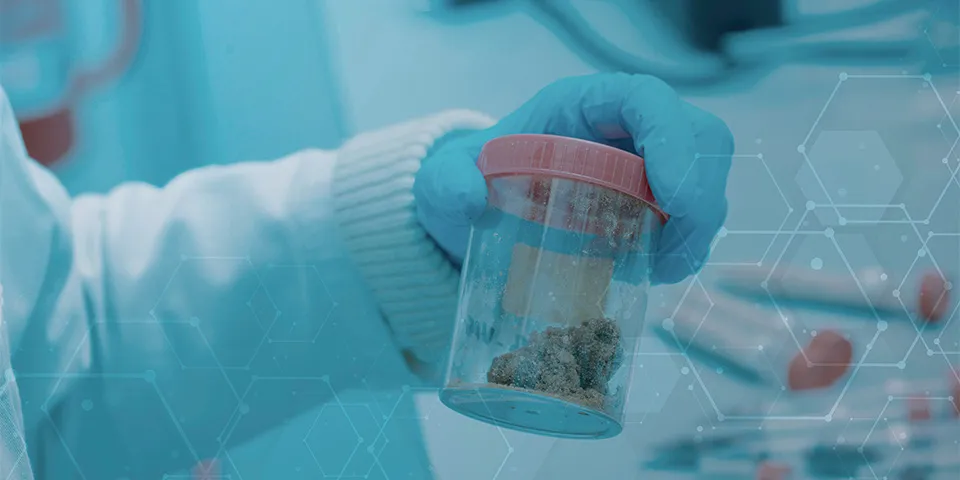
The Netherlands is a leader in recycling tar-containing asphalt. Four companies have the technology and facilities to remove harmful tar from the supply chain by thermally cleaning TAG. Yet a significant proportion is still sent abroad every year, either because it is cheaper or through lack of knowledge. In other countries, where the technology is not as advanced as it is here, tar-containing asphalt granulate (TAG) is used as a road sub-base or simply dumped. And no one should want that. We need to manage our raw materials better, because our current linear economy is depleting the Earth. When TAG is cleaned, you can see raw materials actually being recovered. This directly contributes to the transition to a circular economy. A tangible result, then.
Quite apart from the fact that the countries to which we ship our tar-containing asphalt are not keen to receive it either, this is a case of putting the cart before the horse. Let me explain.
When TAG is dumped at a landfill or used as a sub-base for new roads, you are not only shifting the problem to future generations, you are also making it bigger, more difficult and more expensive to clean in the future, as we already do in the Netherlands. What you are actually doing is diluting and spreading all those carcinogenic polycyclic aromatic hydrocarbons (PAHs) through the soil. This increases the volume that needs to be cleaned. And that means it takes more energy and money to burn off the tar. It is better to burn a concentrated amount of tar from all those stones. In fact, combustion is much more efficient when the tar concentration is higher. Flanders has understood this by now and is already shipping its TAG to the Netherlands for thermal cleaning here. But currently there is no legal framework to prevent the export of tar-containing asphalt granulate from the Netherlands. Neither the Netherlands nor other countries can ban the movement of TAG. That is why I am calling on the State Secretary for the Environment to close the borders, so that we do not burden Europe and the rest of the world with our problems.
At the same time, I am calling for so-called semi-permeable, or partially open, European borders. The borders should be open to countries with highly intelligent and innovative recycling processes, one of which is the thermal cleaning of TAG. These processes may be more expensive, but they are good for the future and for the wellbeing of people and the environment. Companies only invest in technologies like these if they are assured of sufficient volumes and demand. But if those companies are not guaranteed that this material will not disappear abroad, they will not invest.
The Netherlands should therefore no longer allow TAG to be shipped to countries that cannot clean and recycle it. And countries that do not yet have the right technology should be allowed to transport it to countries that do, such as the Netherlands. This is the only way we can find solutions at European level for difficult-to-process materials. After all, trade is only as smart as the people involved. And money always flows to the lowest point.
Question about this story? Ask your question
Keep following this
Get an email when a new story is published. No account needed.
- SubjectNews







