












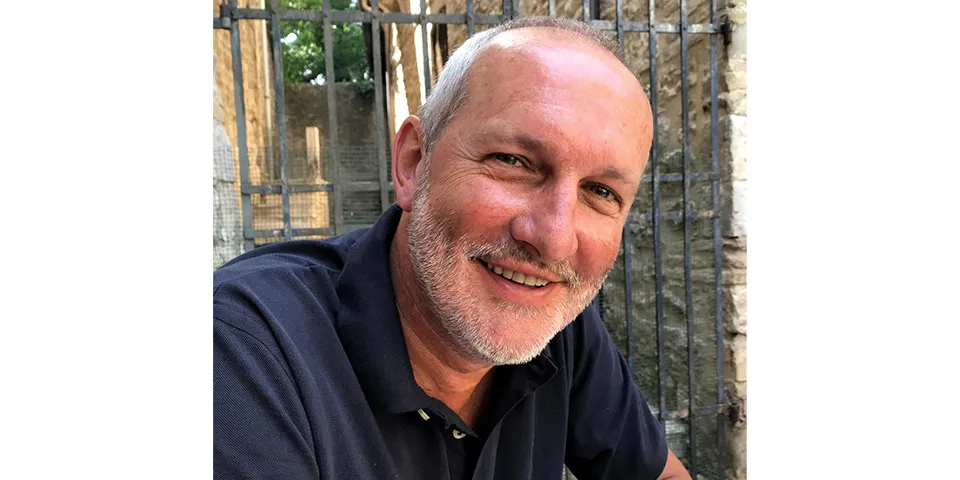
The Pen | Hugo Geerts, managing director of EVANAR bv
Circular economy: utopia or reality?
The Flemish Government has set itself the goal of making our economy fully circular by 2050. Is that achievable and realistic? I fear not. Fortunately, we can see that many companies are keen to take steps towards a circular economy. The success of OVAM’s calls for project proposals proves this. These projects are often based on new and fresh ideas. However, they are usually small projects that do not prove economically viable without subsidies.
That is not to say that larger companies are standing still. They too are looking for new techniques to make their production processes and products more circular, and are attaching increasing importance to product design. Business federations are supporting them in this. But we are still a long way from the ideal world.
And what is the Flemish Government doing? Article 16 of the decree of 23 December 2011 on the sustainable management of material cycles and waste stipulates that tender documents issued by the Flemish Government and local authorities must include provisions to promote the purchase of, on the one hand, products or services which, taking their entire life cycle into account, help to close material cycles more effectively or have a lower environmental impact than comparable alternatives. On the other hand, this applies to raw materials recovered from waste, or products made from them. Very nice in theory, but unfortunately still often not put into practice, even though this statutory obligation has now been in force for more than eight years. Is this due to a lack of knowledge among these authorities, or to lobbying by certain powerful players in the sector?
Consumers also have an important role to play. Can you imagine there being no residual waste in 2050? Every citizen sorting their waste perfectly or composting it at home? 2050 is indeed still a long way off: thirty years, to be precise. Technology will undoubtedly make great strides and thereby help to make our economy more circular. However, I cannot imagine that all problems will have been solved by technology by 2050.
And what might be the biggest obstacle? Flemish waste and materials policy is now almost forty years old. And we have made great strides forward. Despite what some sceptics claim, Flanders is still a leader in waste and sustainable materials policy. But Flanders is just a tiny spot on the world map. We are heavily dependent on what we import. Can we bring all those large multinationals into line so that they only put 100% circular products on the Flemish market? Or is our market too small?
Or can we imagine that, within thirty years, developing countries will be able to bring all their policies up to the same level as the one we are striving for in Flanders? Or even some of what we call developed countries? We do have a lead of almost forty years. Finally, one last thought. The European Union, too, realises that the future lies in the circular economy. But the EU is an organisation where compromises must always be sought. And this often creates problems when it comes to taking a truly progressive approach. Just think of the discussions about a climate-neutral Europe by 2050.
Despite these rather negative (but, in my view, realistic) thoughts, this does not mean that we should throw up our hands and stop all our efforts. On the contrary, let this spur us on to redouble our efforts and try to bring everyone on board, including beyond Flanders. Flanders must remain ambitious and progressive. Every step forward contributes to a better world and helps tackle the climate crisis.
Question about this story? Ask your question
Companies in this story

Keep following this
Get an email when a new story is published. No account needed.
- ThemeCircular business under changing regulations
- SubjectNews
- CompanyOVAM







