












‘The circular economy is about so much more than recycling alone’
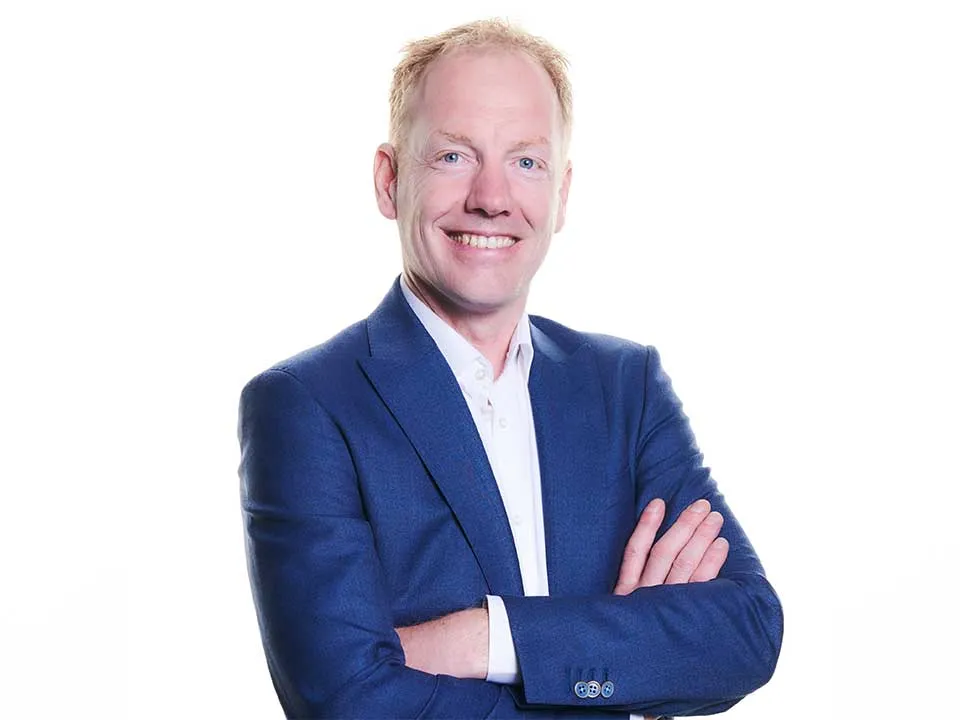
The Study Centre for Business and Government (SBO), part of Euroforum, runs its Waste/Resources Management course several times a year.
Lead lecturer Gilbert de Raad explains what the course covers and who it is for.
Alongside teaching for SBO, De Raad works as Circular Economy Expert at waste-to-product company Renewi. Over the past decade, he has immersed himself in the ins and outs of a world where waste no longer exists, and brings this knowledge to life for his students alongside a range of guest lecturers. According to De Raad, the Waste/Resources Management course is intended and suitable for a broad audience across the waste and recycling industry. “Generally, many participants work for government bodies. They include municipal and provincial officials who occasionally change jobs, as well as large and small organisations involved in waste management and sustainability, such as Shell, ROCKWOOL and Omrin. Many participants are new to the industry and want to get up to speed. There is a lot for them to gain. The diversity of the participants also means they learn a great deal from one another. That is something we hear in the feedback too.”
A broad introduction
The five-day course is “a broad introduction to the waste industry”, says De Raad. “There is a lot going on at the moment. The course covers legislation and regulations, DIFTAR, household waste separation and closing material loops. We also take an in-depth look at the European and national legislative framework. And we cover the players in the market, both public and commercial. Procurement is also, of course, an essential topic, because the waste industry is very much a tender-driven market. I also devote a session to behaviour change.”
With society as a whole facing enormous challenges around climate, sustainability and circularity, De Raad believes it is vital for professionals to be well equipped for their day-to-day work. “That is why we also try to answer participants’ questions, and sometimes go into considerable detail on practical matters they raise. But the waste and recycling market is changing so rapidly that the course has to be updated for almost every new edition to reflect current developments. Ultimately, we also encourage participants to move waste up the R-ladder and spur them to innovate.”
Interventions
Perhaps the biggest challenge is that the Netherlands has agreed to make its economy fully circular by 2050. What does the Circular Economy Expert think of that target? Is it even achievable?
De Raad does not think so. “According to the latest estimates, the Netherlands is currently 24.5% circular. With a number of interventions, that figure could reach 69.7%. That sounds much more realistic to me than 100%. And I think most of our participants feel the same way. Around 100 trillion tonnes of raw materials are extracted globally every year. 8.6% of that is recycled. If we manage to double that percentage by 2032, we will probably keep global warming below 2 degrees. And that offers hope, because we should be able to double the global recycling rate within 11 years if we work together. Especially with all the innovations currently taking place in the recycling industry. The Netherlands is a frontrunner in this area. We explore this in depth on the course.
Question about this story? Ask your question
Keep following this
Get an email when a new story is published. No account needed.
- ThemeCircular business under changing regulations
- SubjectNews







