












Textile factory brings three essential recycling steps together under one roof
Text Ferdi den BakkerImage Brightfiber
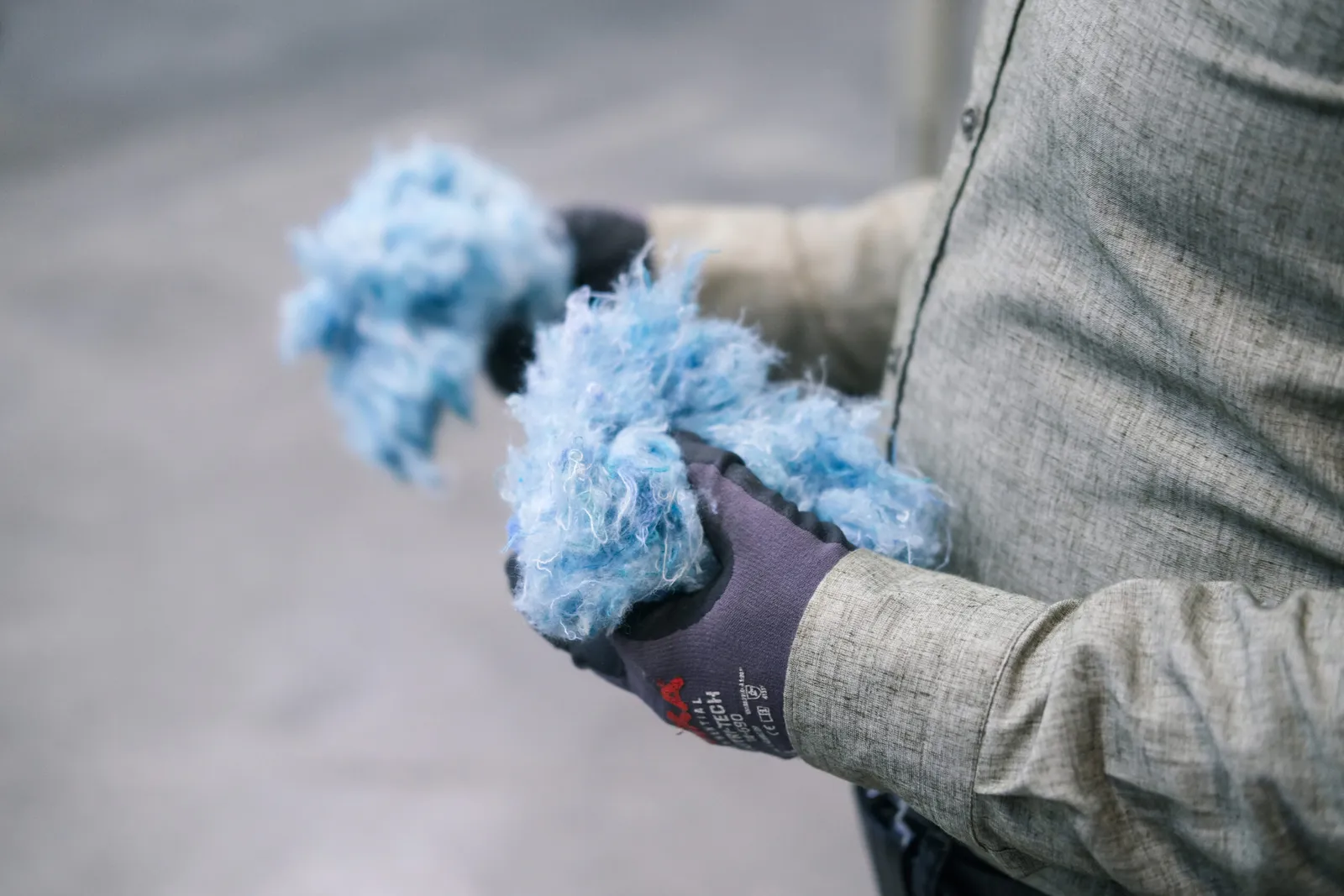
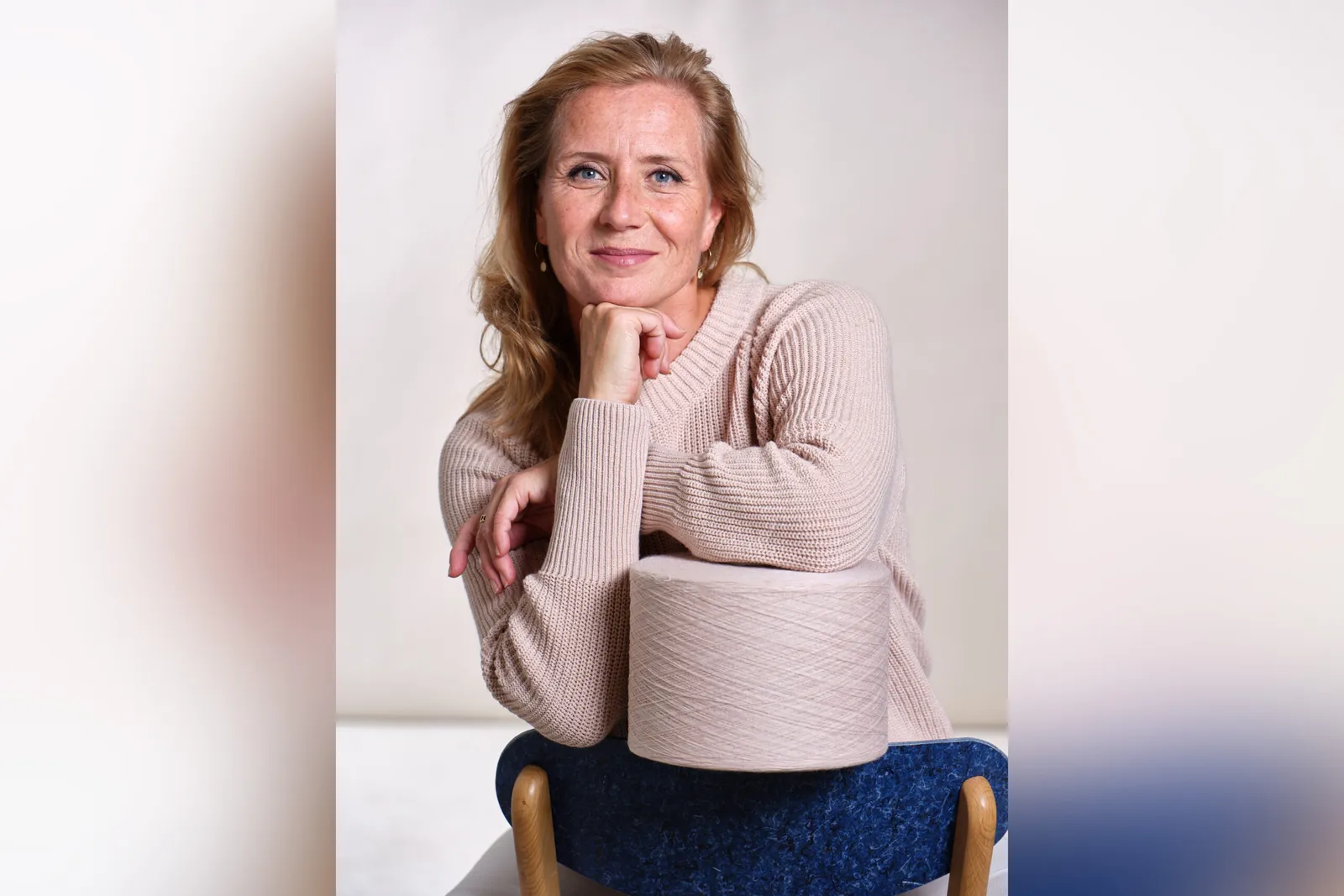
Brightfiber Textiles opened its own circular textile factory in Amsterdam earlier this year. The goal: to turn old clothes into yarn and new garments. Founder Ellen Mensink: “We are the first company in the world to carry out the steps of sorting, cleaning and producing raw materials and fibres for yarn and finished products fully automatically in-house.”
It is hardly surprising that Brightfiber is taking these three steps in-house. Mensink has a long track record in circular fashion. More than ten years ago, she founded Loop.a.life, a circular clothing brand. The brand no longer exists, but Mensink remains convinced that the world must move towards using and wearing circular textiles. She also wants to take the steps herself to make that possible.
Three machines
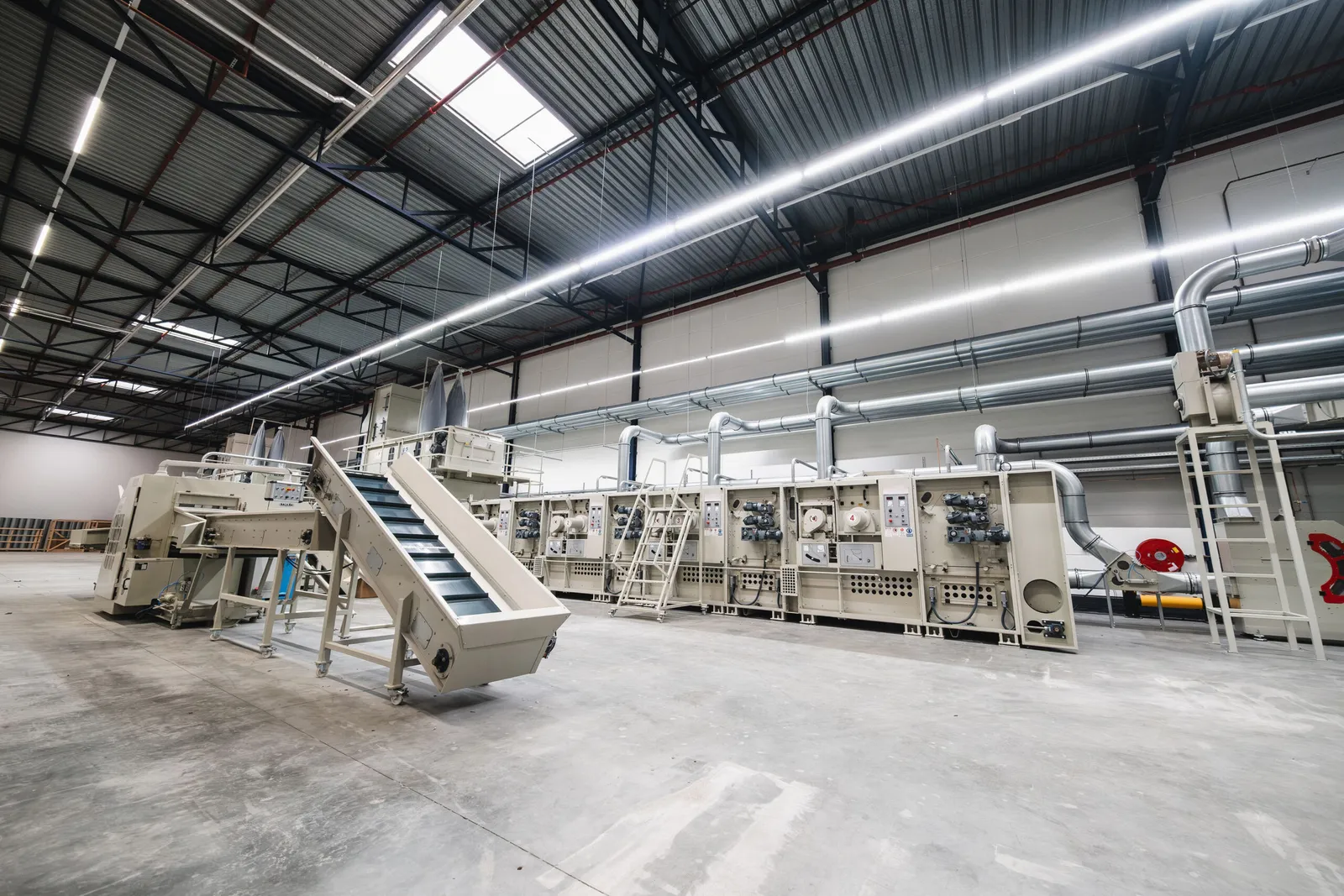
Brightfiber’s Amsterdam factory opened in April. The company currently uses three machines, including a fibre-opening machine. This turns cotton into new fibres, which are then made into yarn and fabric with partners in Europe. There is also a fine sorter that sorts by material and colour. The cleaning machine removes zips, labels and buttons. Together, the machines can process up to 2.5 million kg of textiles a year. The clothing processed by Brightfiber comes from various streams, including clothing banks on the streets.
“Governments must incentivise businesses”
Mensink sees huge potential in textile recycling, but also knows that businesses and governments still have steps to take to realise it. “We have been showing for a long time that this can be done. It is now up to governments to incentivise businesses to take this step. At present, businesses only pay a price per kilo of waste, which is not enough of an incentive. Consumers are willing, but all the certifications leave them unable to see the wood for the trees. We need a simple label, like the one used for houses. You should not really buy an E or F, while A is top, but probably a little more expensive too. If the label is accurate, it provides clarity and consumers can feel confident about paying a little more for a genuinely sustainable circular product.”
“Circular really has to mean circular”
According to Mensink, circularity must also be truly circular. “Of course, it is good that businesses are already using industrial waste, although they have been doing that for decades. But that is not the challenge facing the fashion industry. The challenge is to reduce the waste mountain and use far fewer raw materials, less energy, fewer chemicals and less water. Producing locally helps too. Nature does not send an invoice for new products, but we have to factor that cost into a product’s price. What is more, we create value close to home, develop expertise and create jobs. This production process starts with making the raw materials ourselves.”
Getting production up and running
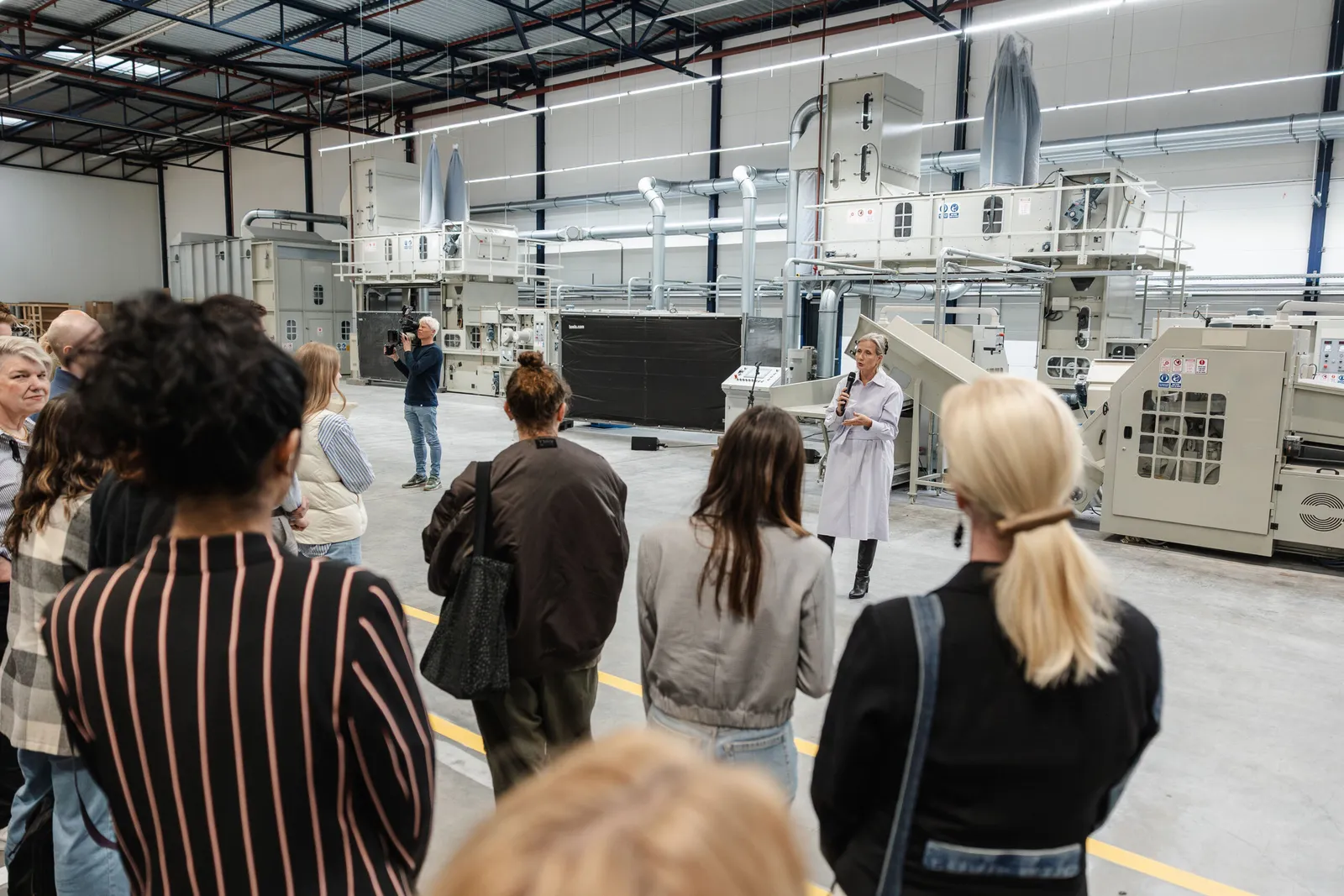
The factory in Amsterdam’s port area is not yet operating at maximum capacity. The supply of clothing, including from clothing banks, exceeds demand for yarn and products. “We need more players in the chain to show some courage and get started. This will not become business as usual by itself. Brands need to get in touch, and we will help them and explain how it works. Call us, contact us, so we can get production up and running and make circular textiles a reality. Sometimes you just have to get started to understand how it works.” According to the CEO, more capacity is not needed at research institutions, but rather practical experience. “These days, you really can’t tell if something has been recycled. Mechanical recycling produces a very good quality.”
Production as proof
The foundations of the production process are now in place. Mensink hopes to see a thriving business in five years’ time. “With lots of brands in Europe carrying a Brightfiber collection. With the three steps we are now taking in-house, we also want to make progress in other regions and scale up. The T-shirts and collection are proof that it can be done.”
Question about this story? Ask your question
Keep following this
Get an email when a new story is published. No account needed.
- ThemeMaking use of textiles and other waste streams
- SubjectNews







