












Testing and improving the recyclability of coated paper
Text Valérie CouplezImage Sirris
A practical guide to sustainable choices
Paper is often coated to improve its barrier properties when used as packaging. This helps extend the shelf life of food, but often hinders recycling. That is why the RePAC2 project was launched last year, with Sirris investigating the alternative paper coatings available and how their recyclability can be evaluated. By the end of the project in December, the aim is to produce a practical guide to help packaging manufacturers make the right, sustainable choices for paper applications.
Paper and board are ideal packaging materials. They are made from bio-renewable fibres that are strong, stiff and flexible. There are plenty of reasons to use them. However, these materials are still laminated when used to package food. Sirris senior engineer Circular Economy Pieter Samyn explains: “This gives them the right barrier properties, but unfortunately we see that it makes recycling more difficult. The plastic film can no longer be separated from the fibres.” Sirris therefore joined forces with Flemish partners (Universiteit Hasselt MPR&S, Pack4Food, Flanders’ Food), German partners (Fraunhofer, IVLV) and Polish centres (Natureef and West Pomerian University of Technology) in the Cornet Tetra project RePAC2 to investigate which alternative coatings are already available on the industrial market or at an advanced stage of development. The project aims to act as a catalyst for the faster adoption in the food industry of materials that have the required barrier properties and are recyclable.
Requirements for high fibre yield
The screening focused primarily on water-based dispersion coatings. “Because they have the greatest potential for recyclability,” says Samyn. “We investigated which formulations were suitable and under what conditions they needed to be processed to achieve the best results.” The bar was set high. Uncoated paper has a fibre yield of more than 99%. “So we wanted to achieve results of at least 90%.” The starting point was to keep the proportion of the coating itself as low as possible, while still allowing sufficient interaction between the coating chemistry and the paper fibres, for example by using an intermediate layer. “An intermediate release layer,” Samyn explains. “It should prevent the coating chemistry from penetrating into the pores of the paper.” The chemistry will also need to be adjusted to improve separation. “The recycled pulp could undergo an additional treatment in future, making it easier to separate coating residues from the paper fibres. This could be done on existing lines.”
Pilot line for testing recyclability
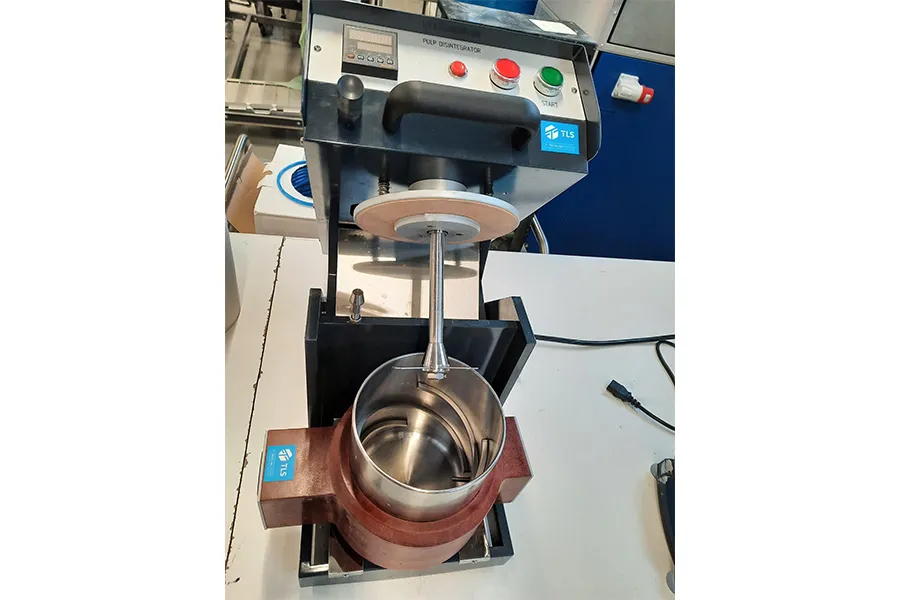
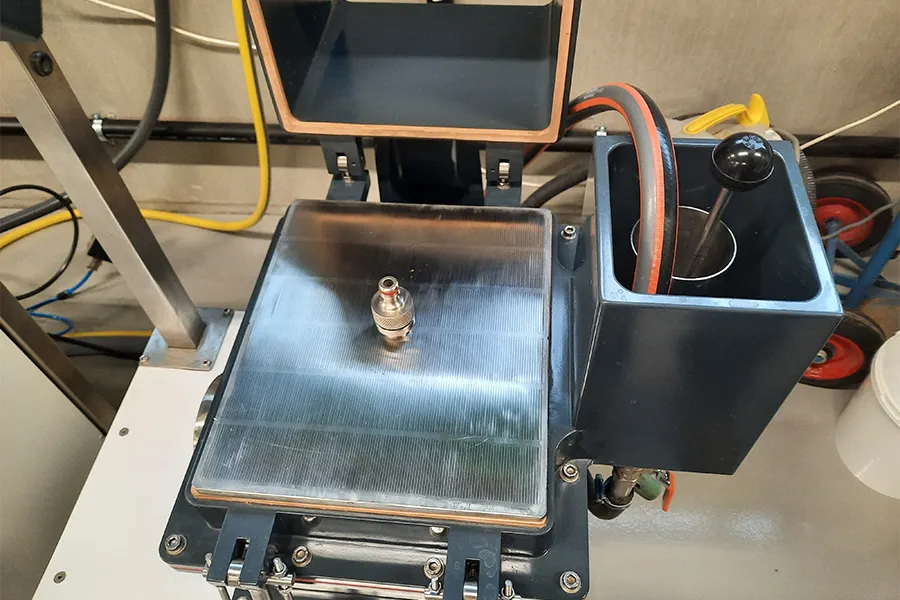
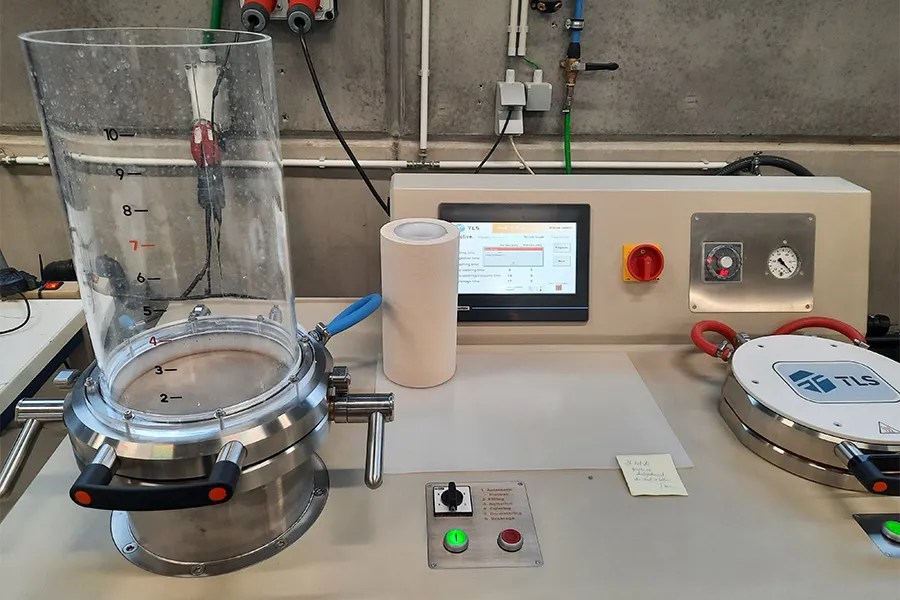
As part of the RePAC2 project, Sirris installed a pilot line to pulp paper and evaluate the quality of the recovered fibres in line with the latest European recommendations. “The aim is to establish reference tools for recycling tests, a kind of benchmark study showing which materials recycle well and which do not. Europe requires 70% of packaging placed on the market to be 100% recyclable by 2030. We are already seeing considerable interest from industry.” The line, now up and running at Sirris’s headquarters in Leuven, brings together the three stages of paper recycling: pulping coated paper, separating unusable fibres, and making and assessing new paper from recycled fibres. “Quality is checked after each stage. This will help us identify the critical parameters for achieving better, reproducible results, and find out how we can further improve the recyclability of coated paper.”
Taking a broader view in a new project
By December, Sirris aims to draw up a ranking of the best coatings on the market in terms of their recyclability. The extensive testing will also yield recommendations on how to factor recyclability in from the design stage of new packaging materials. However, this is not the end of the road. “In the follow-up project BeFORe, which is due to start in January 2024, we want to broaden our focus to include multi-layer packaging with more complex barrier layers, and explore how we can find more sustainable solutions for these too.”
Question about this story? Ask your question
Keep following this
Get an email when a new story is published. No account needed.
- ThemeMaking plastics and packaging circular
- SubjectNews







